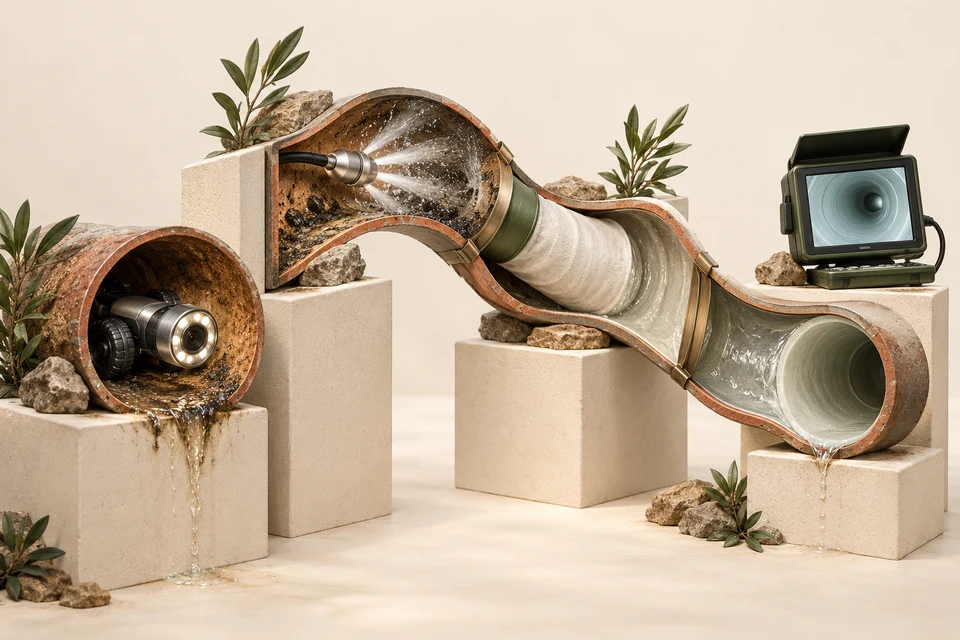
Most problems with trenchless sewer repair come from the steps around the installation rather than the method itself: poor cleaning, a liner the wrong length or size, incomplete curing, connections missed or under-cut, unsealed ends, or a belly lined over without warning. Nearly all of them show on a recorded final video, which is why that video, checked before the crew leaves, is the homeowner's best protection.
- Wrinkles, fins and lumps usually trace back to cleaning, sizing or bends.
- Missed or under-cut connections cause backups and snags; every connection should be on the final video.
- Soft or uncured resin and leaking ends are installation faults that are hard to correct later.
- A belly lined or burst over is not a defect in the new pipe, but it keeps the old problem.
- Ask for cleaning footage, cure information and a final video in the quote, and review them the same day.
01 /Why do trenchless repairs go wrong?
A cured liner cannot be pulled out and tried again, and a burst pipe cannot be un-burst. The US EPA's trenchless fact sheet lists, among CIPP's limitations, that a defective installation is difficult to rectify and that curing long segments is a challenge. That is the core of the problem: the work happens out of sight, in one attempt, and quality depends on preparation and control rather than on anything the homeowner can see from the yard.
The good news is that the common failures are well understood, have recognisable causes, and nearly all of them appear on camera. The table below is a field guide to what they look like and what usually causes them.
| Problem | Usual cause | On the final video |
|---|---|---|
| Wrinkles or fins in the liner | Oversized liner, bends, offsets, loose debris | Folds or ridges, often at bends and joints |
| Lumps and bumps | Roots, scale or debris left under the liner | Raised patches on an otherwise smooth wall |
| Missed connection | Connection not logged or not found after curing | A dimple with no opening; that branch backs up |
| Under-cut or ragged opening | Cutter stopped short or poorly controlled | A lip or fringe of liner catching solids |
| Soft or uncured areas | Wrong resin mix, heat loss, groundwater, short cure | Discoloured or deformed liner; may only show later |
| Leaking or lifting ends | Ends not trimmed or sealed; water tracking behind the liner | Weeping, gaps or a liner edge standing proud |
| Liner stops short | Wrong measurement or tube length | Old pipe exposed before the property line or main |
| Standing water inside the new liner | A belly that was lined over | Water pooling at the belly's distance |
02 /What causes wrinkles, fins and lumps?
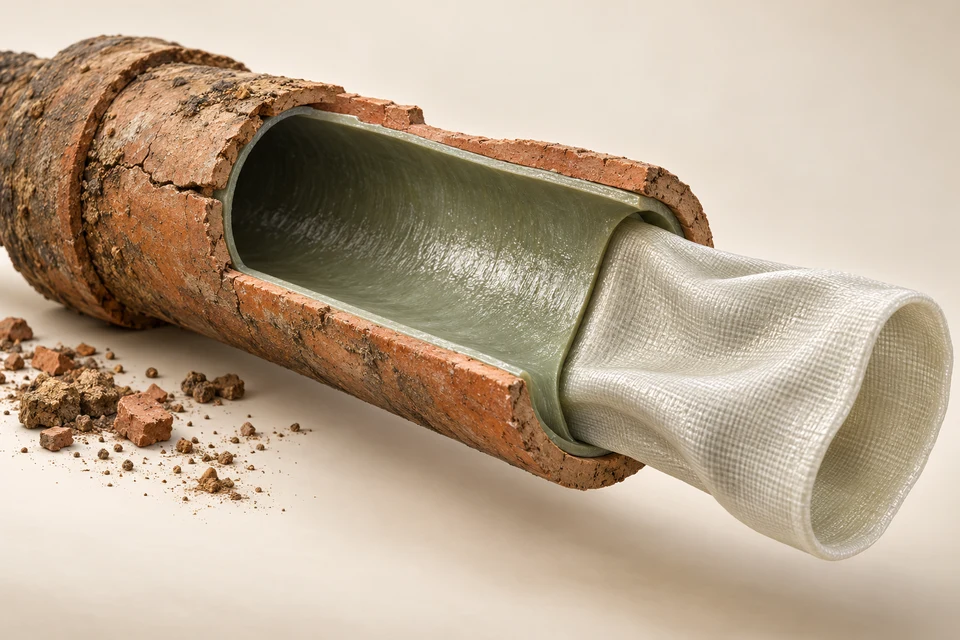
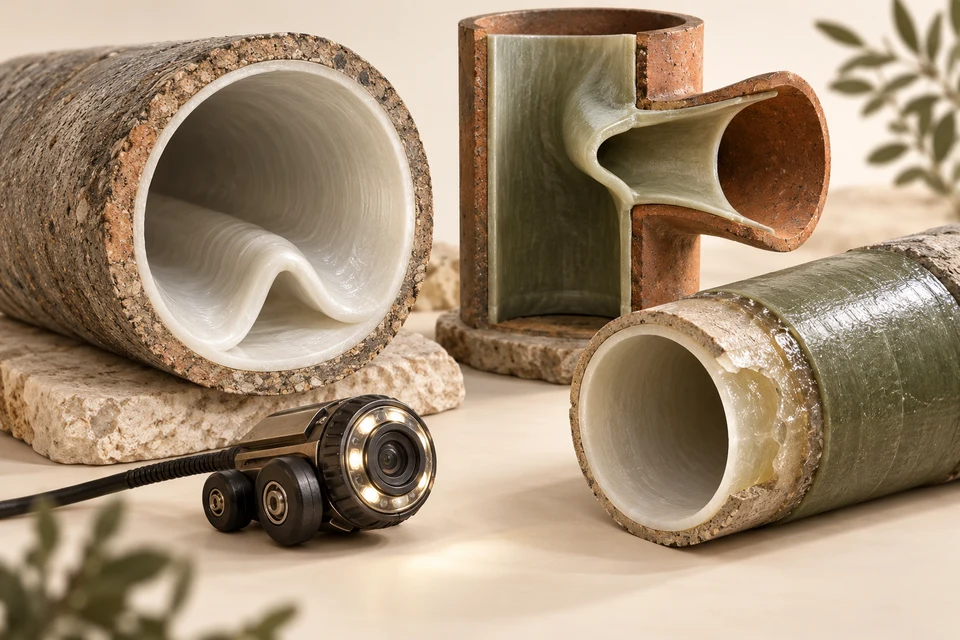
A liner is meant to sit tight against a clean wall. If it is slightly too large for the pipe, it has spare material that folds into wrinkles or fins, often at bends where the inside and outside of the curve differ in length. If the pipe was not cleaned properly, roots, scale or grease under the liner become lumps. Minor offsets can pinch the liner into a ridge.
- Prevention: thorough cleaning with a camera check after, accurate diameter measurement, and a liner system suited to the bends on your line.
- How much matters: a small, smooth wrinkle on a bend is common; a fin that stands into the flow, catches paper or narrows the pipe noticeably is a defect to raise.
- The fix: sometimes grinding the fin down with a cutter; for a bad section, a sectional liner over it or a dig.
Bends are where the trenchless fit checker asks whether the liner can negotiate them, and why several sharp bends move bursting down its list.
03 /Why are connections the most common trouble spot?
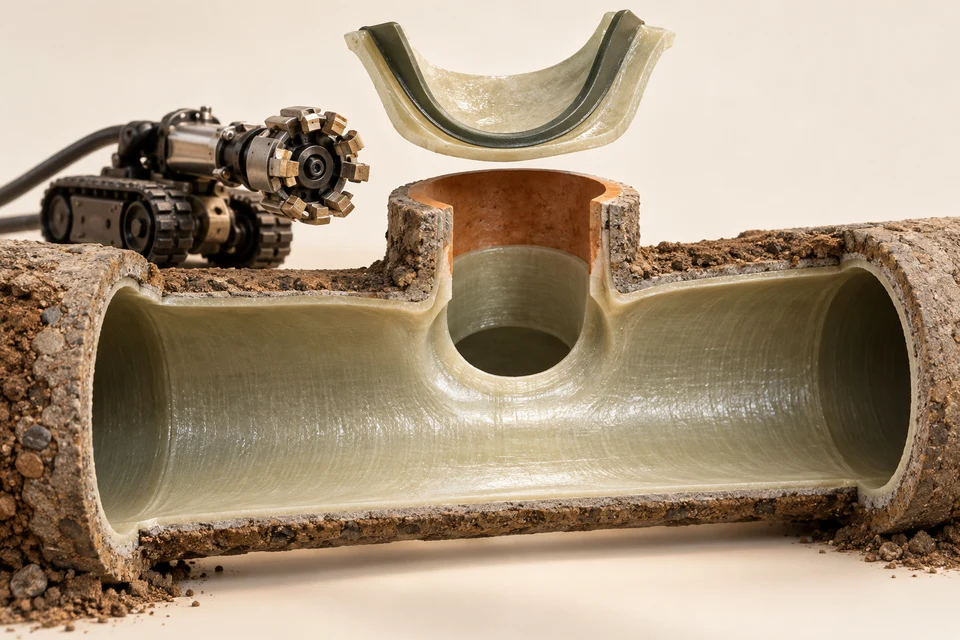
Because each one is a separate, delicate operation done blind through a camera after the liner has cured. A connection that was never logged can be lined over and forgotten, and the fixtures on that branch will back up the first time they are used. A connection that is found but under-cut leaves a lip where paper and grease collect. One that is cut but not sealed can let water track between the liner and the old pipe, and roots follow the water.
The protection is simple: every connection logged by distance on the pre-lining video, every one shown reopened and sealed on the final video. The details are in lateral reinstatement and connection seals.
04 /What about soft spots, uncured resin and odours?
A liner's strength depends on its resin curing fully. Resin mixed in the wrong proportion, a cure that loses heat, cold groundwater flowing around the pipe, or too short a cure time can leave areas that stay soft or cure poorly. They may look normal on the day and deform or crack later. This is why a quote should name the resin system and the cure method, and why reputable installers keep records of the wet-out and cure.
Some resins, notably styrene-based polyesters and vinyl esters, give off a strong odour during installation, and NASSCO runs training on the safe use of styrene. If an odour enters the house, ventilate, keep traps filled with water, and ask the installer what was used and what they advise. A persistent sewer smell after the job is a different matter, usually pointing to a dry trap or an unsealed connection or end.
05 /What goes wrong with pipe bursting?
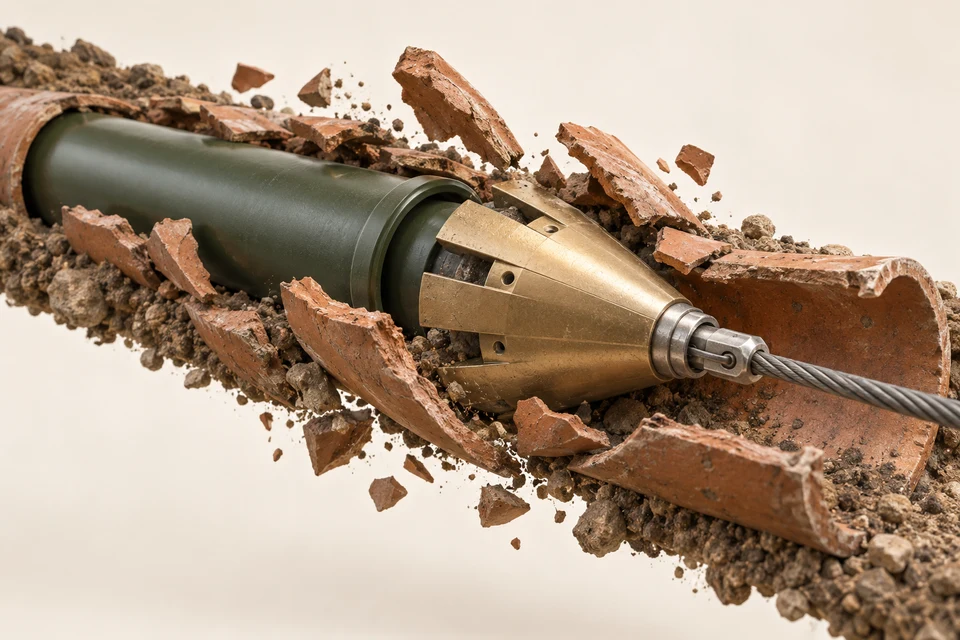
Bursting has its own failure modes, mostly to do with the ground around the pipe rather than the new pipe itself.
- A stalled head: at a collapse, an old repair clamp, concrete encasement or rock. Usually solved with an extra pit, which is why a stall clause in the quote matters.
- Surface heave: shallow lines can lift the ground above the head as soil is displaced.
- Damage to nearby utilities: gas, water or communication lines close to the path can be loaded or moved. Every utility must be located first; in Alberta, Utility Safety Partners asks for requests at least three full working days ahead.
- A reproduced belly: the head follows the old grade.
- Poor reconnections: the new pipe must be joined properly at each end and at any branch.
The bursting decision itself is in when pipe bursting fits, and the specialist detail on sister site PipeBursting.ca.
06 /How do I protect myself before and after the job?
- Before signing
A written scope naming the method, liner or pipe system, lengths, connections, cleaning, cure method, final video and warranty.
- Before lining
Ask to see the post-cleaning footage. A liner on a dirty pipe is the root of many later problems.
- On the day
Confirm the connection count and the liner end positions against the quote.
- Before the crew leaves
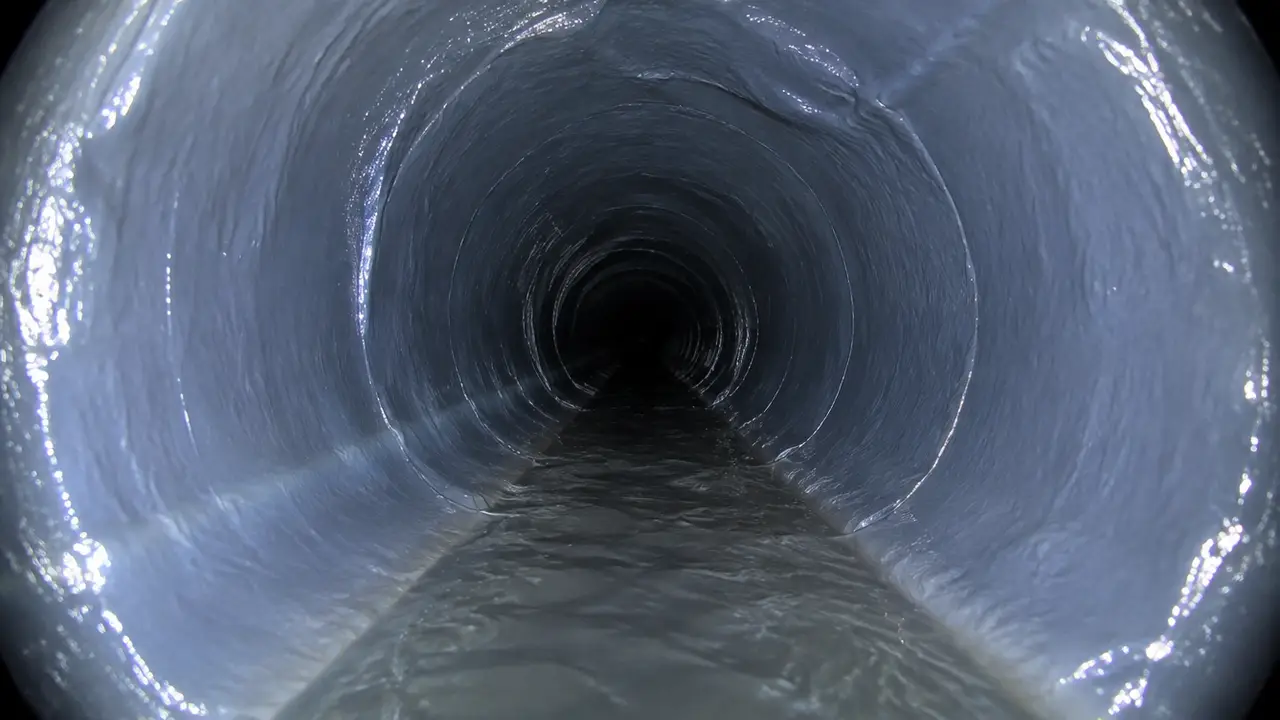
Watch the final video together: smooth wall, ends where promised, every connection open and sealed.
- Afterwards
Keep all videos and the warranty with the house file; re-scope if symptoms return.
The full sequence is in how trenchless sewer repair works. If you already have a repair that seems not to be working, send the before and after footage to the HAUSE Sewer desk for a second opinion.
07 /What can be done if a repair has failed?
It depends on the failure. A missed or under-cut connection can usually be recut. A leaking end can often be sealed with an end seal or grout. A bad wrinkle or a short damaged section can sometimes be covered with a sectional liner. A liner that has failed along its length, or a belly that was lined over, usually means excavation of that section, which is the repair most homeowners hoped to avoid.
As 2026 planning estimates, reinstating a connection typically quotes about $300 to $1,200, a sectional liner $2,500 to $6,500, and an excavated spot repair $3,500 to $16,000 depending on depth and surface. Whether any of that is covered depends on the written warranty, which is why it matters who backs it.
FAQQuestions people ask
What are the most common problems with CIPP lining?
Wrinkles at bends, lumps from poor cleaning, missed or under-cut connections, leaking ends and, less often, poorly cured resin. Most show on the final video.
Can a lined sewer pipe still get roots?
At unsealed connections or liner ends, yes, because water can track behind the liner there. Sealed junctions and ends close that path.
Is a small wrinkle in a sewer liner a problem?
A small, smooth wrinkle on a bend is common. A fin that stands into the flow, catches solids or narrows the pipe should be raised with the installer.
Why is my drain backing up after the sewer was lined?
A connection may have been missed or under-cut, or a belly may have been lined over. Ask for the final video and compare it with the connection log.
Does trenchless repair damage other utilities?
Lining works inside the pipe and rarely affects other lines. Bursting pushes soil outward, so nearby utilities must be located, and sometimes exposed, before the pull.
NETWORKGo deeper across the HAUSE Sewer network
Sewer lining for tree roots: will a CIPP liner stop them for good?
Sewer lining for tree roots: how a CIPP liner seals root-damaged joints, which lines qualify, preparation, weak points at the ends, and planning costs.
SewerJetting.caJetting before trenchless lining: why the prep cleaning decides the result
Why jetting before trenchless lining matters: root removal, descaling cast iron, cleaning to a bare wall, camera checks and what rushed CIPP prep causes.
SewerQuotes.comSewer line replacement cost: open-cut vs trenchless, line by line
Sewer line replacement cost in Canada for 2026: open-cut, CIPP lining and pipe bursting planning ranges in CAD, per-metre math, line items and what moves price.