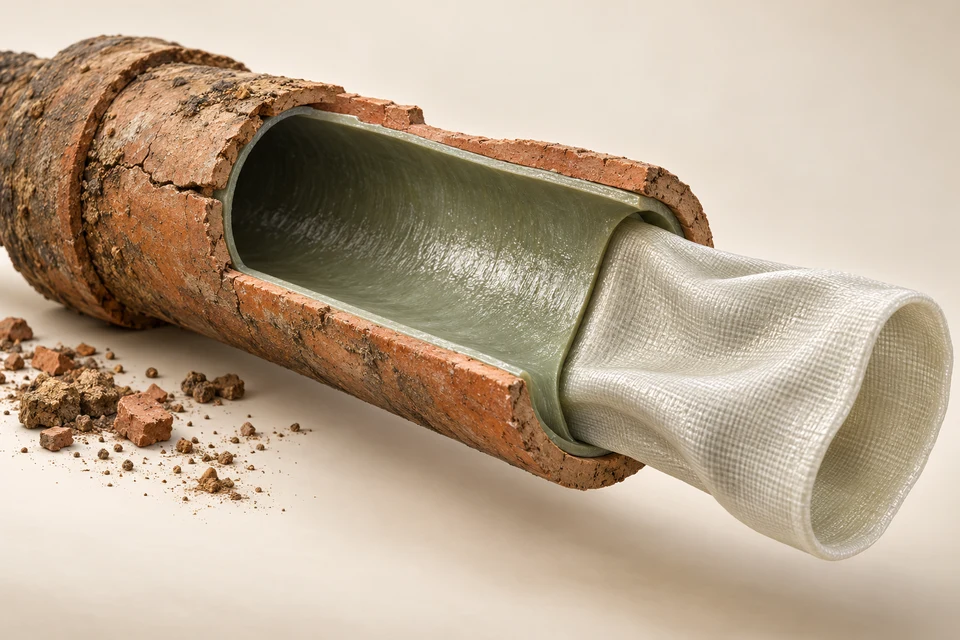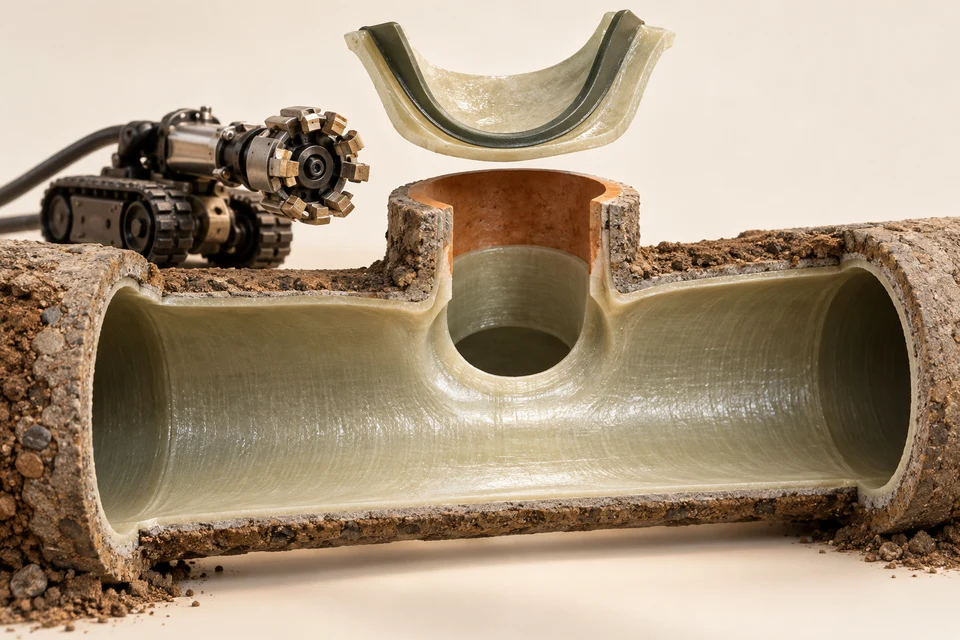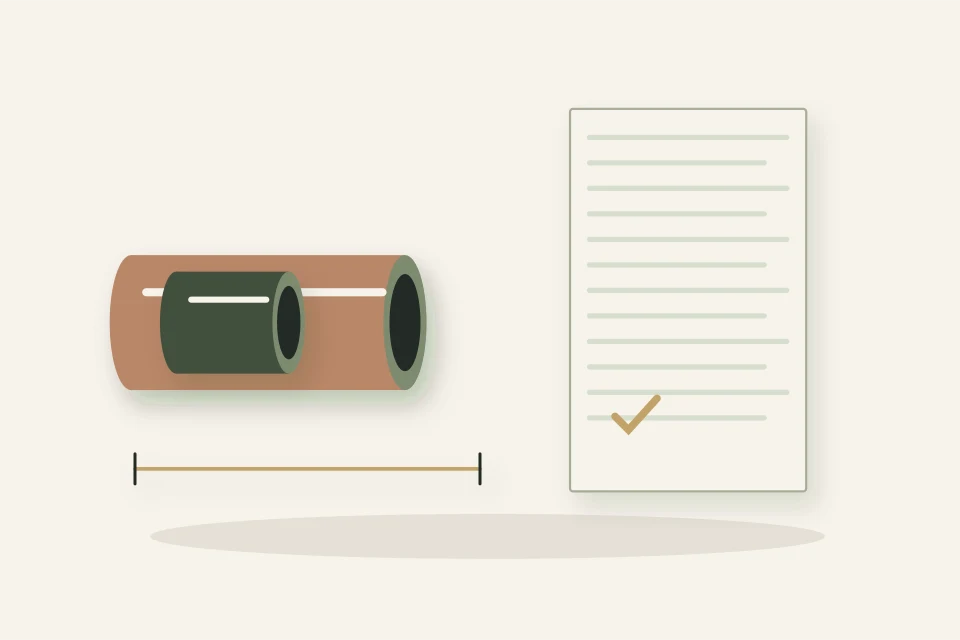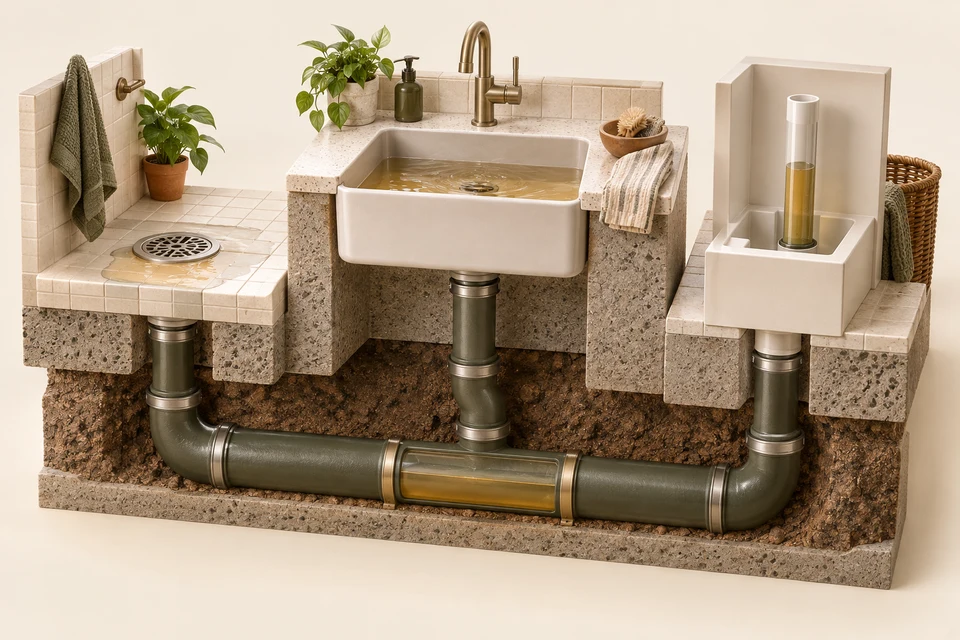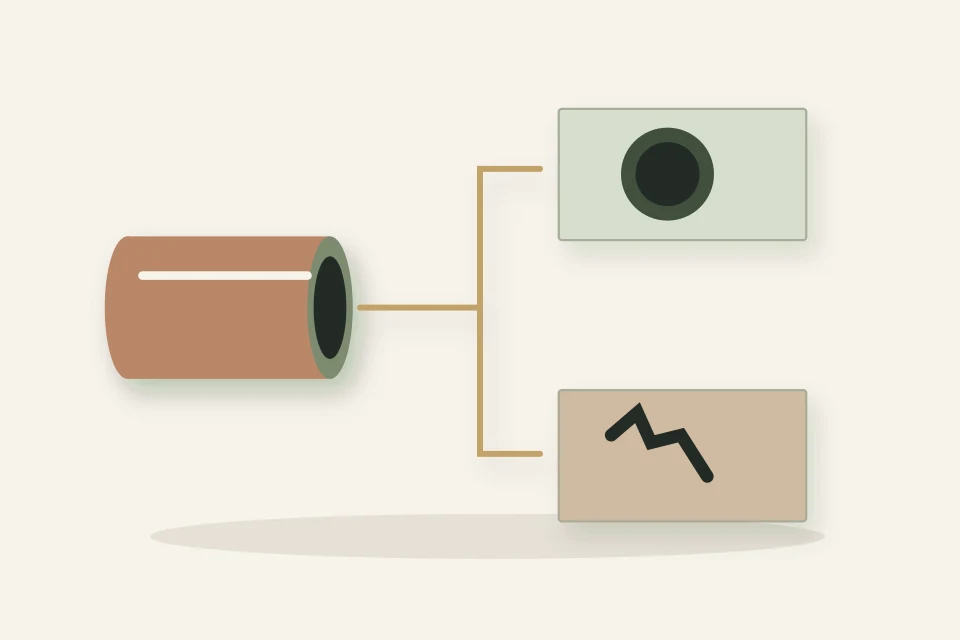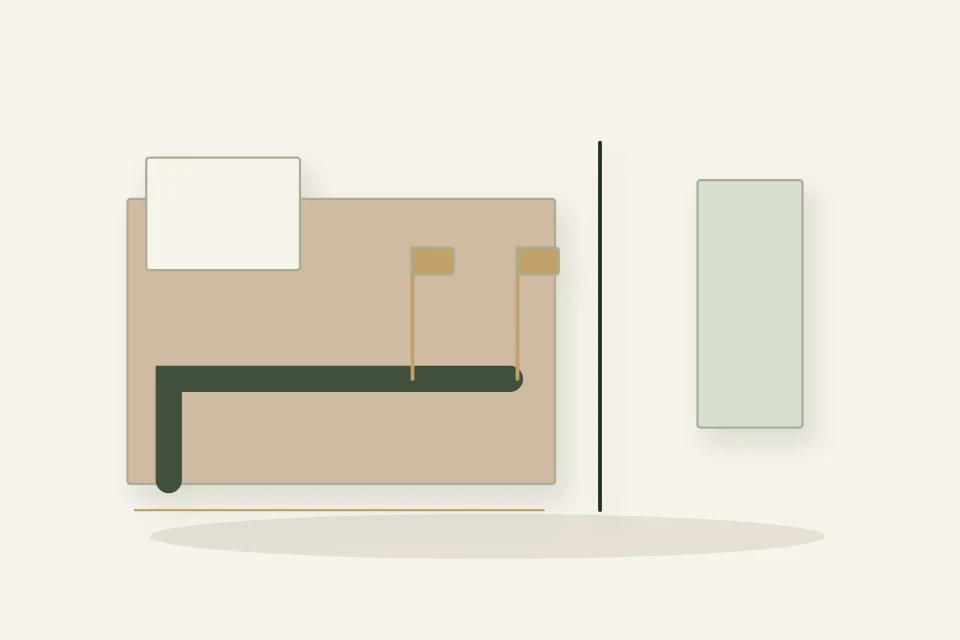
In Calgary the City owns the sanitary service from the main to the property line and the homeowner owns it from the property line to the house. The City has already relined thousands of its portions with CIPP, so many private laterals are now the oldest part of the line. A private trenchless repair needs a camera inspection, the right permit from the City where required, and locates before any pit.
- Ownership splits at the property line: City side from the main, owner side to the house.
- City open data records 4,113 City-owned service lines as CIPP, concentrated in 1950s and inner-city communities.
- The City's lateral lining program works from the manholes; residents are notified and asked not to use water during the work.
- Homeowners may apply for plumbing permits in Calgary; inspections are booked through 311 or the City's online account.
- Utility Safety Partners asks for locate requests at least three full working days ahead and does not locate private sewer lines.
01 /Who owns which part of a Calgary sewer lateral?
The City's own description of its Public Sanitary Service Lines dataset puts it simply: a sanitary service pipe can be thought of as two sections. From the sanitary main to the property line, the pipe is owned and maintained by the City of Calgary. From the property line to the house, it is owned and maintained by the homeowner. That split decides who repairs what, and who pays.
Two practical consequences follow. First, if a camera shows the fault on the City side, the next call is to 311, not to a contractor for a private repair. Second, the City's records of material and date cover only its portion; the City notes that the material on private property can be different and could have been installed at a different time. Your side has to be confirmed on camera.
02 /Where has the City already relined its side?
The same open data records the material of each City-owned portion, and a growing number are coded CIPP: lined in place. A HAUSE summary of the dataset, fetched in September 2026, counts 4,113 such lines out of 367,397, about 1.1% citywide, with nearly all of them dated in the 2010s and 2020s. They are not spread evenly.
| Community | City-side lines | Coded CIPP | % relined | % clay tile (TIL) | Median year |
|---|---|---|---|---|---|
| Highwood | 865 | 191 | 22.1 | 2.2 | 1956 |
| Glendale | 972 | 193 | 19.9 | 12.7 | 1958 |
| University Heights | 483 | 96 | 19.9 | 73.3 | 1965 |
| Rosemont | 482 | 80 | 16.6 | 39.8 | 1958 |
| Crescent Heights | 1,395 | 223 | 16.0 | 0.0 | 1965 |
| Glamorgan | 1,237 | 155 | 12.5 | 50.7 | 1959 |
| Mount Pleasant | 2,273 | 255 | 11.2 | 0.0 | 2004 |
| Collingwood | 810 | 89 | 11.0 | 73.2 | 1959 |
| Rosedale | 592 | 55 | 9.3 | 0.0 | 1950 |
| Charleswood | 1,344 | 100 | 7.4 | 82.2 | 1961 |
Grouped by the City's community structure classification, about 3.8% of City-side lines in communities classed as 1950s and 3.9% in inner-city communities are coded CIPP, against 1.7% in 1960s and 1970s communities and almost none in communities built since. Where the City side under your boulevard has been lined, the private pipe from the property line to the foundation may be decades older than the pipe it now connects to.
03 /How does the City's lateral lining program work?
The City's sanitary lateral lining program page describes lining existing sanitary service pipes by a trenchless process, with tools sent into the pipes from the manholes. Residents are notified in person 30 minutes before work begins. Beforehand they are asked to pour about four litres of water into every floor drain, laundry tub, bathtub and shower drain, and during the work not to run water, showers, toilets, washing machines or dishwashers. The page describes the sewer connection being closed for about three hours during liner installation.
Two things are worth taking from that. The program shows the City treats lining as a normal way to renew service pipes, which is useful context if a contractor proposes lining your side. And it does not replace your side: the private portion remains the owner's to inspect and maintain. How connections are reopened after lining, on either side, is explained in lateral reinstatement and connection seals.
04 /What permits and inspections apply in Calgary?
The City of Calgary issues plumbing permits for installing, altering or adding to a plumbing system. Its plumbing and gas permits page says homeowners may apply for all permit types except a gas permit, and that inspections are booked by contacting 311 or through an online VISTA account, with requests for next-day inspections made by 2 p.m. Whether a particular private sewer repair needs a permit depends on the scope; ask your contractor to confirm with the City and show it on the quote.
- Utility connections: the City's water and sewer connections page says builders or homeowners provide service connections from the property line to the building at their own expense, and it keeps a list of approved indemnified contractors for utility servicing work.
- Surrounding municipalities: in Alberta, permits are available through municipalities accredited under the Safety Codes Act, and through agencies in non-accredited areas. Airdrie, Cochrane, Chestermere, Okotoks and other towns have their own arrangements; confirm locally.
- The City side: do not arrange private work on the City portion; call 311.
05 /What must happen before digging a pit?
Many trenchless repairs need no digging at all, working from a basement cleanout. But bursting pits, a new exterior cleanout or a hybrid repair all break ground. Utility Safety Partners, Alberta's locate service, asks for requests at least three full working days before you start, online anytime or by phone at 1-800-242-3447 on weekdays. Within one metre either side of the marks, lines must be exposed with hand tools.
Its homeowner guidance is explicit that customer-owned lines, such as water and sewer service lines, sprinkler systems and lines connecting buildings on a property, are not registered with it. Your own lateral is traced with a camera sonde or a private locator. The job sequence around that is in how trenchless sewer repair works.
06 /What should I do when my Calgary sewer backs up?
Stop using water, keep people and pets away, and wear gloves, boots and a mask if you must go near it. The City's sewage backup guidance says to call 311: the agent asks questions to decide whether you need a plumber for an internal plumbing issue or whether the problem might be City infrastructure. The same page recommends installing a backwater valve on below-grade fixtures.
Once the line is clear, a camera run while the pipe is clean turns the backup into a diagnosis, and the diagnosis into a repair choice. The symptom-by-symptom version is in sewer symptoms: what to do first, and the method shortlist in the trenchless fit checker.
07 /Calgary conditions that affect the repair
- Materials by era: City data shows clay tile dominating City-side installs in the 1960s and 1970s (about 77.5% of lines in communities classed 1960s/1970s) and cast iron more common in 1950s and inner-city areas. See trenchless repair by pipe material.
- Depth and frost: laterals in a cold climate are generally buried deeper, which makes trenches costlier and favours working from inside or from pits.
- Winter: frozen ground slows and adds cost to any pit or dig; liners installed from a cleanout are less affected. Non-urgent digs are often booked for spring or fall.
- Mature trees: many established communities have large trees over the service route, a reason both for root intrusion and for avoiding a trench.
- Basement suites and additions: extra branches under the slab or a line under an addition change access and reinstatement plans; see trenchless repair under a basement slab.
08 /What does trenchless repair cost in Calgary?
Calgary quotes generally fall within the national 2026 planning ranges on the trenchless sewer repair cost page: about $2,500 to $6,500 for a first sectional liner, $9,000 to $28,000 for a full liner on a 15 to 25 m lateral, and $10,000 to $30,000 for bursting, with digs from about $3,500 under lawn to $16,000 when deep or under concrete. Winter pit work and hard-surface restoration push toward the top of the ranges.
Ready for next steps? Book a recorded camera inspection, run the Spot Repair or Full Liner? planner with what it shows, and send the footage and details to the HAUSE Sewer desk. HAUSE is an independent information and quote-request network, not a contractor.
FAQQuestions people ask
Which part of a Calgary sewer lateral does the homeowner own?
The City owns and maintains the sanitary service from the main to the property line; the homeowner owns and maintains it from the property line to the house.
Has the City relined my sewer line?
Possibly its portion. City open data records the material of each City-owned portion, including thousands coded CIPP. It says nothing about the private side, which is yours.
Do I need a permit for trenchless sewer repair in Calgary?
It depends on the scope. The City issues plumbing permits and homeowners may apply for them; ask your contractor to confirm with the City whether your job needs one.
Does Utility Safety Partners locate my sewer line?
No. Customer-owned lines such as sewer and water services are not registered with it. It locates the registered utilities around your line; your lateral needs a private locate.
Who do I call about a sewer backup in Calgary?
Call 311. The agent works out whether you need a plumber for an internal issue or whether City infrastructure may be involved.