Repair the pipe.
Know the limits.
Plain-language guidance on fixing a damaged sewer lateral from the inside: spot liners, full CIPP lining, pipe bursting, reopening connections, and the cases where digging is still the right call.
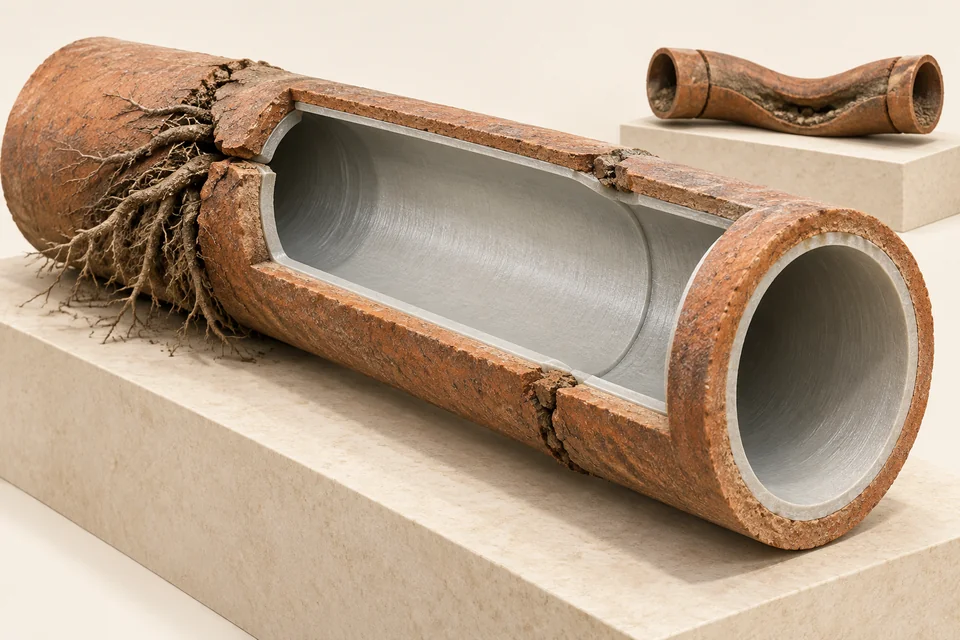
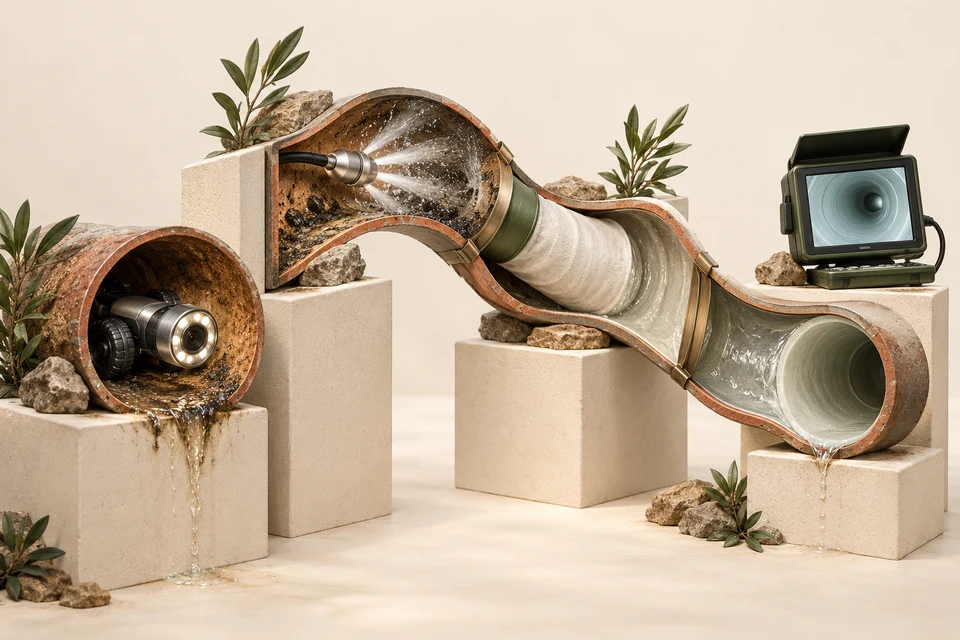
Lining relies on an existing route that can be prepared and passed. Material, shape, grade and connections belong in the assessment.
Read the full guide ↗A cured liner can seal eligible cracks and leaking joints. The cleaning, installation and finished camera record matter.
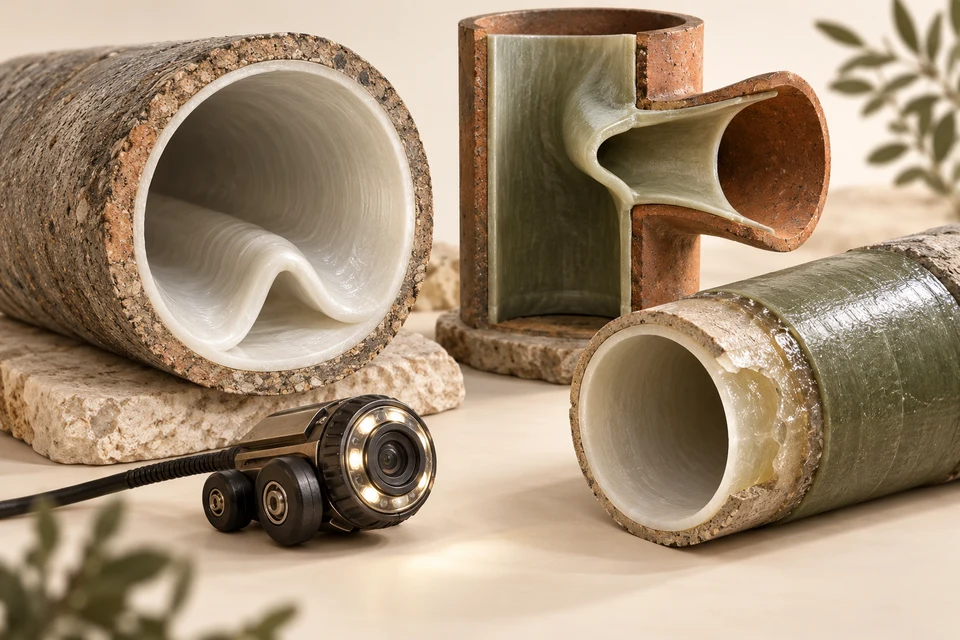
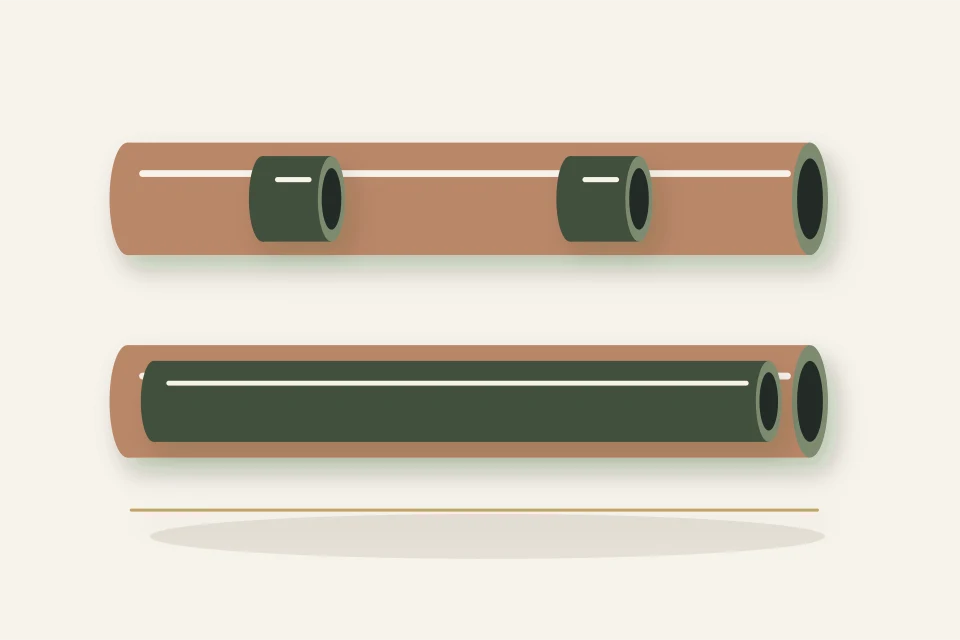
Read the full guide ↗The open end shows the host pipe and its inner liner. End transitions and any reopened branches need a defined sealing scope and a finished inspection record.
Read the full guide ↗A liner follows the existing alignment. A water-holding belly or an impassable collapse can still require excavation.
Read the full guide ↗Conceptual study · not to scale · eligibility and ownership require site confirmation.
Trenchless sewer repair fixes a damaged sewer line from the inside or through small pits instead of an open trench. A short liner seals one defect, a full cured-in-place liner renews the whole pipe, and bursting pulls in new pipe along the old path. Lining suits round, passable pipe with roots, cracks or leaks; a collapse, a belly or a blocking offset usually still needs a dig at that spot.
See why the condition changes the plan
Use the section to see what changes. This is a teaching model; your recorded inspection determines the actual scope.
Open the full assessment tool ↗The round pipe can support a continuous inner lining when the method, preparation and connections are suitable. A site assessment must confirm the fit.
Choose a repair plan for one damaged lateral and watch what it fixes
An 18 m lateral runs from a basement cleanout to the city main. Switch the camera findings on and off, choose a repair plan and the surface above, then play the job from camera run to final video and see which faults are fixed, which remain and what the plan costs to plan for.
What the model shows, in words
Six faults, one line
The model starts with a lateral that has roots at two joints, a crack, a passable offset, a belly and a crushed section. Each can be switched off, so you can build the line your own footage shows. Distances follow the pipe from the cleanout, the way a camera counter reads them, and the picture is drawn to explain rather than to scale.
Sectional liners only reach what is linable
Pick the sectional plan and a short sleeve is seated at each root, crack or offset. The belly and the collapse are left untouched because a short liner can neither correct grade nor pass a blockage, so the model sends them to a dig. Every other joint stays exactly as it was, which is the trade the Spot Repair or Full Liner? planner prices.
A full liner seals every joint but keeps the dip
With the full plan, one liner inverts from the cleanout toward the main and cures in place. Roots, cracks and joints are sealed along the whole length, yet the belly still holds water in the finished pipe. A collapse stops the liner outright, so the model refuses that plan until the collapse is dug or switched off.
Bursting, digging and the hybrid
Bursting replaces the pipe along its old path from a pit at each end and usually leaves the belly in place. Open cut rebuilds pipe and grade but opens the whole route, and under a driveway rebuilding the surface becomes a large part of the price. The hybrid plan digs only where a belly or collapse sits and lines the rest, the pattern explained in when excavation is necessary.
Where the numbers come from
Costs in the panel are the same 2026 planning ranges as the cost page: short liners per section, a full liner per metre plus setup and cleaning, bursting and open cut for a lateral of this length, and digs priced by surface. They are estimates for planning, not quotes, and the model labels its drawing as illustrative.
The repair below.
The place you live.
Trenchless work may reduce surface disruption when the line is suitable. Access, connections and any required local excavation still belong in the plan.
Understand the access choices ↗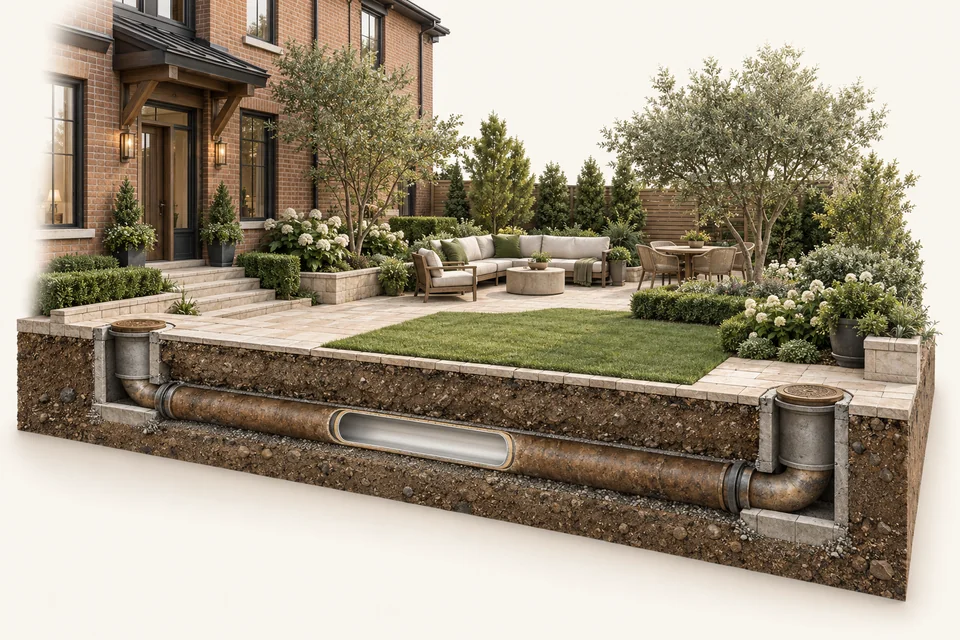
What is going on with your sewer line?
Pick the closest match. Each path goes to the guide that answers it in full.
Trenchless Fit Checker
Six questions, one shortlist: which repair conversations to have first — a sectional liner, a full-length CIPP liner, pipe bursting, a dig, or a camera inspection before anything else — plus the questions to ask a contractor. It does not decide eligibility; it applies the published rules below to your answers so you walk into a quote meeting knowing what to ask.
How the Trenchless Fit Checker works →
Also freeSpot Repair or Full Liner?
Enter each defect from your sewer camera report to compare sectional spot liners with one full-length CIPP liner: planning costs, coverage, digs and a break-even.
Trenchless Fit Checker
Read these first
How trenchless repair works
The job from camera run to final video: cleaning, installing, reopening connections and proving the result.
CornerstoneSpot repair or the whole line?
Sectional liners, excavated spot repairs and when one fault is really a symptom of a failing pipe.
CornerstoneReopening and sealing connections
Why the branch connections are where lined laterals most often leak, and what a good reinstatement looks like.
CornerstoneProblems with trenchless repair
Wrinkles, blocked branches, soft spots and leaking ends: how each happens and how the final video catches it.
What it looks like down there
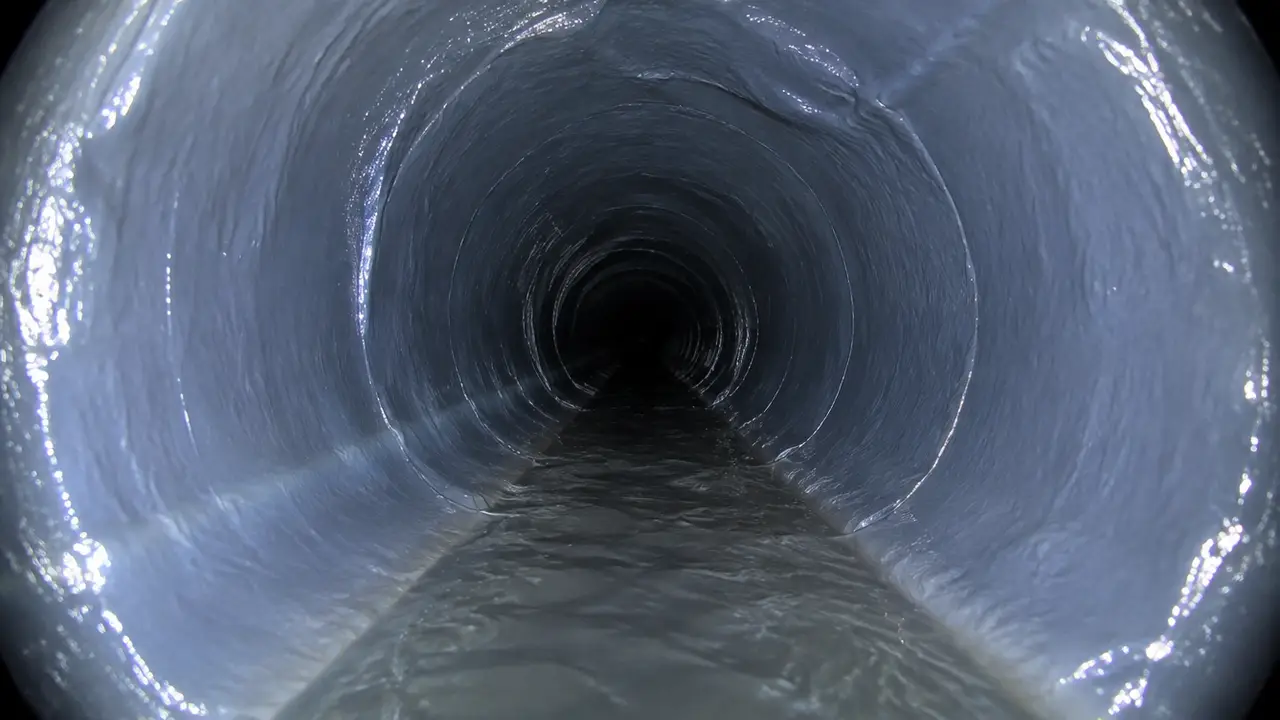
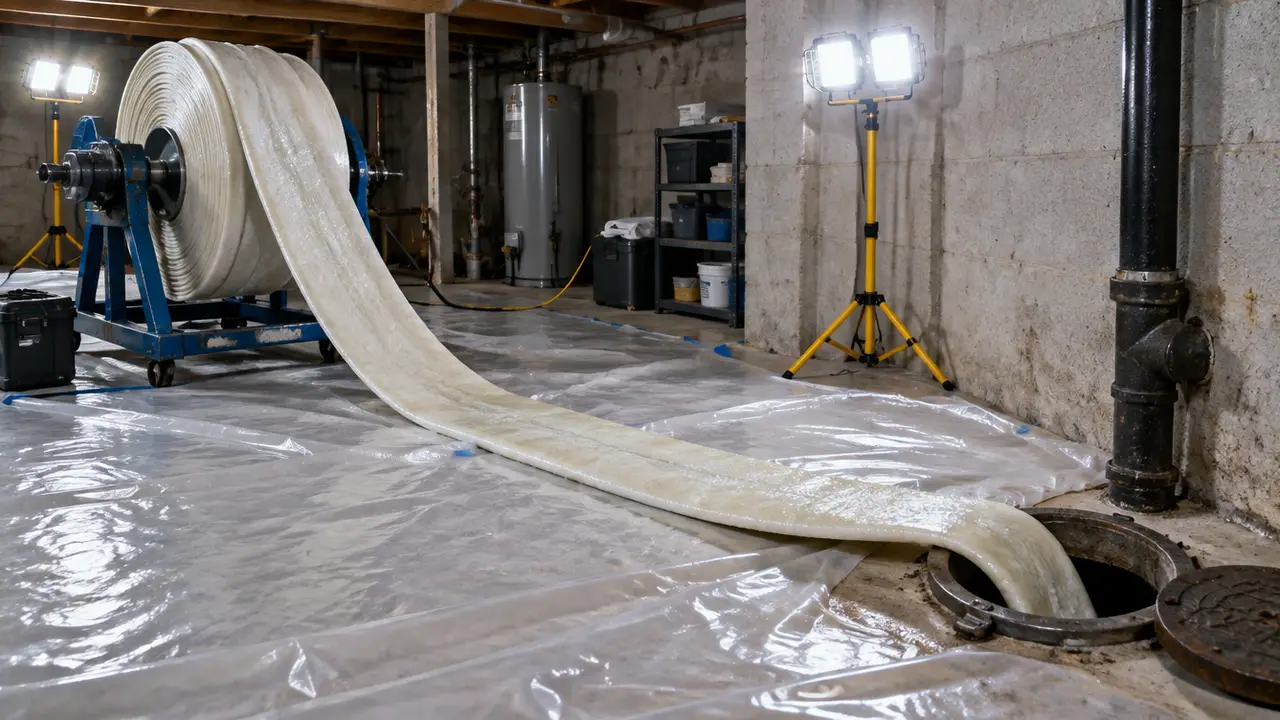
Illustrations of what this work involves and what a camera or a trained eye picks up. Every guide on TrenchlessSewerRepair.ca carries more like these.
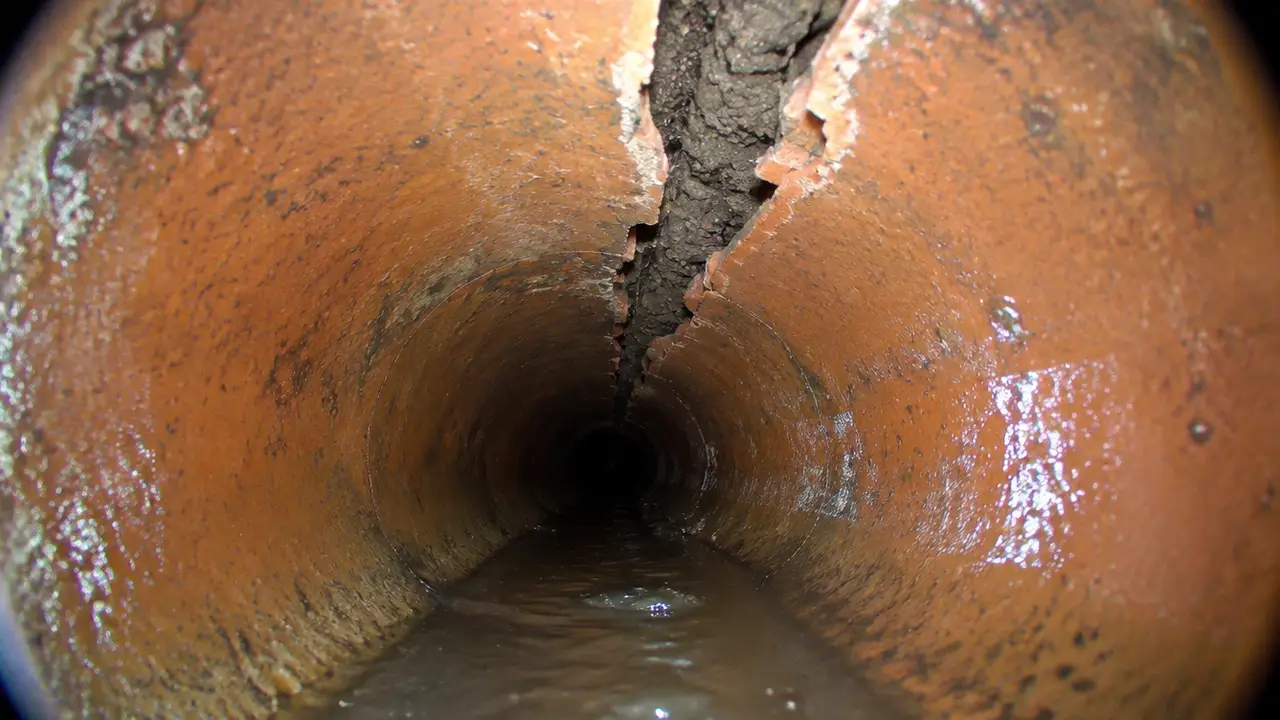
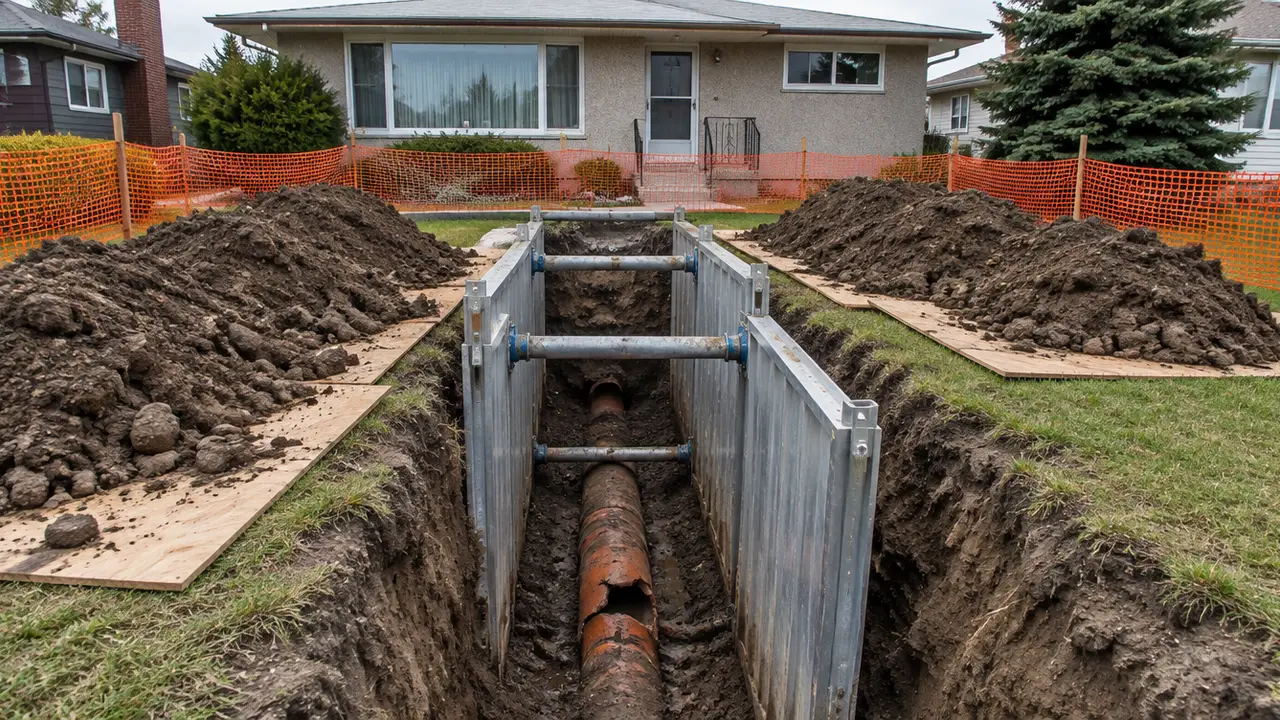
01 /Which trenchless repair fits which sewer defect?
The camera decides, and the defect points to the method. Roots at joints, cracks and small leaks in pipe that is still round are what liners are made for: a sectional liner when there are one or two isolated faults, a full-length cured-in-place pipe (CIPP) liner when the faults are spread along the line. Pipe that is badly broken or too small, on a mostly straight run with room for a pit at each end, is the case for bursting. A collapse, a belly that holds water or an offset the camera cannot pass usually needs the pipe exposed at that spot.
| Camera finding | Usually discussed first | Why |
|---|---|---|
| Roots through one or two joints | Sectional liner after root cutting | Seals the entry point; cutting alone lets roots return |
| Roots or leaks at many joints | Full CIPP liner | One jointless pipe from end to end |
| Cracks and fractures, pipe still round | Liner, sectional or full | The liner carries the load the cracked pipe no longer can |
| Groundwater getting in at sound joints | Joint grouting or a liner | Grout seals joints in sound pipe; a liner seals everything |
| Minor offsets the camera passes | Full liner, with care | Ask how wrinkles at the offset will be controlled |
| Old clay, cast iron or fibre at end of life | Full liner or bursting | Fibre that has deformed may not line at all |
| Belly, collapse or blocking offset | A dig at that spot, then line the rest | No trenchless method corrects grade or passes a blockage |
Run your own findings through the trenchless fit checker, which applies these rules to six questions and gives you the questions to ask. The deeper reasoning is in when CIPP sewer lining fits, when pipe bursting fits and when excavation is necessary. If symptoms brought you here and nobody has run a camera yet, start with sewer symptoms: what to do first.
02 /What does a trenchless repair job look like, step by step?
A well-run repair follows the same eight steps whoever does it, and each step is a question you can ask before you sign. Responsibilities vary by contractor and municipality, so treat this as a checklist rather than a promise.
- Camera scope
A recorded run from a cleanout or accessible point, with the route located and every defect logged by distance.
- Diagnosis
Material, defect types, severity, grade problems and access limits written down from the footage.
- Method recommendation
Sectional liner, full liner, bursting, a dig or a hybrid, and why the others were ruled out.
- Written quote
Method, materials, access, cleanouts, restoration, connections to reopen and exclusions.
- Permits and locates
Who obtains any required permit and books utility locates before ground is broken.
- Repair
Cleaning and preparation first, then the installation as scoped.
- Final video
A post-repair camera pass showing the whole repair and every reopened connection.
- Documentation
Footage, scope notes, permit records and the warranty in writing, kept with the house file.
Two steps are skipped more often than they should be: proper cleaning before a liner goes in, and the final video. Both matter because a liner cannot be inspected any other way once it has cured. The full sequence, with what can go wrong at each stage, is in how trenchless sewer repair works, and the failure patterns are in problems with trenchless sewer repair.
03 /Trenchless or excavation: an honest comparison
Neither is always right. Trenchless repair usually disturbs less of the yard, driveway or basement floor, but it needs a usable access point and a pipe path, and it keeps the existing grade. Excavation works even where access is poor and is the only way to fix grade, but restoring what the trench went through is often a major line on its own.
Many real jobs are both: one small dig where the grade has failed and a liner either side, priced section by section. If a camera run shows a handful of faults, the Spot Repair or Full Liner? planner prices sectional liners against one full liner and routes anything unlinable to a dig. Repairs under a basement floor are their own case, covered in trenchless repair under a basement slab.
04 /What drives the cost of a trenchless sewer repair?
As 2026 planning estimates in Canadian dollars, a camera inspection with a locate typically quotes about $250 to $600, a sectional liner $2,500 to $6,500 for the first section and $1,500 to $3,500 for each extra one on the same visit, a full-length CIPP liner on a 15 to 25 m lateral $9,000 to $28,000, and pipe bursting $10,000 to $30,000. An excavated spot repair runs from about $3,500 under lawn to $16,000 when deep or under concrete.
- Length of run: liner or pipe material and install time scale with the metres between access points.
- Pipe diameter: a 100 mm house lateral behaves very differently from a 150 mm or larger shared or commercial line.
- Access and cleanouts: a usable cleanout saves money; adding one is often part of the scope.
- Pipe condition: root mass, scale, offsets and partial collapse decide how much preparation comes first.
- Connections: each branch that must be reopened and sealed inside a liner is a separate line item.
- The municipal tie-in: work at the property line or the main can add permits, inspection and coordination.
- Restoration: landscaping, concrete, decking or interior finishes over any pit or dig.
- Urgency and records: an active backup is quoted separately, and fuller reporting for insurance or a sale can add time.
Every line item and a worked example are on the trenchless sewer repair cost page.
05 /Calgary, Alberta and cold-weather scheduling
The guides on this site are written for Calgary and the surrounding region, including Airdrie, Cochrane, Chestermere, Okotoks, High River, Strathmore, Canmore and the Red Deer corridor, and they apply across Canada with local checks. In Calgary the City owns the sanitary service from the main to the property line and the homeowner owns the rest, according to the City's own open-data description; call 311 when the City side may be involved. Customer-owned sewer lines are not registered with Utility Safety Partners, so your lateral needs a private locate even after the free public locate marks the utilities around it.
Cold weather does not cancel sewer failures; it changes scheduling. Frost and frozen ground make excavation slower and dearer, which is one reason trenchless repair is often considered in winter where the pipe qualifies. Non-urgent repairs can be booked into the shoulder seasons for easier site conditions and cheaper restoration. Local detail, including where the City has already relined its side of the lateral, is in the Calgary guide.
TrenchlessSewerRepair.ca is part of the HAUSE Sewer network, an independent information and quote-request service. HAUSE is not a contractor and does no work itself. For the full method atlas, see sister site TrenchlessSewer.ca; for liner engineering, SewerRelining.ca; for bursting in depth, PipeBursting.ca. When you have footage or a quote, send the details to the desk.
Every guide on TrenchlessSewerRepair.ca
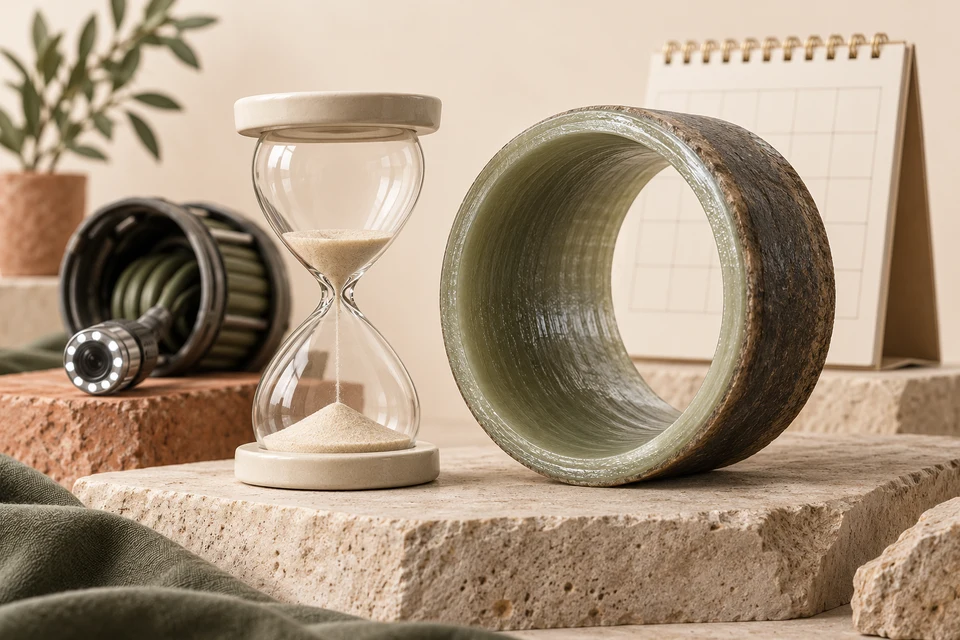
How long does trenchless sewer repair last, and how long does it take?
How long trenchless sewer repair lasts and how long the job takes: what decides service life, what shortens it, and the timeline from scope to video.
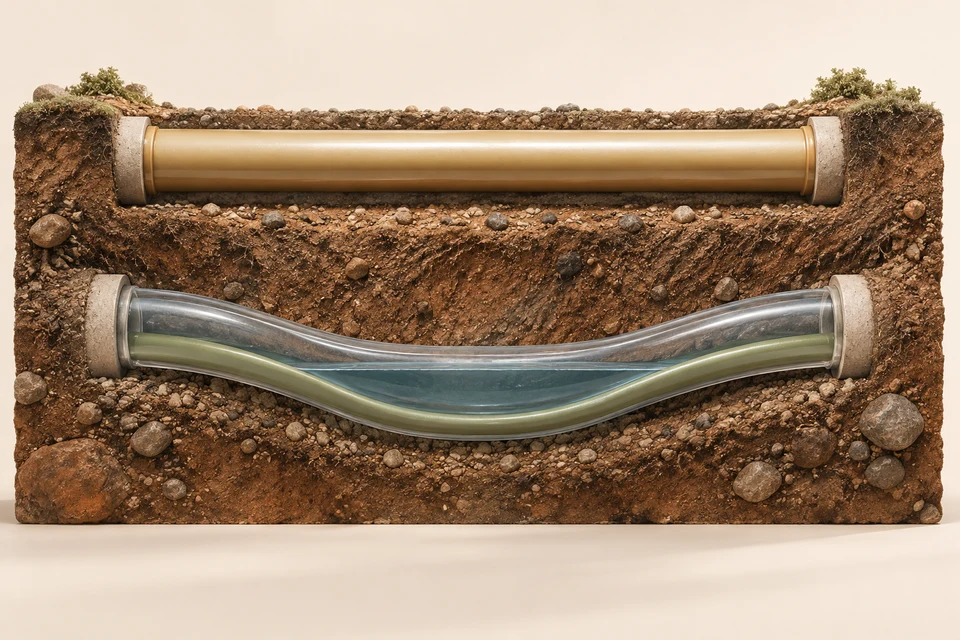
Can trenchless sewer repair fix a belly?
Can trenchless sewer repair fix a belly or sag? Why liners and bursting follow the old grade, when a sag can be lived with, and how a one-pit hybrid repair fixes it.
Problems with trenchless sewer repair, and how to avoid them
Problems with trenchless sewer repair: liner wrinkles, missed connections, soft spots, leaking ends, stalled heads — why they happen and how to catch them.
When excavation is necessary
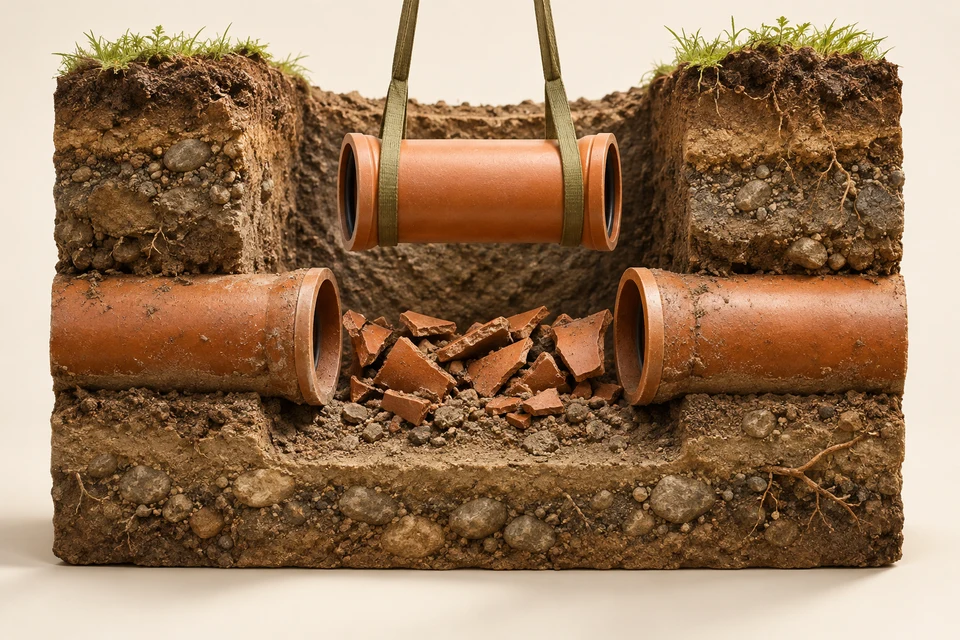
Collapsed pipe, bellies, severe offsets and short open runs: an honest guide to when open-cut sewer excavation beats lining or bursting, and how hybrid repairs work.
Sewer symptoms: what to do first
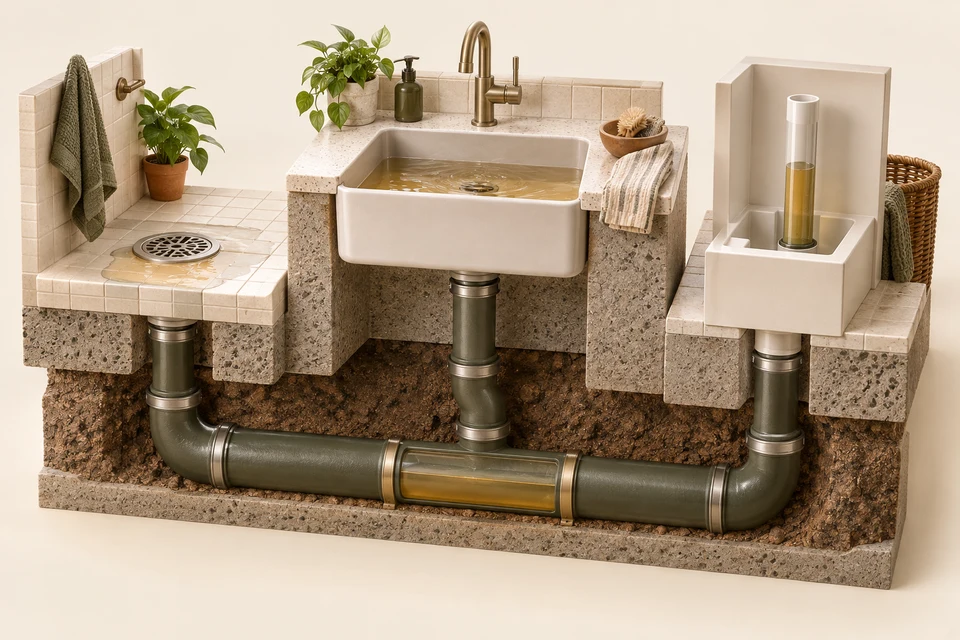
Sewer backup, slow drains, gurgling, odours or a soggy lawn? Match the symptom to a safe first step and the inspection that leads to the right repair method.

Trenchless repair by pipe material: clay, cast iron, concrete, fibre and plastic
Which trenchless repair suits each sewer pipe: clay tile, cast iron, concrete, Orangeburg fibre and ABS or PVC — how each fails and what fixes it.
When CIPP sewer lining fits
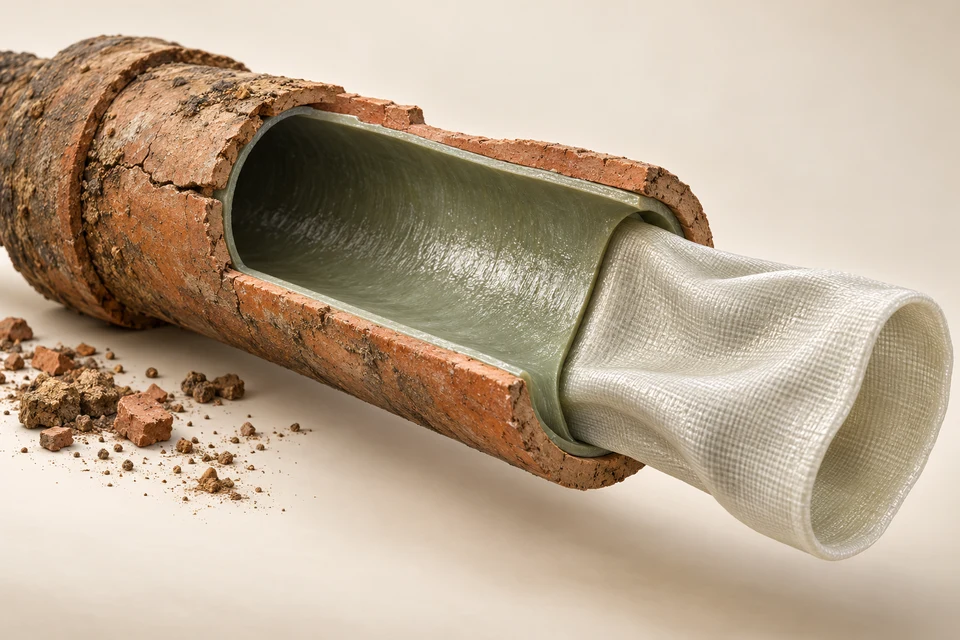
What cured-in-place pipe (CIPP) lining can fix in a sewer lateral, what it cannot, how the install sequence works, and what to ask before agreeing to a liner.
How trenchless sewer repair works, from camera run to final video
How trenchless sewer repair works on a house lateral: camera and locate, cleaning, access, lining or bursting, reopening connections, final video.
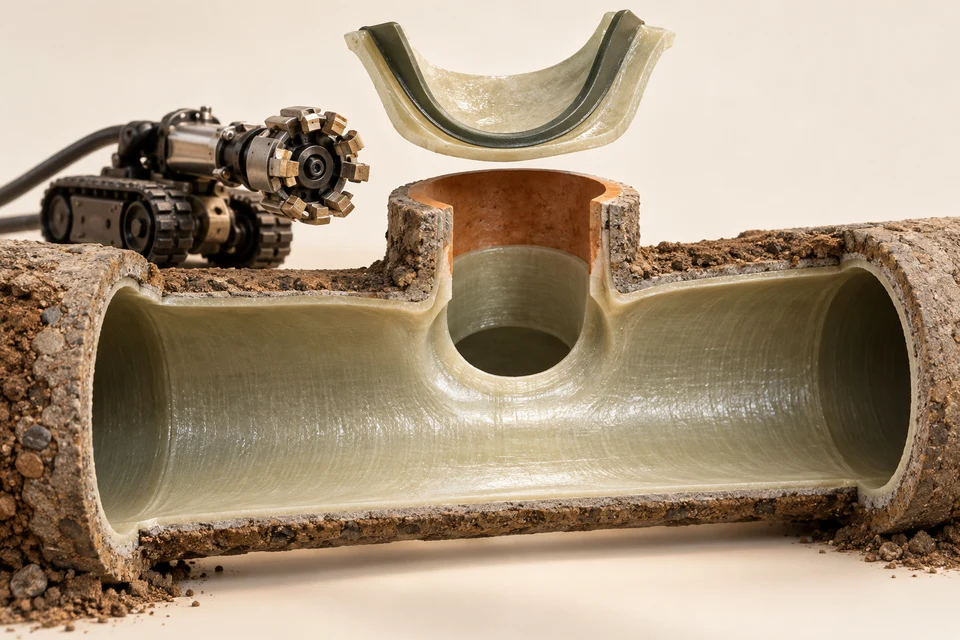
Lateral reinstatement and connection seals: where lined sewers leak
How connections are reopened after a sewer is lined, why the junction is where lined pipes leak or get roots again, and how connection seals close it.
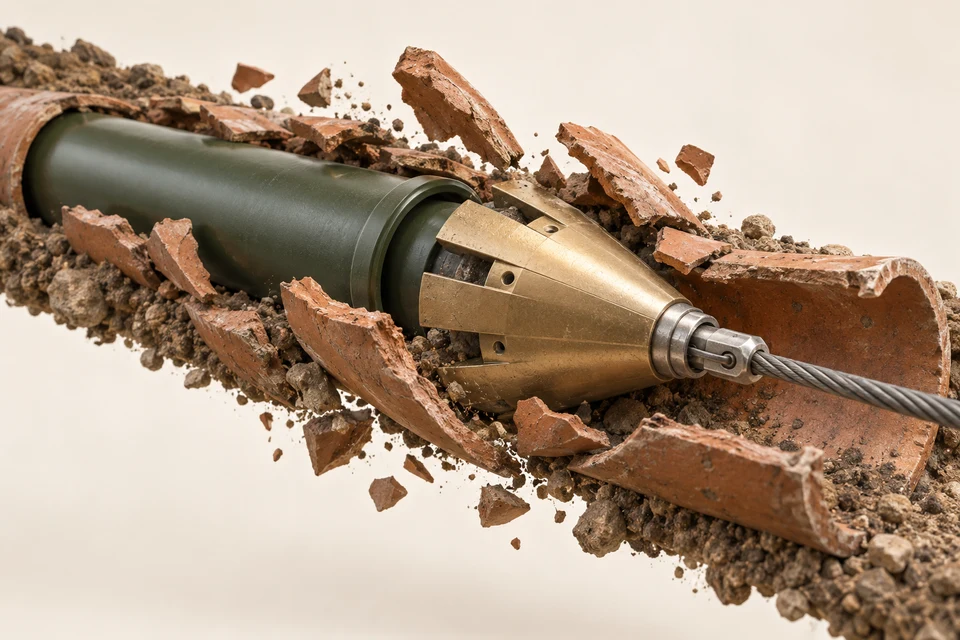
When pipe bursting fits
How pipe bursting replaces a sewer line along its existing path, why it needs pits at each end, straight runs and utility locates, and when it is a poor fit.
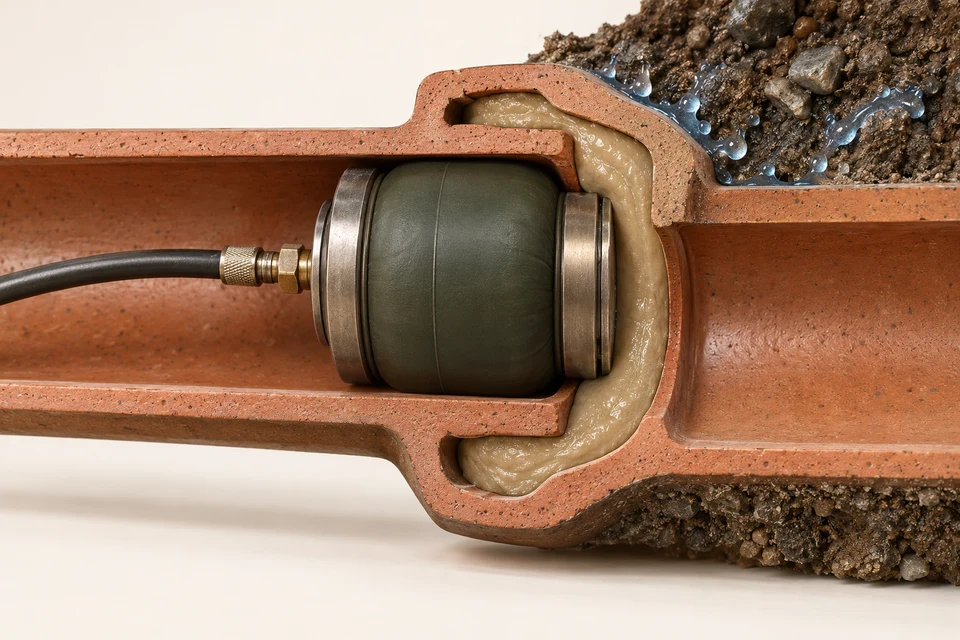
Sewer joint grouting: sealing leaking joints from inside the pipe
Sewer joint grouting explained: how test-and-seal packers find and seal leaking joints, what chemical grout fixes and what it cannot.
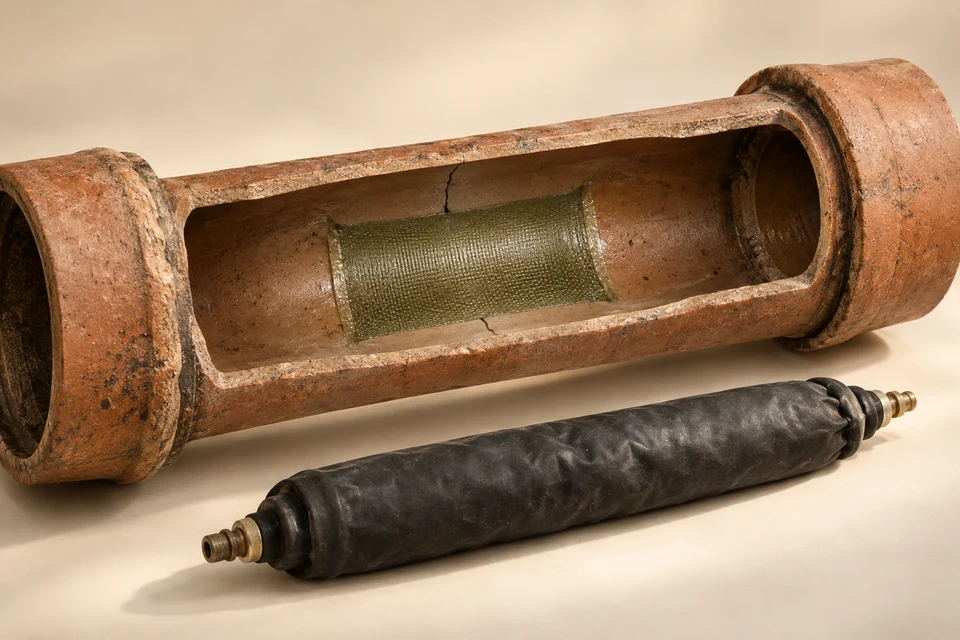
Sewer spot repair: fixing one defect without redoing the whole line
Sewer spot repair explained: sectional point liners vs excavated spot repairs, what each fixes and costs, and when one fault means the line is failing.
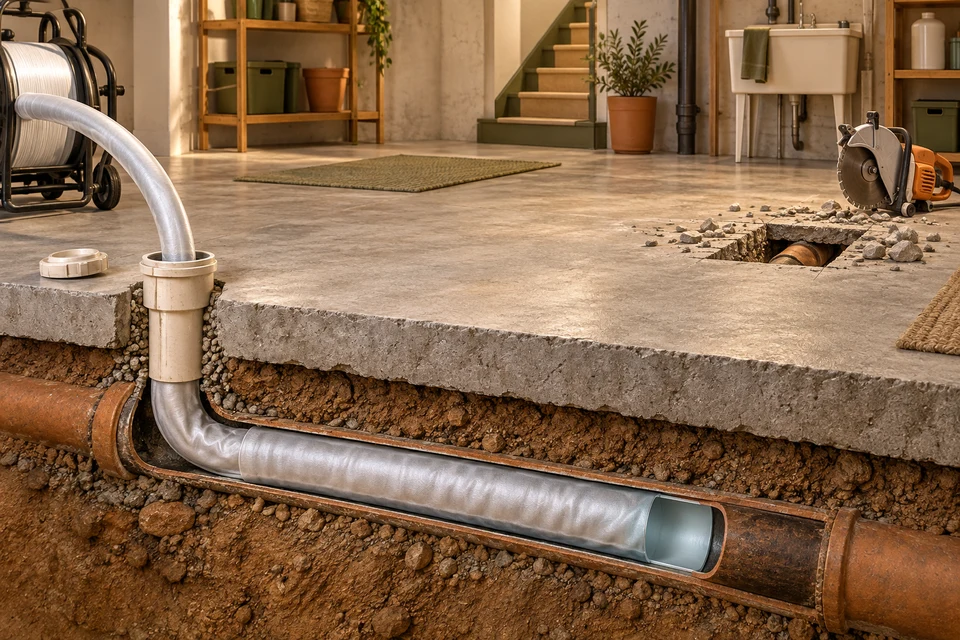
Trenchless repair under a basement slab: lining the drain vs cutting the floor
Trenchless pipe repair under a basement slab: when the building drain can be lined from a cleanout, and when the concrete has to come up.
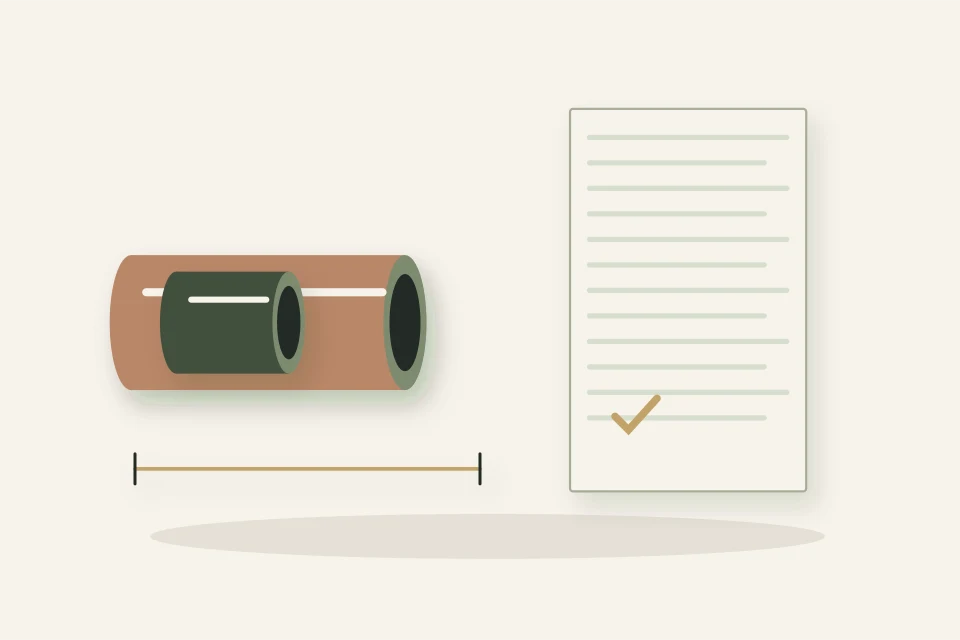
Trenchless sewer repair cost: what each fix typically quotes in 2026
Trenchless sewer repair cost in Canada, 2026: spot liners, full CIPP lining, bursting, reinstatements and digs, with line items and worked examples.
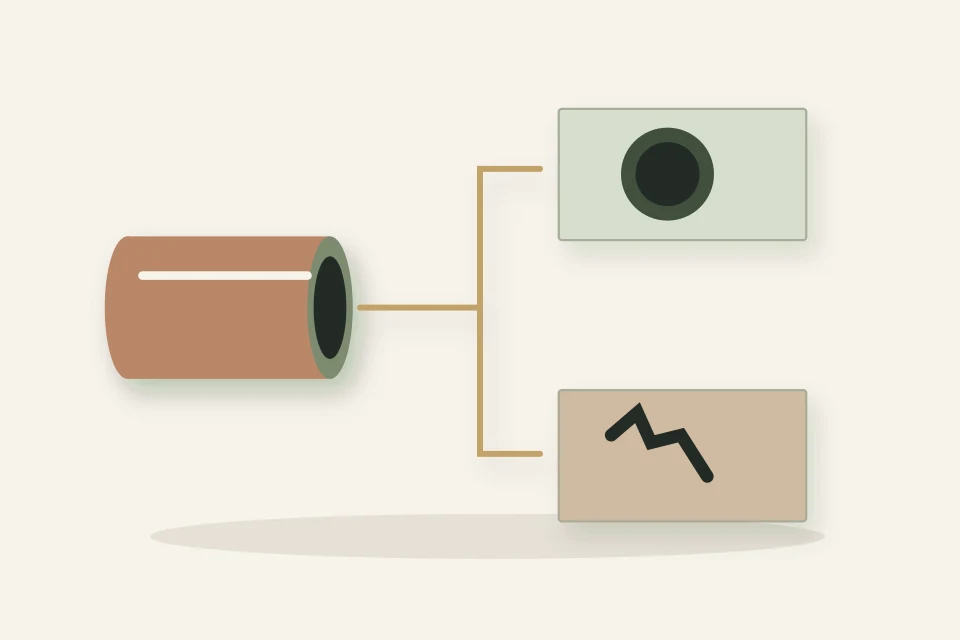
Trenchless fit checker
Answer six questions about camera findings, collapse, length, access, bends and surface to get a shortlist of sewer repair methods to discuss with a contractor.
Spot repair or full liner? Price both plans from your camera findings
Enter each defect from your sewer camera report to compare sectional spot liners with one full-length CIPP liner: planning costs, coverage, digs and a break-even.
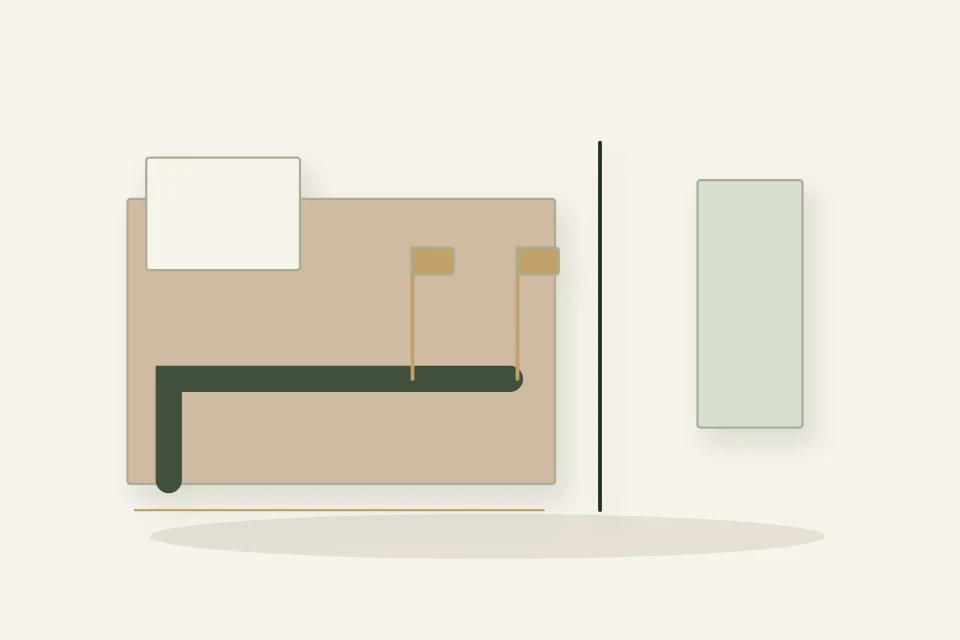
Trenchless sewer repair in Calgary: what to know before you fix the line
Trenchless sewer repair in Calgary: who owns which part of the lateral, where the City has relined its side, permits, locates, 311 and winter timing.
Frequently asked
How long does a CIPP sewer liner actually last?
Service-life claims vary by liner system and installation quality. Ask for the manufacturer's documentation and the installer's written warranty rather than relying on a headline number, and keep the final video so the liner can be checked later.
Does trenchless work if my pipe is collapsed?
Not through the collapsed section. A liner needs a round, open path, and a collapse can stall a bursting head. The usual plan is a dig at the collapse, then lining or bursting for the rest if it is sound.
Do I need permits, and who arranges them?
It depends on the municipality and the scope. In Alberta plumbing permits come from accredited municipalities or agencies, and Calgary issues its own. Ask the contractor who pulls the permit and books locates, and get the answer in the quote.
How disruptive is trenchless sewer repair?
Usually less than a trench: a liner can often go in through a cleanout, and bursting needs a pit at each end. Drains are out of use for part of a day, and any pit still needs restoring.
Can trenchless repairs be done in Calgary winters?
Often, where the pipe qualifies and access is available, because liners are installed from inside. Frozen ground slows and raises the cost of any pit or dig, so non-urgent work may be better booked for spring or fall.
Will I get documentation for insurance or a real-estate file?
Only if you ask. Request before-and-after video with distances, the written scope, permit records and the warranty in writing before work starts.
Is a trenchless repair cheaper than digging?
Often under driveways, trees and finished basements, where restoration dominates. A short, shallow run under open lawn can be cheaper to dig. Price both when the camera allows.
Describe the problem once. Get a straight answer.
Send the symptoms and anything you already know — age of the house, what a camera found, what you have been quoted. The HAUSE Sewer desk replies with next steps and, where available, a local contractor for the job.
Sewage backing up right now? Stop using water, keep people away from the water, and do not touch electrical equipment near it.