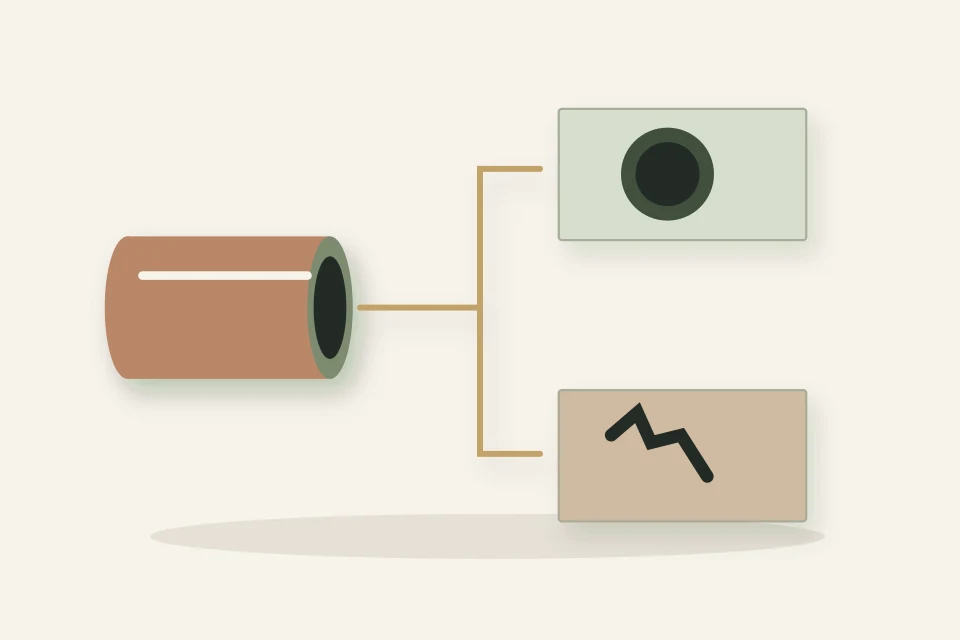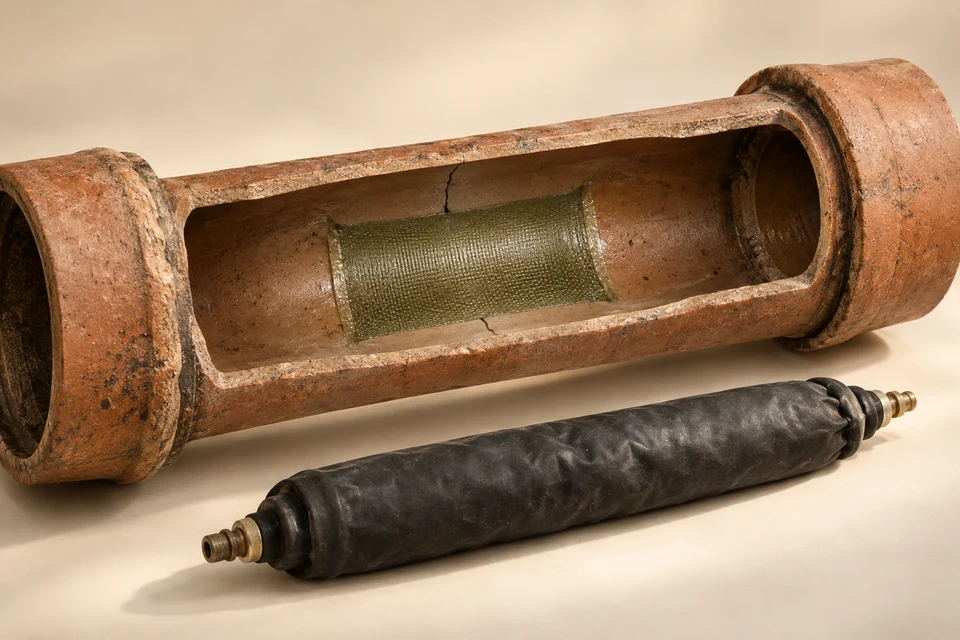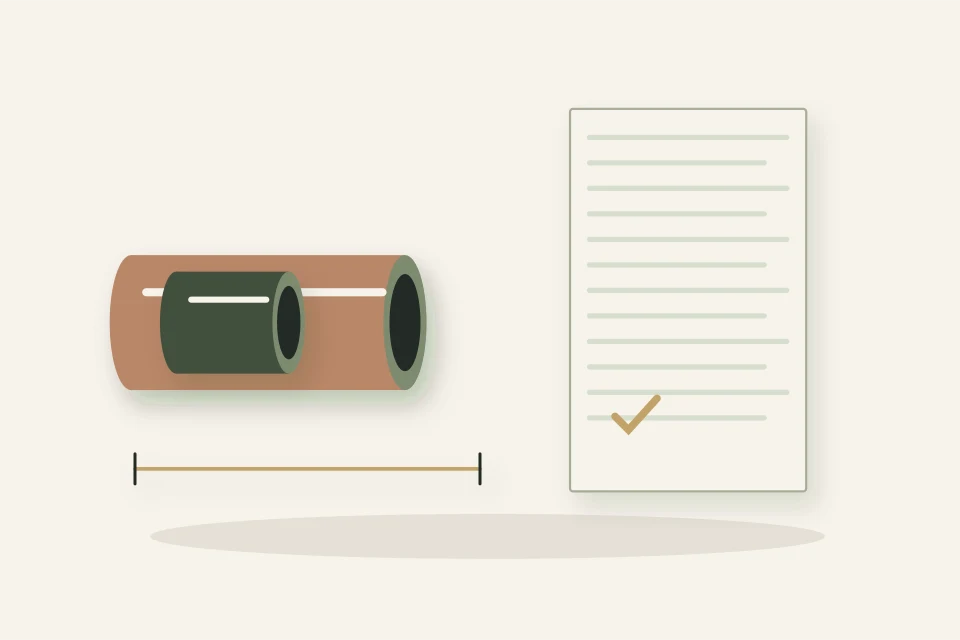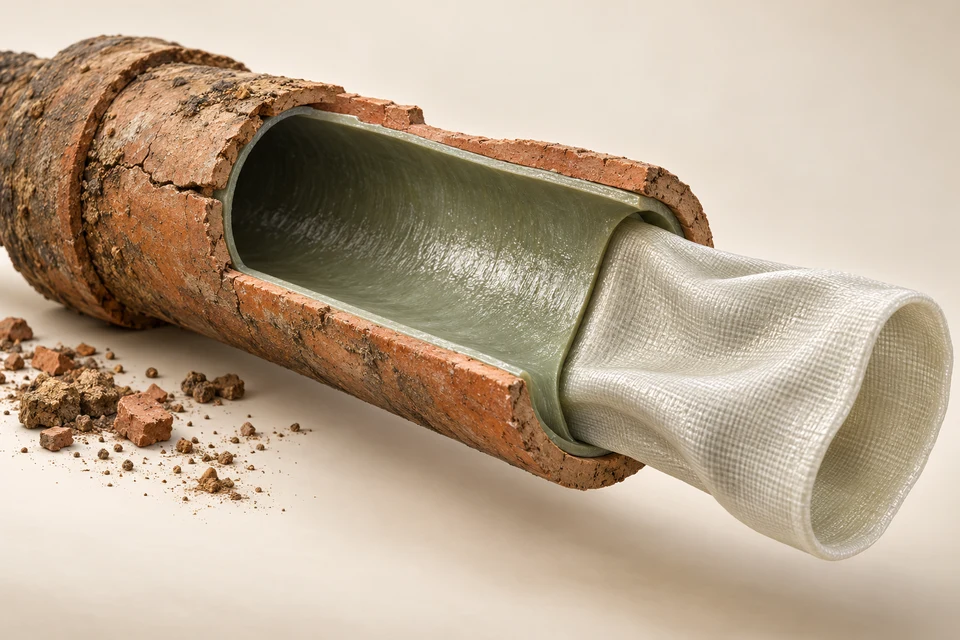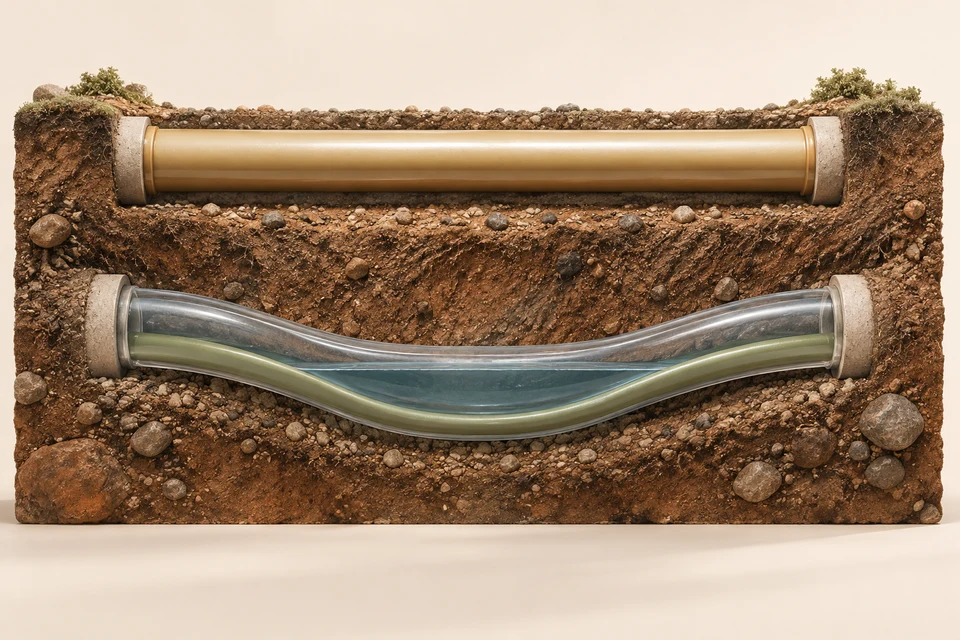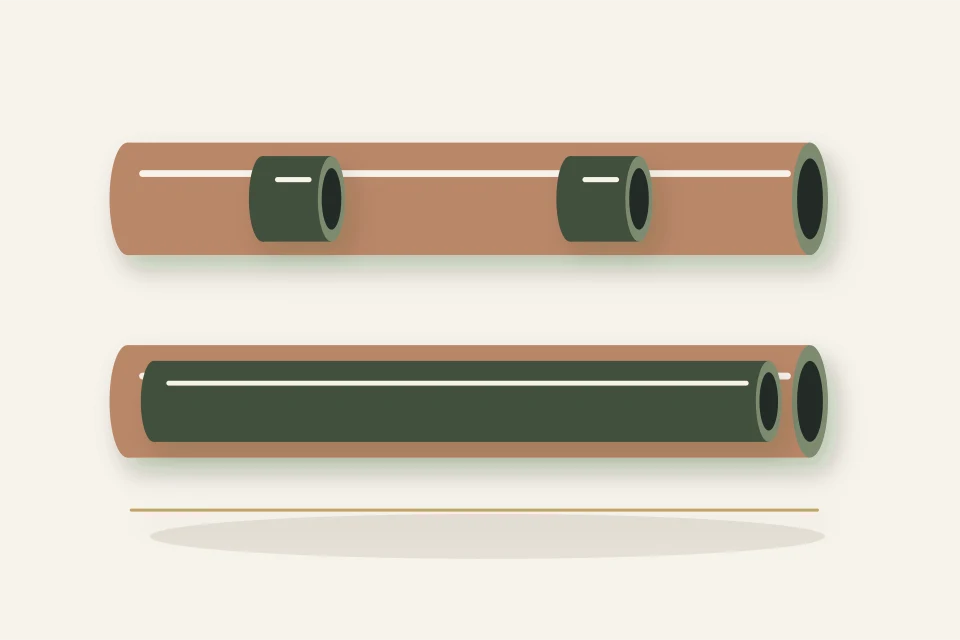
This planner takes the defects on your camera report, groups the ones a short liner can reach, and prices two plans from this site's 2026 planning ranges: sectional liners at each fault, or one full-length liner that seals every joint. Faults no liner can fix, such as a belly or collapse, are sent to a dig in both plans. It draws your line and shows where the two plans cross over.
- Each linable defect gets a sectional liner; defects within one liner length of each other share one.
- Bellies, collapses and offsets the camera cannot pass become digs, priced in both plans.
- Three or more sections, or sections costing at least 60% of a full liner, point to pricing the full liner.
- On old clay, concrete or cast iron, two or more sections make it a close call, because the joints between them stay open.
Spot Repair or Full Liner?
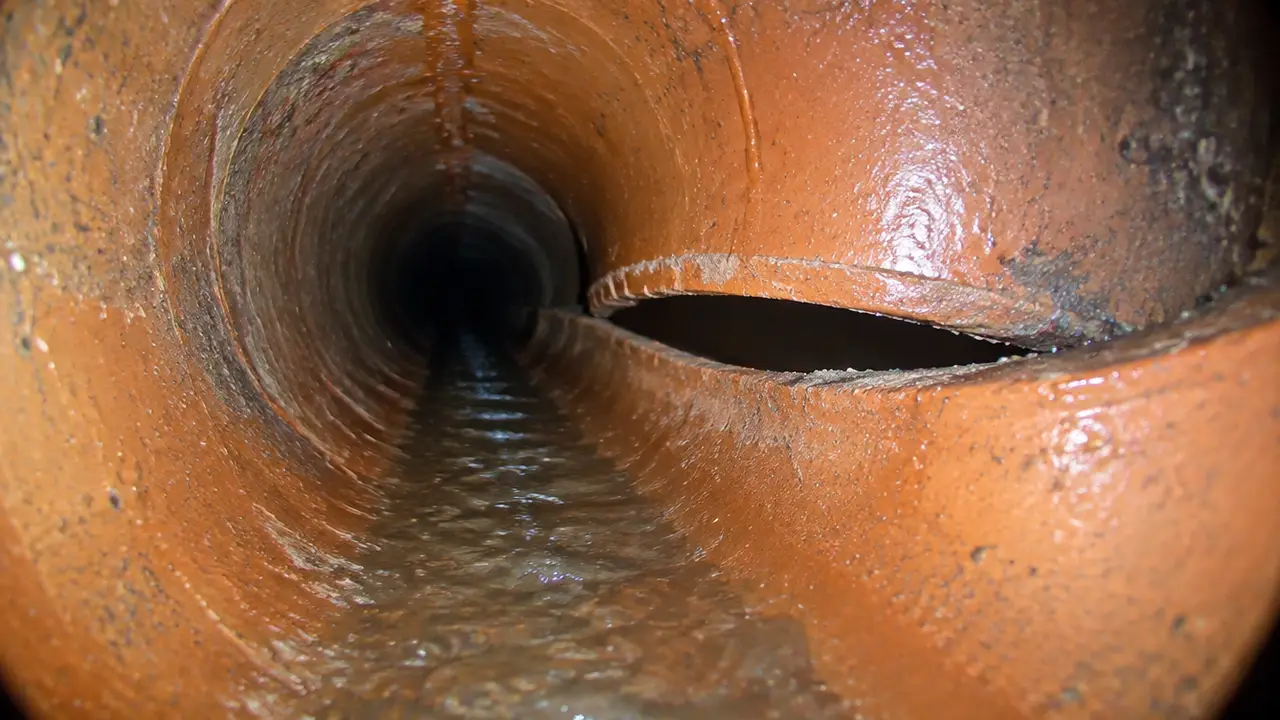
01 /What does the spot repair or full liner planner decide?
It answers one narrow question that comes up on almost every trenchless repair quote: is it better to fix the faults the camera found, one short liner at a time, or to line the whole lateral in one go? It does so with numbers you can check. Every dollar figure comes from the ranges on this site's trenchless sewer repair cost page, which match the ranges published on sister sites SewerQuotes.com and SewerReplacement.ca.
The planner is live: change a distance, a defect type or the line length and the strip map, the two plan prices and the verdict update immediately. It never invents a price outside those ranges, and it says plainly which inputs are assumptions you control.
02 /What do I enter?
| Input | Default | Used for |
|---|---|---|
| Length of the lateral being repaired (m) | 18 | Full-liner material cost; the strip map; the coverage percentage |
| Pipe material | Vitrified clay | The close-call rule for old jointed pipe; the Orangeburg warning |
| Branch connections a full liner must reopen | 1 | Reinstatement cost in the full-liner plan |
| Length of each sectional liner (m, assumed) | 1.0 | Grouping nearby defects and the coverage shown |
| Surface over any spot that must be dug | Lawn, under about 2.5 m deep | Which dig range applies |
| Usable cleanout for the liner? | Yes | Adds a new cleanout to both plans when the answer is no |
| Up to 8 defects: distance from the access point (m) and type | Roots at 4.5 m, crack at 11 m | Everything else |
Read distances straight from the footage counter on your camera video; they follow the pipe from the access point, not a straight line across the yard. A defect entered beyond the line length is left out and the result says so. The types are roots at a joint, crack, fracture, offset joint the camera passes, separated joint, hole or missing piece, belly or sag, collapse, and offset the camera cannot pass.
03 /How are defects grouped into sectional liners?
The first six types are treated as linable. They are sorted by distance, and each defect joins the current section if it lies within one liner length of the previous defect in that section; otherwise it starts a new section. A section is at least one liner length long, and longer if it spans several defects. With the default 1 m liner, roots at 4.5 m and a crack at 5.2 m share one section; roots at 4.5 m and a crack at 11 m need two.
The 1 m default is an assumption, not a product length. Installers choose liner lengths to lap sound pipe either side of a defect, and your contractor will set the real figure from the footage. Change the input to see how longer liners merge more defects into fewer sections. Holes and separated joints are linable only where the pipe around them is sound, which is a camera call; a short liner is not a cure for a pipe that is falling apart.
04 /How are the two plans priced?
| Item | Low | High | Applies to |
|---|---|---|---|
| First sectional liner | $2,500 | $6,500 | Sectional plan |
| Each extra section, same visit | $1,500 | $3,500 | Sectional plan |
| Full-liner setup | $500 | $2,000 | Full plan |
| Liner per metre | $500 | $1,200 | Full plan × your length |
| Cleaning and preparation | $400 | $2,500 | Full plan |
| Each reinstated branch connection | $300 | $1,200 | Full plan × connections |
| Dig at a belly, collapse or blocking offset — lawn, under about 2.5 m | $3,500 | $9,000 | Both plans, per dig |
| Dig — deep, or under concrete or asphalt | $7,000 | $16,000 | Both plans, per dig |
| New cleanout when none is usable | $600 | $2,500 | Both plans (sectional only if it has a liner) |
Figures are rounded to the nearest $50. For the default 18 m clay line with one connection, the full-liner plan works out to about $10,200 to $27,300, inside the $9,000 to $28,000 range quoted for a 15 to 25 m lateral. The planner does not add permits, bypass pumping or restoration beyond the dig ranges; ask for those as separate lines in a real quote.
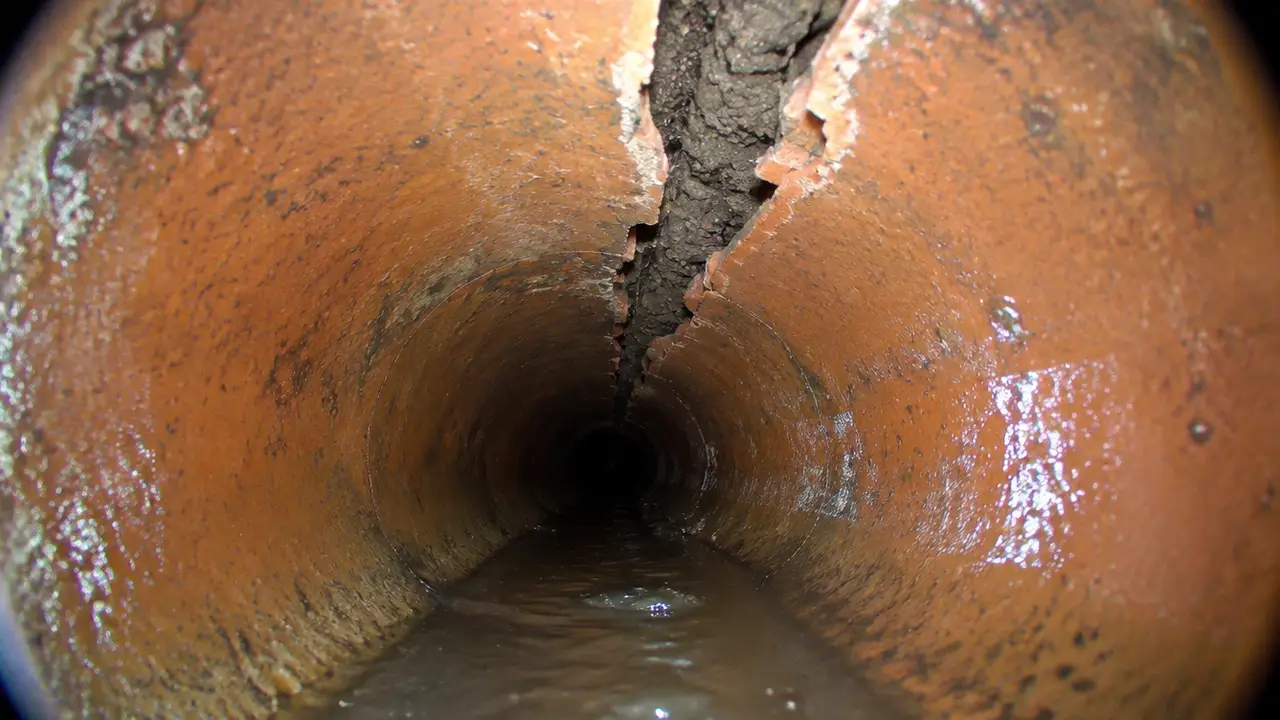
05 /How does it reach a verdict?
Rules are checked in order and the first match wins. Midpoint means the average of a plan's low and high figure.
- No defects entered — Enter what the camera found.
- Bituminous fibre (Orangeburg) — Ask whether it can be lined at all. Fibre pipe often deforms out of round, and a liner needs a round host; price bursting or replacement alongside.
- Only dig-type defects — Dig at the fault, no liner from these entries.
- Three or more sections, or the sectional midpoint is at least 60% of the full-liner midpoint — Price a full liner.
- Clay, concrete, cast iron or unknown material with two or more sections — Close call, price both, because the joints between the sections stay open to roots and leaks.
- Otherwise — Sectional liner or liners look proportionate.
Any dig is listed first in the reasons, with its distance, its type and its planning range, because it happens whichever liner plan you choose. The result also shows the break-even: the number of sections at which the sectional midpoint would pass the full-liner midpoint, calculated as one more than (full midpoint − $4,500) ÷ $2,500, rounded up.
06 /Worked examples
The default line. An 18 m clay lateral with one connection, roots at 4.5 m and a crack at 11 m. Two sections price at $4,000 to $10,000 and cover about 2 m, or 11% of the line. The full liner prices at $10,200 to $27,300. Two sections are well under 60% of the full midpoint, but the pipe is old clay, so the verdict is Close call, price both. The break-even is seven sections.
A newer line with one fault. Change the material to ABS or PVC and delete the roots. One section at $2,500 to $6,500 against a full liner costing several times more: Sectional liner looks proportionate. On plastic pipe with solvent-welded joints, the unlined joints are not the same root risk as clay.
A belly in the middle. Back on the default line, add a belly at 8 m. Both plans now carry a dig at $3,500 to $9,000, the reasons open with Dig first at 8 m, and the strip map draws the dig in red. That is the hybrid described in trenchless sewer belly repair.
07 /What the planner cannot tell you
- Whether a defect is structurally suited to a short liner. That is a judgement on the footage, made by the installer.
- The real liner length, resin or cure, which vary by system. Engineering depth on liners is the lane of sister site SewerRelining.ca.
- Your pipe diameter, depth or groundwater, which move every price.
- What happens to defects the camera missed. A full liner covers them; sectional liners do not. That is the value of the extra spend.
To see which methods are worth discussing at all, run the trenchless fit checker first. The trade-offs behind this planner are laid out in sewer spot repair, and when your quotes arrive you can send them to the HAUSE Sewer desk for a second look.
FAQQuestions people ask
Why does the planner price a dig in both plans?
Because a belly, a collapse or an offset the camera cannot pass needs the pipe exposed whatever liner you choose. Leaving it out of one plan would make that plan look cheaper than it is.
Is a full liner always the safer choice on old clay pipe?
It seals every joint, including ones that have not failed yet, which is why the planner calls two or more sections on clay a close call. Whether that is worth the extra cost depends on the age and condition the footage shows.
Why is my section count lower than my defect count?
Defects within one liner length of each other share a section. Increase or decrease the assumed liner length to see how the grouping changes.
Where do the prices come from?
From the planning ranges on this site's cost page, which agree with SewerQuotes.com and SewerReplacement.ca. They are 2026 estimates in Canadian dollars, not quotes.
NETWORKGo deeper across the HAUSE Sewer network
Sewer line repair cost: what a spot repair should cost
Sewer line repair cost in Canada for 2026: spot repair and sectional liner planning ranges in CAD, what drives the price, and when a repair beats full replacement.
SewerRoots.caPermanent fixes for roots in sewer lines
Permanent fixes for roots in sewer lines: CIPP lining, sectional point repairs, pipe bursting and open-cut replacement compared by cost, lifespan and fit.
DrainAugering.caCan a drain snake damage your pipes? Where the real risks are
Can a drain snake damage pipes? How cables and cutters harm old clay, Orangeburg, cast iron, plastic traps, chrome fittings and toilets, and how to avoid it.