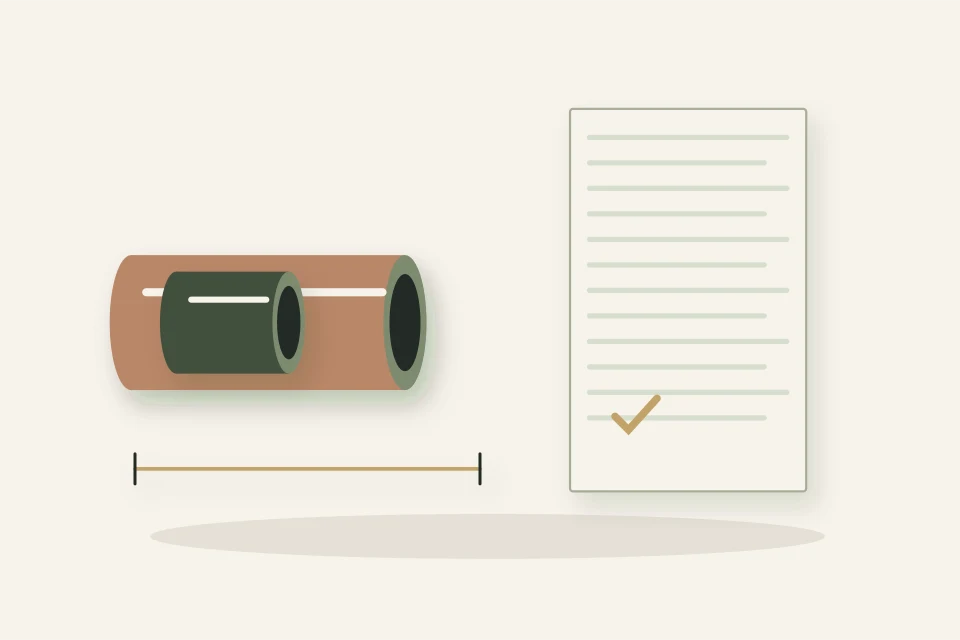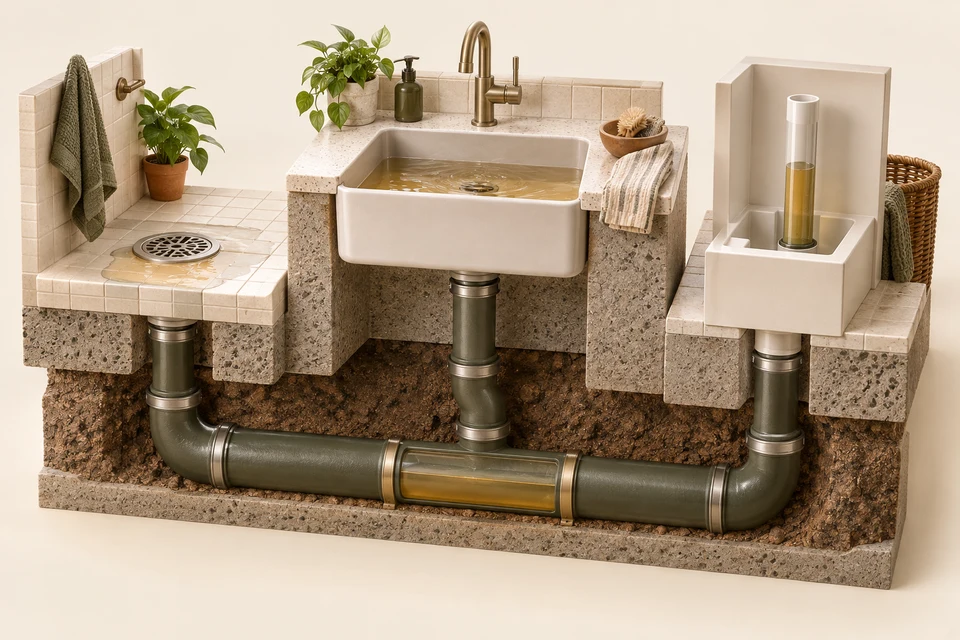
Six questions, one shortlist: which repair conversations to have first — a sectional liner, a full-length CIPP liner, pipe bursting, a dig, or a camera inspection before anything else — plus the questions to ask a contractor. It does not decide eligibility; it applies the published rules below to your answers so you walk into a quote meeting knowing what to ask.
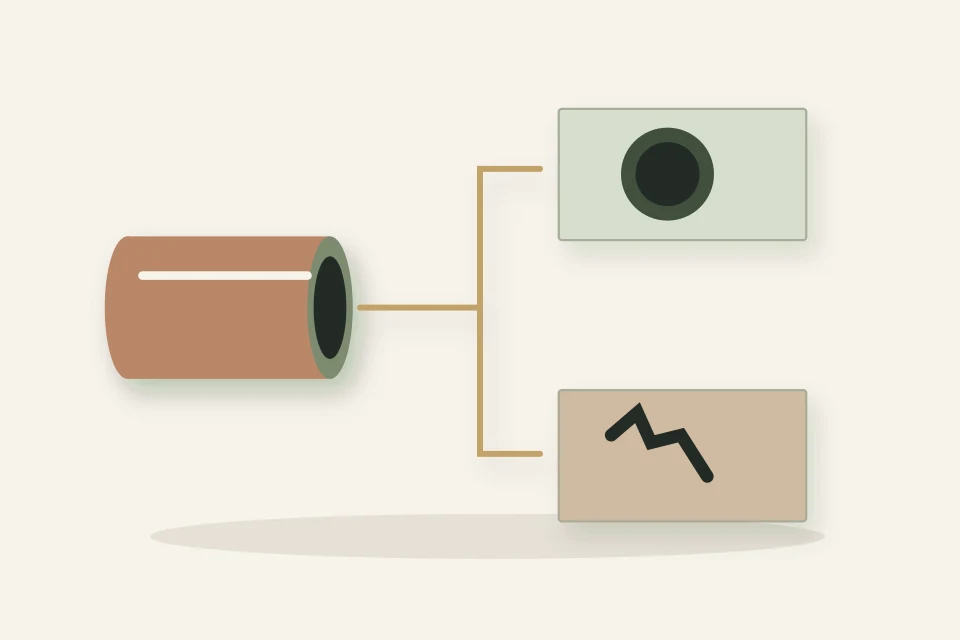
- The camera finding sets the starting point: round pipe points to lining, a belly or collapse points to a dig at that spot.
- Access, bends, length and what sits above the line then move each method up or down one level.
- No recorded camera run, or a finding marked Not sure, turns the result into a provisional shortlist headed Camera inspection first.
- A collapse, a belly or a blocking offset flags a likely hybrid: one dig, then lining or bursting for the rest.
Trenchless Fit Checker
01 /What does the trenchless fit checker do?
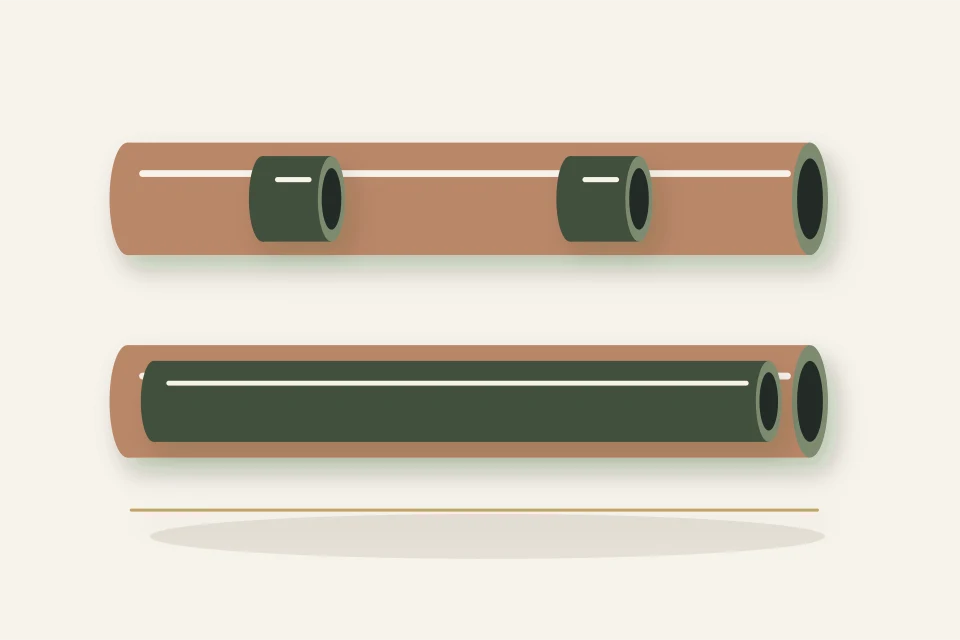
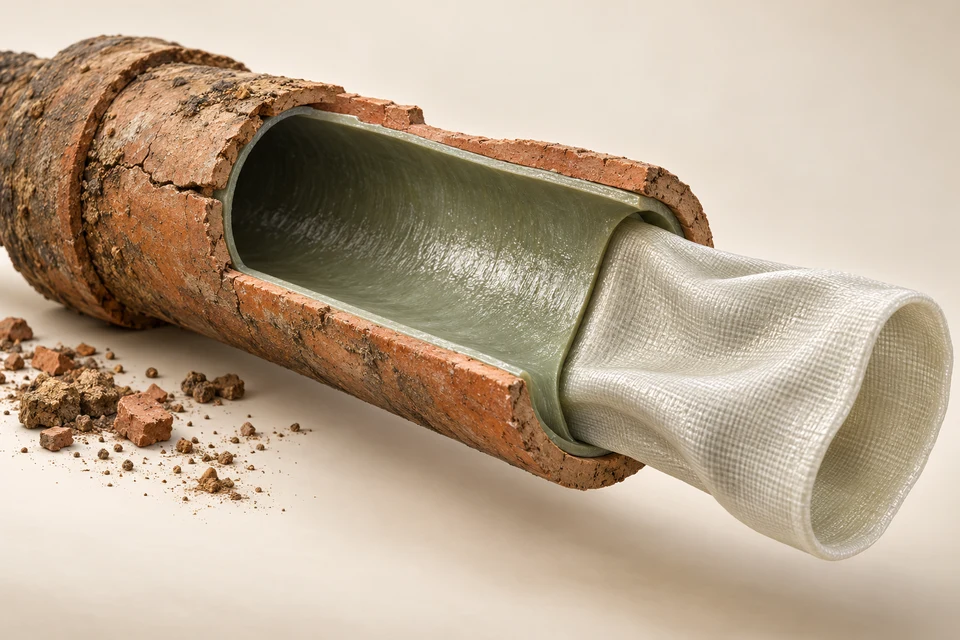
The checker turns six plain answers into a ranked shortlist of four repair approaches, each marked Discuss first, Possible or Unlikely, with one sentence explaining the mark. It also lists what changed the shortlist and the questions to put to whoever quotes the work. The six questions are the ones this site's original checker asked, kept because they are the facts that actually separate a liner job from a bursting job from a dig.
It is deliberately modest. A repair method is chosen from recorded camera footage, a locate, the depth, the ground and the installer's own equipment. The checker has none of that. What it can do is stop you arriving at a quote meeting without knowing that a belly cannot be lined out, or that a short run under open lawn may be cheaper to dig. Use it before you call, and again when the footage comes back.
02 /What are the six questions, and why each one matters?
| Question | Options | Why it matters |
|---|---|---|
| 1. Recent camera inspection? | Within a year with video · older or no video · none yet | Without footage no method can be chosen; old footage may miss new damage |
| 2. What did the camera show? | Roots, cracks or small leaks in round pipe · minor offsets · severe offset the camera could not pass · belly holding water · collapse · not sure | Sets the starting level of every method |
| 3. Length to the property line or main | Under 15 m · 15–30 m · over 30 m · not sure | Short runs make digging competitive; long runs make trenches costly |
| 4. Access points | A usable cleanout · access at both ends · none or unknown | Liners need a way in; bursting needs a launch and a receiving point |
| 5. Changes of direction | Mostly straight · one or two gentle bends · several or sharp bends · not sure | Bends add pits for bursting and wrinkle risk for liners |
| 6. What sits above the line | Lawn or open ground · driveway, patio, mature trees or additions · not sure | Hard surfaces raise the restoration bill of any trench |
Every question must be answered before a result appears. If one is left on Select, the checker says how many are missing instead of guessing. The answer Not sure is allowed on four of the six questions; on the camera-finding question it forces the provisional Camera inspection first headline, because a guessed defect is not a basis for choosing a method.
03 /How does the checker rank the methods?
It works in two steps. First the camera finding gives each method a starting level: 2 means Discuss first, 1 Possible and 0 Unlikely. Then up to seven modifiers move a method by one level, and every level is clamped between 0 and 2. The headline names the methods left at level 2, or those at level 1 if none reached 2.
| Camera finding | Sectional liner | Full CIPP liner | Pipe bursting | Excavation |
|---|---|---|---|---|
| Roots, cracks or small leaks; pipe still round | 1 | 2 | 1 | 0 |
| Minor offset joints | 1 | 2 | 1 | 1 |
| Severe offset the camera could not pass | 0 | 0 | 1 | 2 |
| Belly or sag holding water | 0 | 0 | 0 | 2 |
| Collapsed or crushed section | 0 | 0 | 1 | 2 |
| Not sure | 1 | 1 | 1 | 1 |
A sectional liner starts at Possible rather than Discuss first on round pipe because the six questions do not say how many defects there are. One or two isolated faults suit a short liner; roots at every joint of an old clay line suit a full one. The second tool on this site, Spot Repair or Full Liner?, takes the defect list and answers that part.
| Your answer | Change | Reason given in the result |
|---|---|---|
| Several or sharp bends | Bursting down one | Extra pits for bursting; ask whether the liner can negotiate the bends |
| One or two gentle bends | No change, note only | Usually workable for a liner; bursting may need a pit at a bend |
| Access at both ends (finding is not a belly) | Bursting up one | Bursting needs a launch point and a receiving point |
| No cleanout or unknown | No change, note only | Plan for a new cleanout or an access pit first |
| Under 15 m and lawn above | Excavation up one | A short run under open lawn makes digging cost-competitive |
| Hard surface above, finding is round, minor offsets or not sure | Excavation down one | Restoration costs rise for any trench |
| Over 30 m, finding is round, minor offsets or not sure | Excavation down one | A full trench gets expensive; a long liner may need a second access point |
Three further notes appear without changing any level. If the length is Not sure, the checker asks you to read it off the camera counter, because length drives material, time and price for every method. If a collapse, belly or blocking offset sits under a hard surface, the checker reminds you that the fault still needs a local dig and asks you to price the restoration of that one spot. If your footage is older or has no video, it asks for a fresh recorded scope with distances before anything is signed.
04 /Why does a collapse or belly always keep a dig on the list?
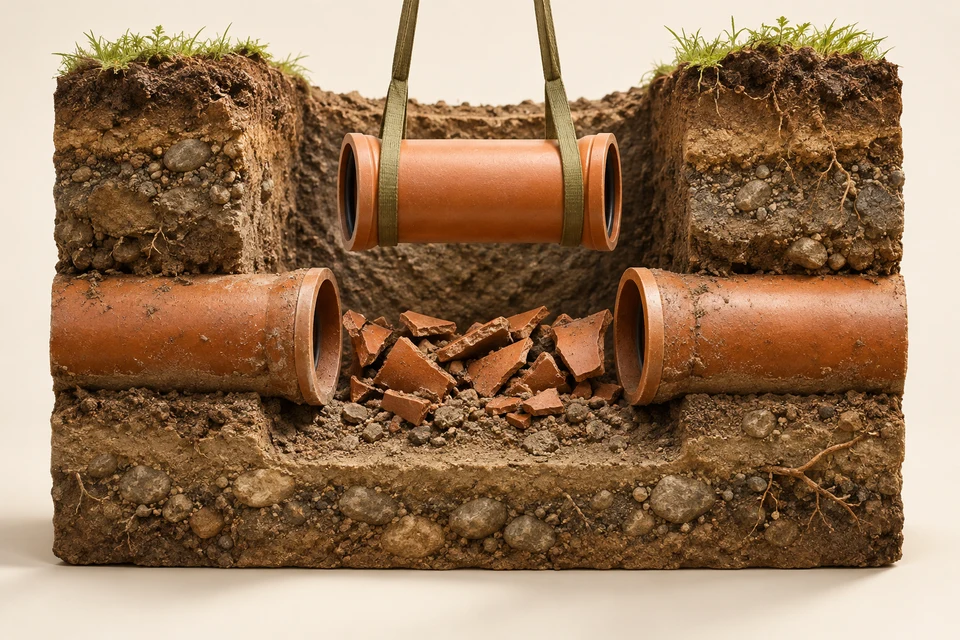
Because no trenchless method corrects grade or passes a true blockage. A liner is shaped by the host pipe, so a belly lined over is still a belly, now holding water inside a new pipe. A bursting head follows the old path and usually reproduces the dip. A collapse offers no round path to invert a liner through, and it can stall a bursting head. For those three findings the checker keeps excavation at Discuss first whatever the surface, and it shows a Hybrid likely line: dig at the fault, then line or burst the rest if the camera shows the remaining pipe is sound.
That is not a failure of trenchless repair; it is how most careful repairs of older laterals are planned. The long-form reasoning is in when excavation is necessary, and belly repairs have their own guide, trenchless sewer belly repair.
05 /What questions does the result tell me to ask?
Four questions appear on every result, and more are added for each method that is not Unlikely. They are written to be read out, word for word, to anyone quoting the job.
- Always: which method do you recommend, and why were the others ruled out? Will I get before-and-after video with distances marked? Who pulls the permit and books the utility locates? What does the written warranty cover, for how long, and who backs it?
- If a liner is on the list: what liner, resin and cure method, and how will each branch connection be reopened and sealed?
- If bursting is on the list: where will each pit go, what pipe will be pulled in, and how are its joints fused and tested?
- If a dig is on the list: how deep and wide is the dig, how are bedding and grade checked, and what restoration is included?
A contractor who answers those clearly and puts the answers in the written quote is giving you something you can compare. Reopening connections after lining is explained in lateral reinstatement and connection seals.
06 /What should I do if the result says camera inspection first?
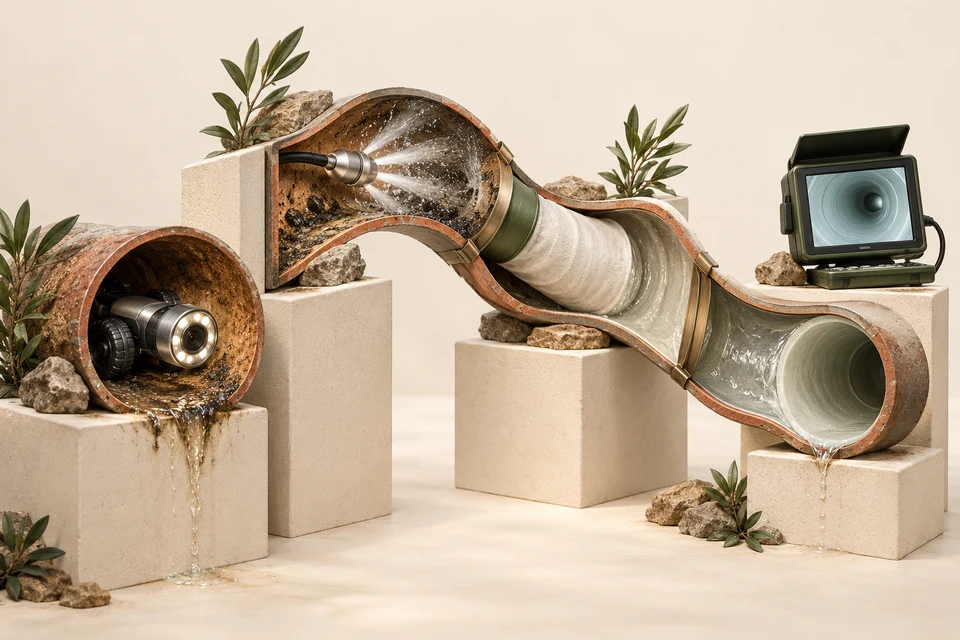
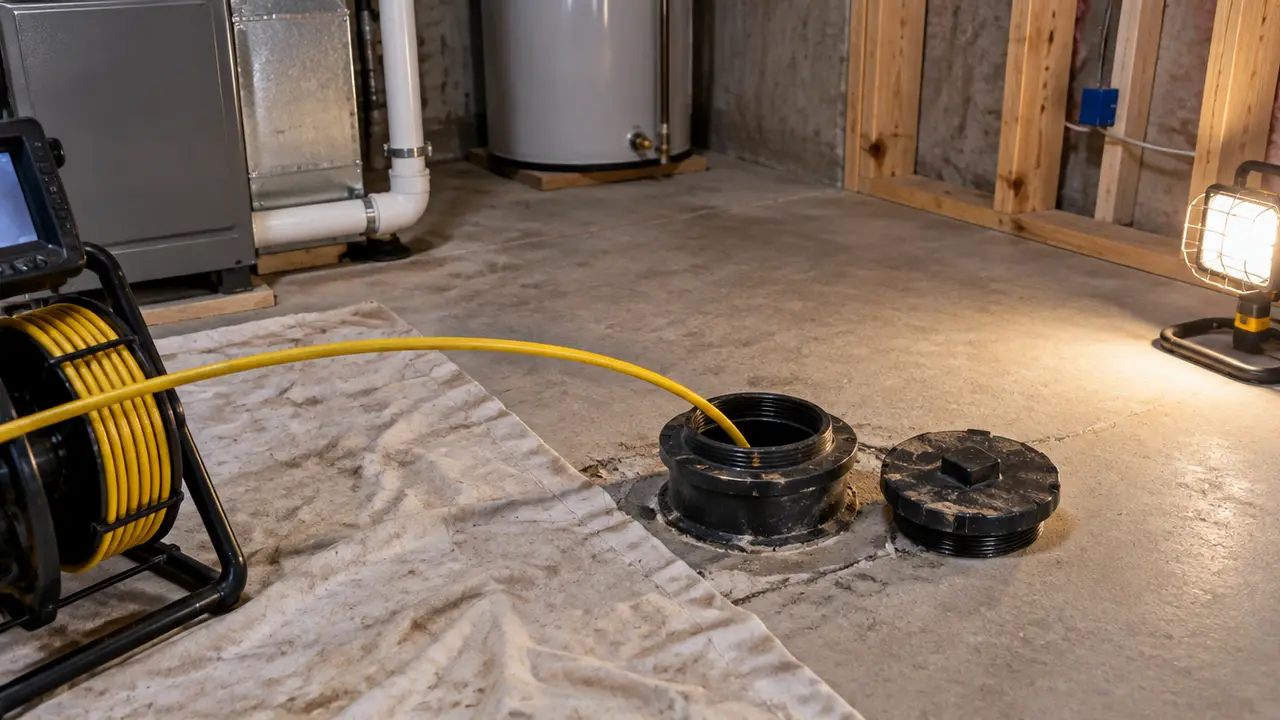
Book a recorded inspection of the whole line from the cleanout to the main, with the footage counter visible and a locate of the route and depth. Ask for the video file, not just a summary. Then run the checker again with the real finding. In Alberta, remember that customer-owned lines such as sewer services are not registered with Utility Safety Partners, so a private locate with a camera sonde is how your own lateral is traced; the utilities around it are marked by the free locate request, which Utility Safety Partners asks for at least three full working days before digging.
- Scope
A recorded camera run with distances, from the cleanout to the city connection.
- Rerun the checker
Enter the real finding, length and access instead of Not sure.
- Price the shortlist
Ask for each method marked Discuss first, and a dig where a hybrid is flagged.
- Compare in writing
Same footage to every contractor, same questions, answers in the quote.
Symptoms that should push the scope up the list, and what to do in the meantime, are in sewer symptoms: what to do first. When you have footage and want a second pair of eyes, send it to the HAUSE Sewer desk.
07 /What are the limits of the checker?
- It knows nothing about pipe diameter, depth, soil, groundwater, nearby utilities or the host material, all of which an installer weighs.
- It cannot tell how many defects there are, which decides between a sectional liner and a full one.
- Its levels are editorial rules written for this site, not an industry standard or a contractor's method statement.
- It gives no prices. Planning ranges for each method are on the trenchless sewer repair cost page.
- It does not cover permits. In Alberta, plumbing permits come from accredited municipalities or agencies; in Calgary the City issues them. Confirm what your job needs.
Read the result as a map of the conversation, not a verdict. How each method actually works is covered in when CIPP sewer lining fits and when pipe bursting fits.
FAQQuestions people ask
Why does the checker need all six answers?
Each answer moves at least one method. A result built on five answers could rank bursting highly for a line with sharp bends, so it waits until every question has an answer, even if that answer is Not sure.
Can the checker tell me my line qualifies for lining?
No. It tells you lining is worth discussing. Qualification depends on the recorded footage, pipe size, access, the cleaning result and the installer's liner system.
Why is bursting never ranked first for a belly?
Bursting follows the old line, so the new pipe usually settles into the same dip. The checker also blocks the access bonus for bursting when the finding is a belly.
My result lists a dig and a liner. Which is it?
Probably both. When a collapse, belly or blocking offset is found, the usual plan is a dig at that spot and a liner or burst for the sound remainder, priced as separate sections.
Does a Discuss first mark mean it will be cheapest?
No. It means the method matches what you described. Cost depends on access, depth, restoration and the contractor; compare written quotes built on the same footage.
NETWORKGo deeper across the HAUSE Sewer network
Trenchless lining vs pipe bursting: cost, fit and trade-offs
Trenchless lining vs pipe bursting cost in Canada: 2026 CIPP and bursting ranges in CAD, line items, which defects each fixes and how to choose.
PipeCleaning.caPipe Method Matcher: which cleaning methods suit your pipe
Pipe Method Matcher: enter your house era, pipe material and symptom to see which pipe cleaning methods are recommended, safe with conditions, or avoid.
SewerJetting.caJet or auger? A decision tool for your blocked line
Jet or auger decision tool: enter blockage type, pipe material, camera findings, pipe size and access to see whether to jet, auger or camera first.
SOURCESSources and further reading
- US EPA — Collection Systems O&M Fact Sheet: Trenchless Sewer Rehabilitation (EPA 832-F-99-032)
- NASSCO — National Association of Sewer Service Companies
- ASTM International — F1216, rehabilitation of pipe by inversion of a resin-impregnated tube (CIPP)
- Utility Safety Partners (Alberta) — homeowner overview, click before you dig