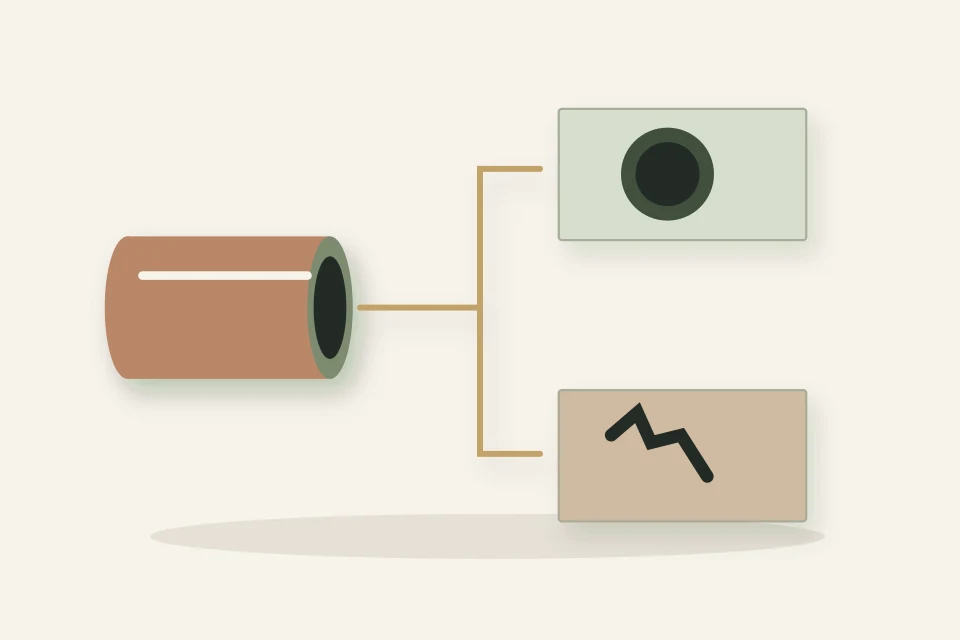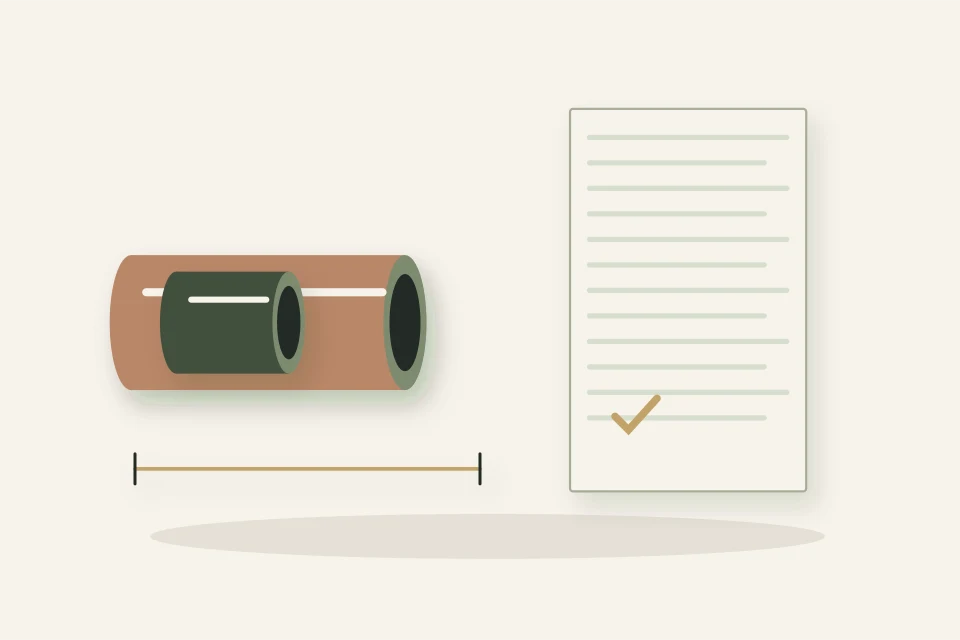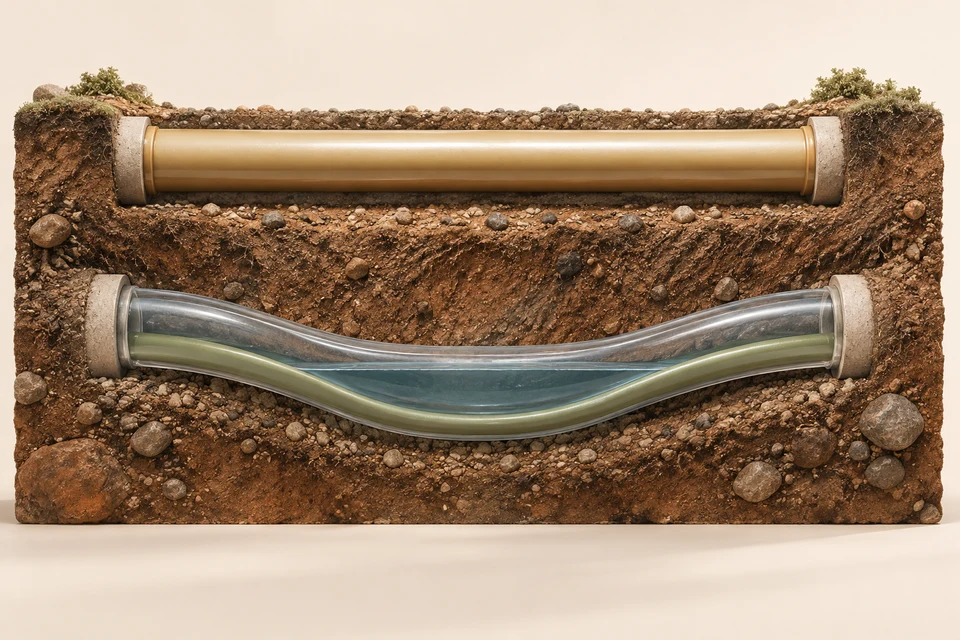
Usually not on its own. A belly is a section of sewer pipe that has sunk below the line's grade, and both CIPP liners and pipe bursting follow the existing path, so the new pipe keeps the dip. The fix for a belly that causes trouble is to expose that section and relay it on proper bedding and slope, often in one pit, then line or burst the rest of the line if it needs it.
- A belly is a grade problem, not a crack; liners and bursting do not change grade.
- A small sag that drains between uses may be managed with maintenance rather than dug.
- A belly that holds water and solids and causes backups needs relaying at that section.
- One pit at the belly plus lining either side is a common, lower-disruption plan.
- Measure it: the camera shows how long the belly is and how much of the pipe the water fills.
01 /What is a sewer belly, and how does it form?
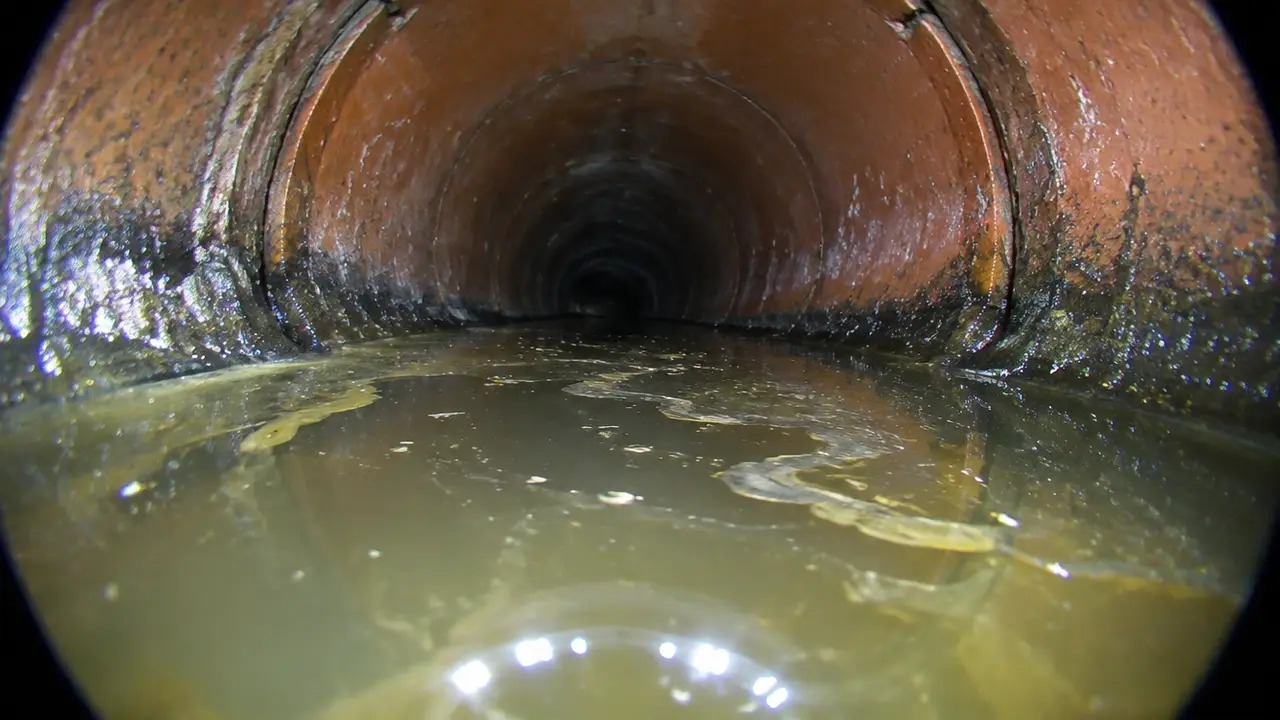
A belly, also called a sag, is a stretch of pipe that has dropped below the slope it was laid at. Sewage and water still flow downhill toward the main, but in the low stretch they pool. Solids settle out in the standing water, paper catches on them, grease coats the pipe above the water line, and a partial blockage builds each time the line is used.
Bellies usually form because the ground under the pipe moved after it was laid. Poorly compacted backfill settling, bedding washed away by a leaking joint, soil disturbed by a later dig for another utility, or frost action in shallow sections are the common causes. Heavy loads such as a driveway built over a shallow line can press a section down. Knowing the cause matters, because a belly relaid on the same loose ground can come back.
02 /Why can't a liner or pipe bursting fix a belly?
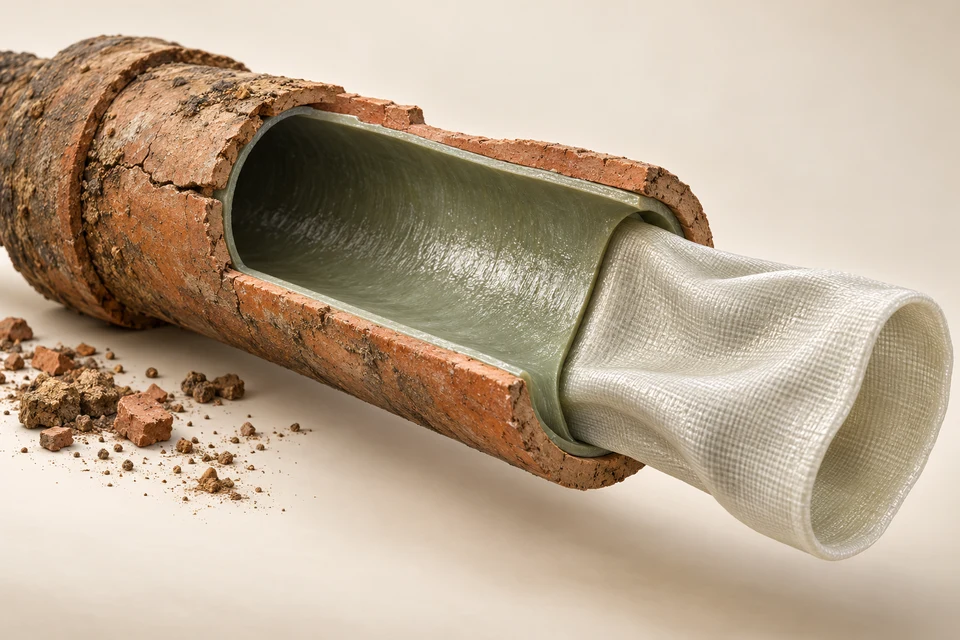
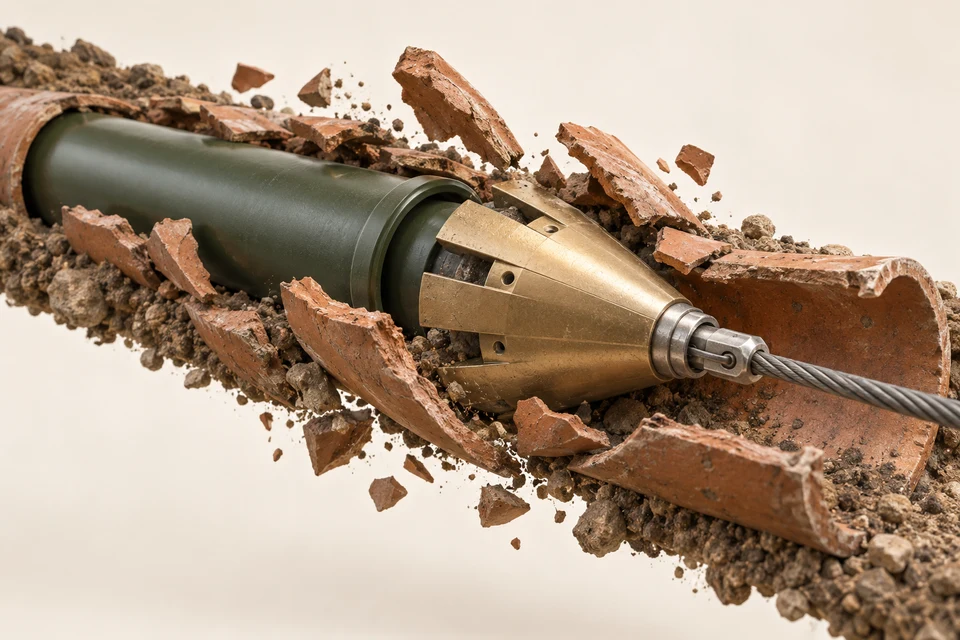
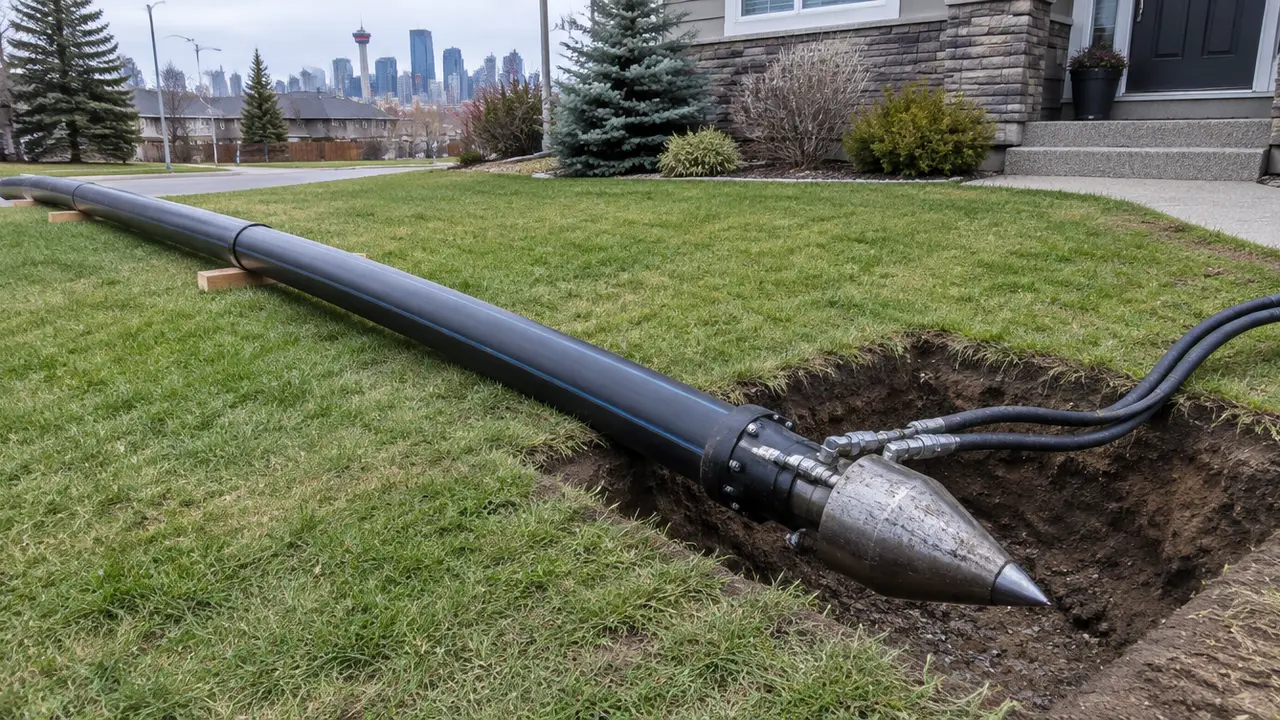
Because both methods take their route from the old pipe. A cured-in-place liner is pressed against the inside of the host and hardens in its shape; if the host dips 40 mm over three metres, so does the liner. A bursting head is pulled along the old pipe's path and the new pipe settles into the channel it leaves, which usually reproduces the dip.
A liner does bring one real benefit in a sag: it seals the joints there, so leaks and roots stop. What it cannot do is stop the pooling. That is why the original version of this site listed bellies, with collapses and severe offsets, as the cases where neither lining nor bursting usually fits.
03 /Is a small sag worth fixing at all?
Not always. A camera often shows a little water sitting in an old lateral, and a shallow sag that drains down between uses and has never caused a backup may be managed rather than dug. The decision turns on how much water the belly holds, how long it is, whether solids collect in it and whether the household has had blockages at that distance.
| What the footage shows | Usual reading | Usual response |
|---|---|---|
| A thin film of water, no solids, no history of blockages | Minor | Note it; re-scope in a few years |
| Water covering a noticeable part of the pipe, some debris | Moderate | Maintenance jetting; plan a repair if blockages start |
| Camera lens goes under water; solids and grease build up | Significant | Relay the section |
| Backups recur at the belly's distance | Causing trouble | Relay the section before other work |
Ask the contractor to state the belly's start and end distances and how deep the water gets, and keep the video. Report reading in depth is the lane of sister site SewerInspector.ca.
04 /How is a belly actually repaired?
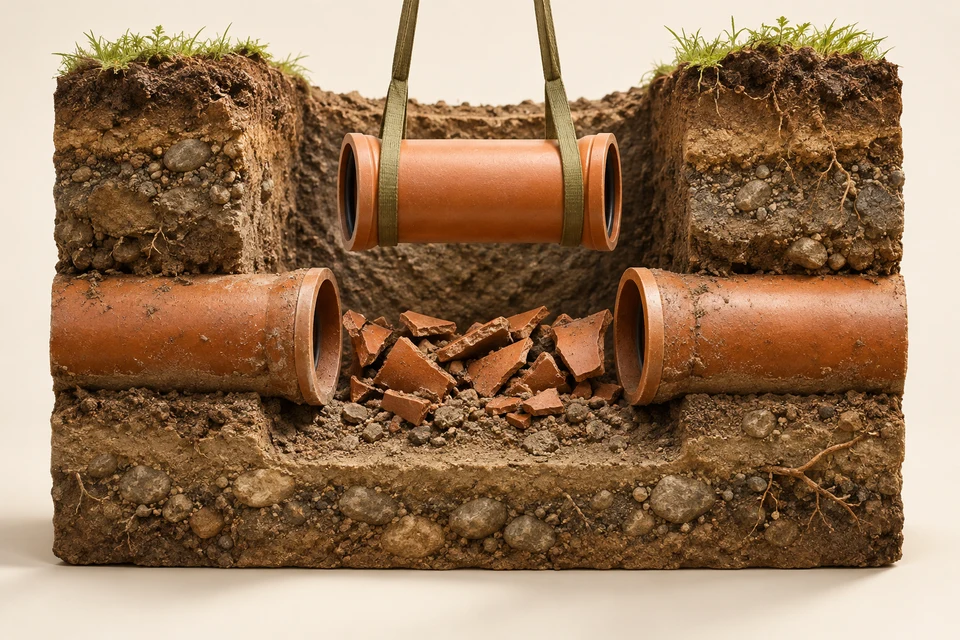
By exposing it. The installer digs a pit over the sag, cuts out the low section, re-compacts or replaces the bedding underneath, and couples in new pipe at the correct slope, checked before backfill. Because the dig is only as long as the belly, it is often a single pit rather than a trench.
- Locate the belly on the surface
The camera sonde marks where the dip starts and ends, and its depth.
- Locates and permit
Utilities marked through the provincial locate service, and a permit where required.
- Excavate the section
One pit, shored if deep, long enough to reach sound pipe at both ends.
- Rebed and relay
Firm bedding, new pipe, shielded couplings, slope checked.
- Camera, then backfill
A video of the relaid section running clean, then compacted backfill and restoration.
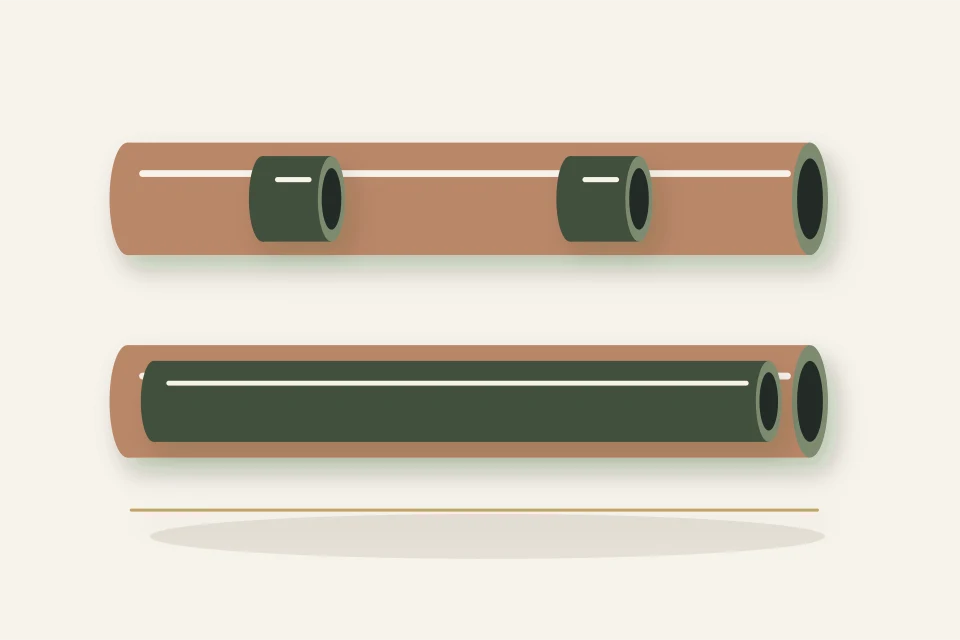
If the rest of the lateral has roots, cracks or leaking joints, it can then be lined from the cleanout, with the liner lapping onto the new section, or burst using the pit as a launch point. The full reasoning for when a dig is needed is in when excavation is necessary.
05 /What does belly repair cost?
As 2026 planning estimates, relaying a belly in one pit falls within the excavated spot repair range: about $3,500 to $9,000 CAD under lawn at up to about 2.5 m deep, and $7,000 to $16,000 deeper or under concrete or asphalt. If the rest of the line is lined too, add the full-liner range of about $9,000 to $28,000 for a 15 to 25 m lateral, or $2,500 to $6,500 for a first sectional liner if only one other fault needs it.
The Spot Repair or Full Liner? planner adds a dig automatically when you enter a belly, and prices it into both the sectional and full-liner plans so you can see the total for a hybrid. Full line items are on the trenchless sewer repair cost page.
06 /What should I ask about a belly on my footage?
- Where does the belly start and end, and how deep does the water get?
- Is it causing the blockages I have had, or is it incidental?
- Would a liner or burst leave it in place, and what would that mean for maintenance?
- How long would a pit at the belly be, and what surface is above it?
- What caused it, and how will the new bedding stop it happening again?
- Can the rest of the line be lined or burst from the same pit?
Be wary of a quote that lines over a significant belly without mentioning it. The liner will be sound, but the pooling and the blockages will continue, and the cause will then be harder to fix. The trenchless fit checker never ranks a liner or bursting first for a belly for exactly this reason.
07 /Bellies in Calgary and other cold-climate cities
Cold-climate laterals are generally buried deeper for frost protection, which makes digging any section more work but also protects most of the line from frost movement. Shallow sections, such as where a line rises to meet a basement or passes under a cleared driveway where frost penetrates further, are where frost-related movement is more likely. Settlement over old backfill is common in established neighbourhoods everywhere.
In Calgary, check the ownership line before planning: the City owns the service from the main to the property line and the homeowner owns the rest, according to the City's open-data description. A belly on the City side is a call to 311, not a private repair. More local context is in the Calgary guide, and you can send your footage to the HAUSE Sewer desk for a second opinion on whether a belly needs digging.
08 /How do I tell a belly from a blockage on the video?
A blockage sits at one point; water behind it rises toward the camera and falls away once it is cleared. A belly holds water over a length of pipe even when the line is clear, with a visible waterline that rises as the camera moves into the dip and falls as it climbs out the other side. Debris often lies along the bottom of the wet stretch. Ask for the start and end distance of the waterline and the camera's view when it is at the deepest point, because those two facts decide whether the section is worth digging.
FAQQuestions people ask
Can you reline a sewer pipe with a belly?
You can, and the liner will seal the joints, but it follows the dip, so water and solids keep collecting there. A belly that causes trouble needs relaying.
Does pipe bursting fix a sagging sewer line?
Usually not. The head follows the old path, so the new pipe settles into the same dip unless the sag is dug out first.
How much water in a sewer line is too much?
There is no single number for a house lateral. A thin film that drains is often tolerable; water that submerges the camera, collects solids or matches your backups needs attention.
Can a belly be fixed without digging?
Not reliably. Correcting grade means moving the pipe and the ground under it, which requires exposing that section.
Why did my sewer line develop a belly?
Usually ground movement after installation: settling backfill, bedding washed out by a leak, a later dig nearby, frost in a shallow section, or a load pressing down.
NETWORKGo deeper across the HAUSE Sewer network
Is trenchless sewer repair worth it? Lifespan, cost and when it fails
Is trenchless sewer repair worth it? How long lining and bursting last, when trenchless beats digging on cost, and the pipe conditions where it fails.
PipeCleaning.caHow long cast iron drain pipes last, and when to repair, line or replace
How long do cast iron drain pipes last? Why they rust and crack, how to judge remaining life, and when a repair sleeve, lining or replacement is right.
SewerInspector.caCommon sewer defects, explained by what they do to the pipe
Common sewer defects explained: roots, cracks, fractures, offset and separated joints, sags, deposits, holes and collapse, with severity and usual next steps.