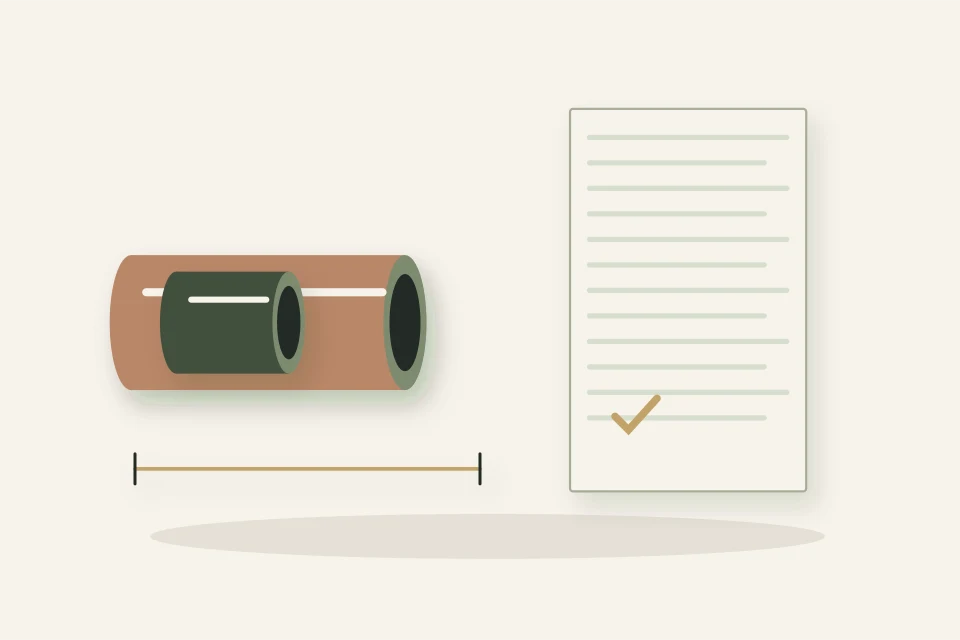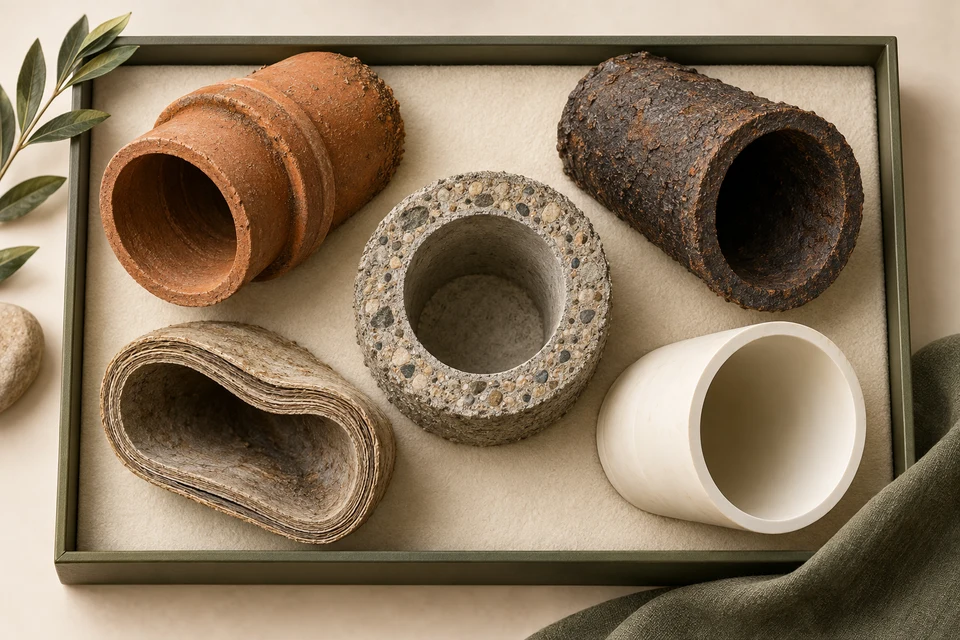
Pipe bursting usually fits a mostly straight sewer line that is too damaged or too small to line, where pits can be dug at both ends and nearby utilities have been located and are clear. It is a poor fit for bellies, runs with many bends, crowded utility corridors and some pipe materials, because the head follows the old path and pushes the surrounding soil outward.
- Bursting replaces the pipe rather than renewing it from inside, so it works on pipe too broken to line.
- It needs a launch pit and a receiving pit, plus a pit at any connection or sharp bend.
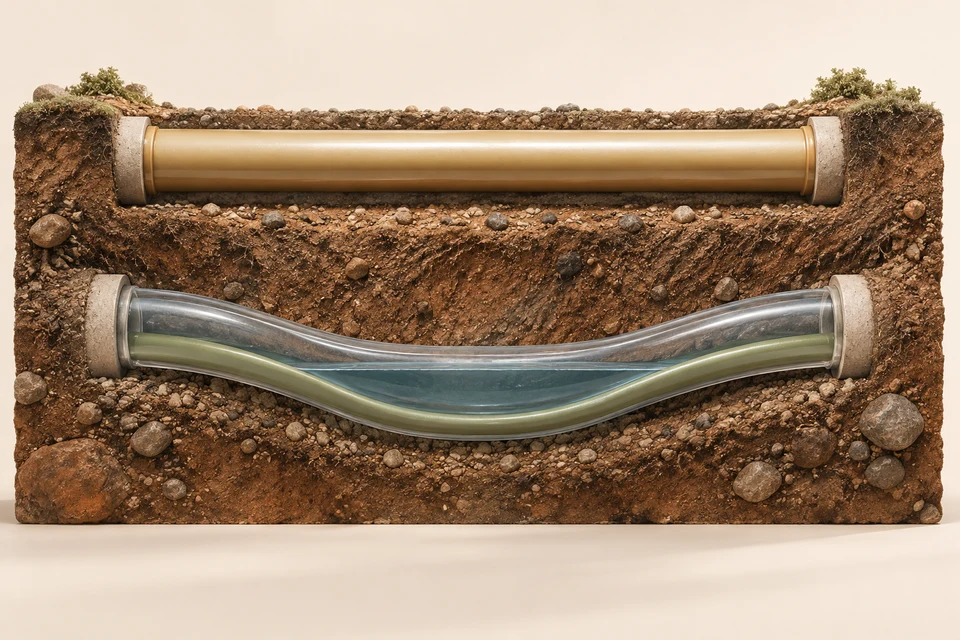
- It follows the existing route and grade, so a belly usually survives the burst.
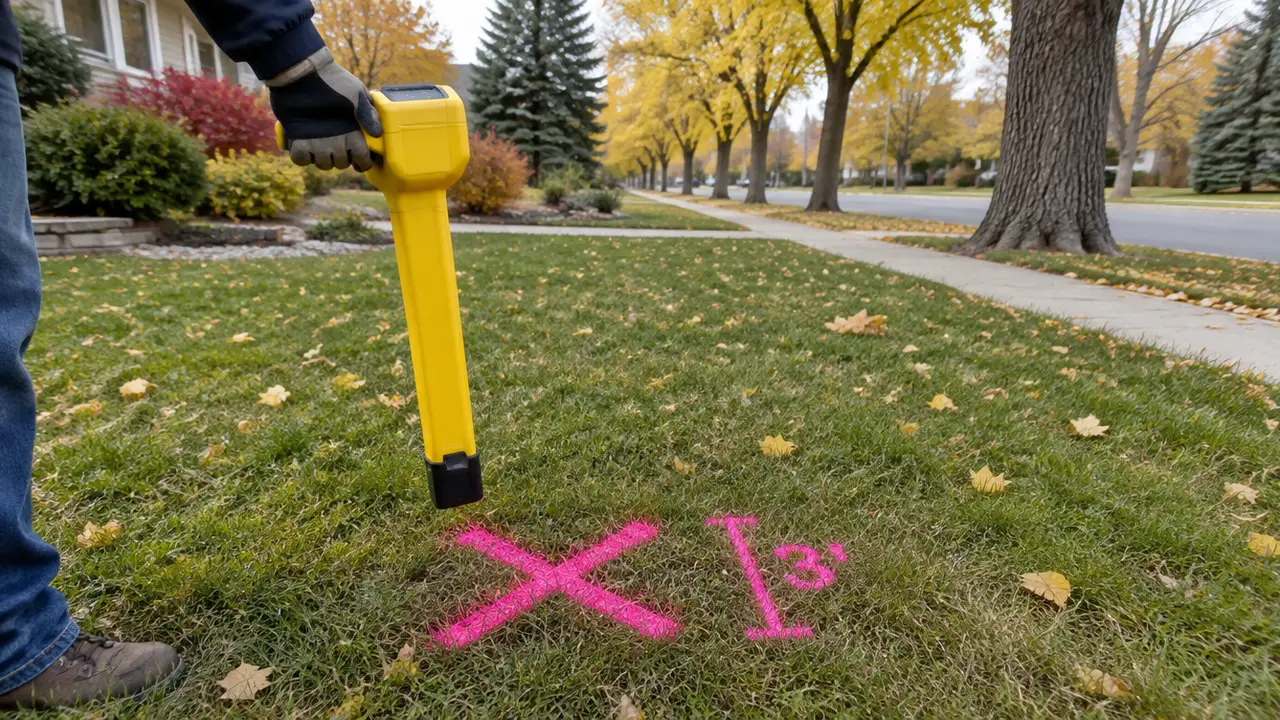
- Every nearby buried utility must be located first; in Alberta that means a request at least three full working days ahead.
- Compare it with a liner when the pipe is still round, and with a dig when the run is short and shallow.
01 /How does pipe bursting work, briefly?
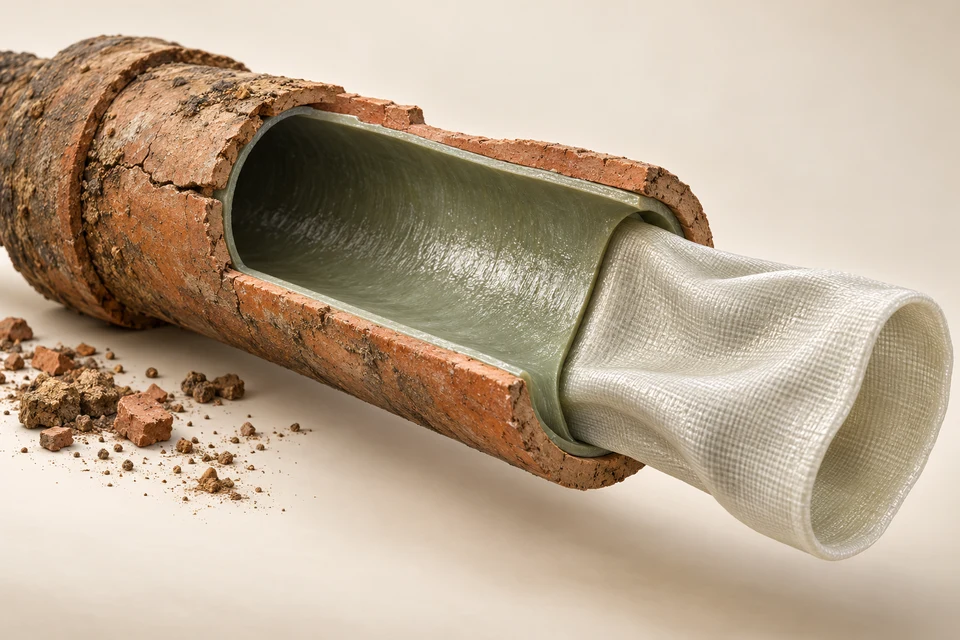
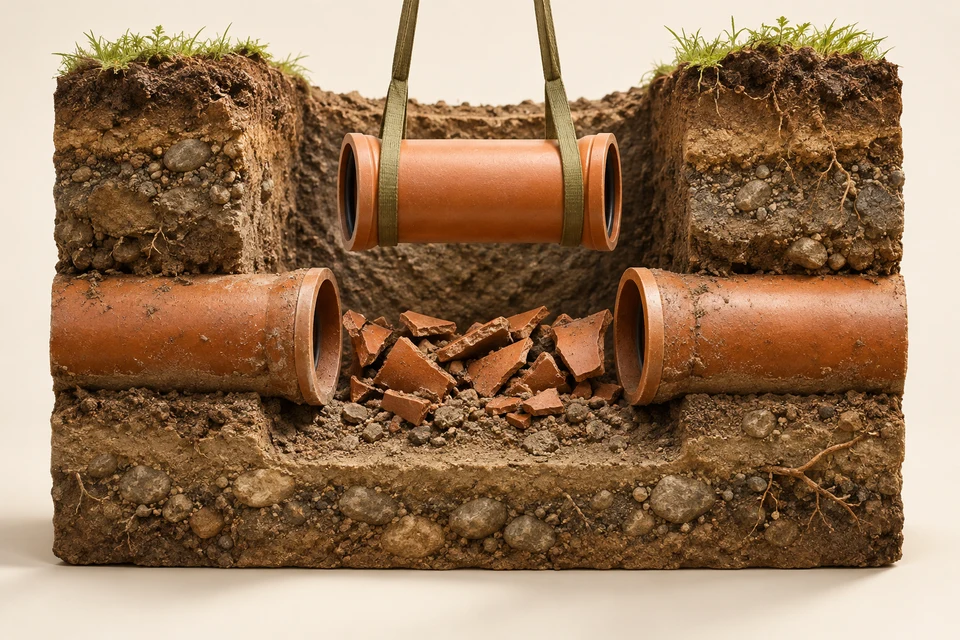
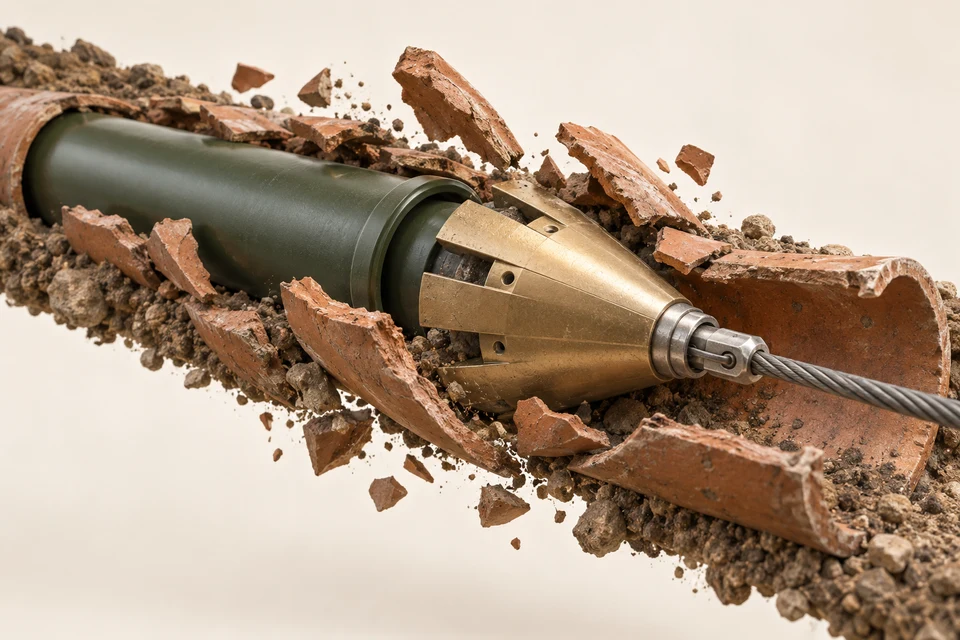
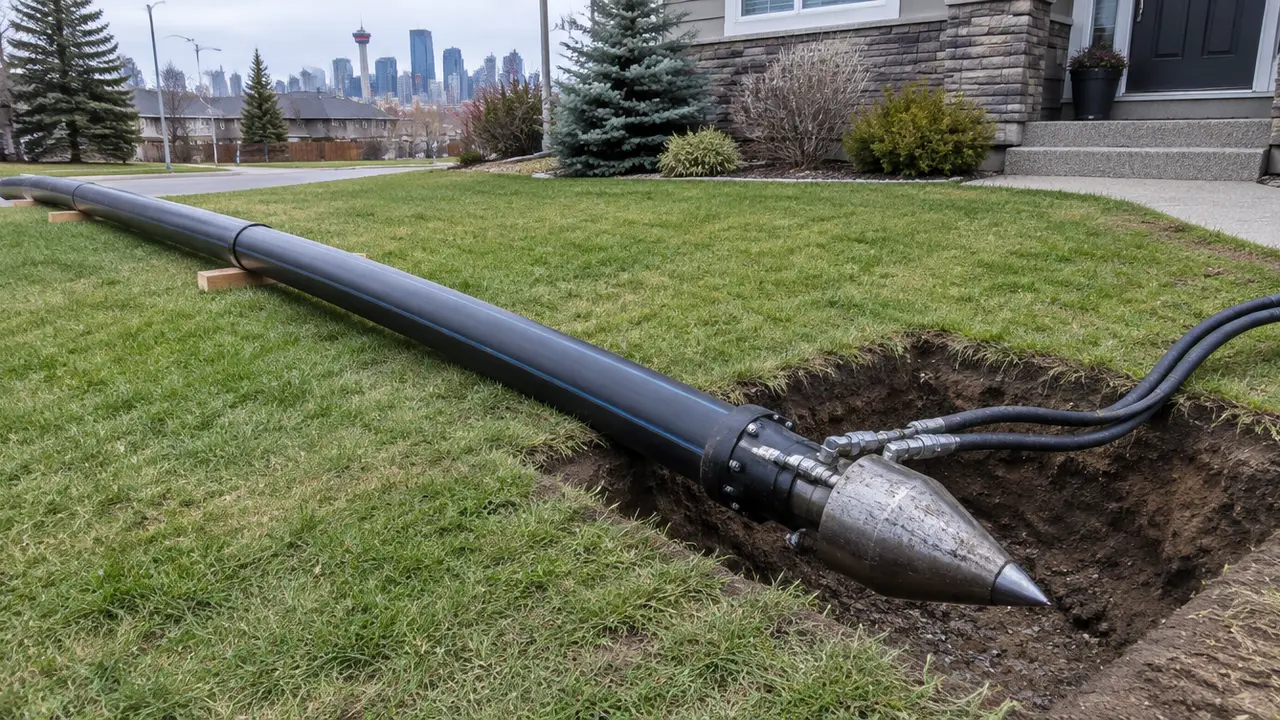
A cone-shaped bursting head, a little larger than the new pipe, is drawn through the old pipe by a cable or a string of rods from a machine in a pit at the far end. As it passes, it cracks the old pipe, pushes the fragments sideways into the soil, and tows a new pipe, most often fused high-density polyethylene (HDPE), into the space it opens. When the head reaches the receiving pit, the new pipe lies where the old one ran. It can sometimes install a larger pipe than the one it replaces.
The US EPA's trenchless fact sheet sums up the mechanism as expanding the existing pipe outward until it cracks, with the new pipeline pulled in behind, and lists two limitations worth remembering: flow has to be diverted while the pipe is out of service, and the percussive versions of the method can cause significant ground movement. The full technical story — static, pneumatic and split heads, upsizing, fusion — belongs to sister site PipeBursting.ca. Here the question is narrower: when is bursting the right repair for your lateral?
02 /When is bursting the better repair than a liner?
Bursting earns its place where a liner cannot do the job. A liner needs a round, passable host and keeps the old pipe's bore less the liner wall. Bursting needs neither: it can deal with pipe that is cracked into pieces, partly deformed, badly scaled or simply too small for the building it now serves.
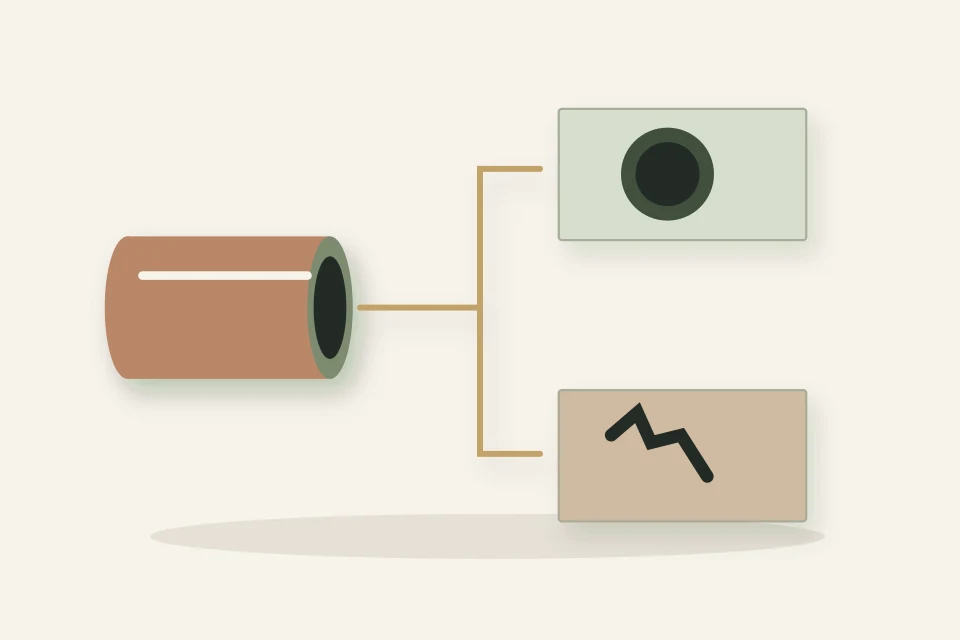
Where both fit, the choice often comes down to access and what sits above each end. A liner may need nothing but a cleanout; bursting always needs at least two holes. Put your own answers through the trenchless fit checker, which raises bursting when you have access at both ends and lowers it for sharp bends.
03 /What does a residential burst need on site?
Two pits are normally dug: a launch pit where the new pipe goes in and a receiving pit where the machine pulls from. That is much less disturbance than a full trench, but it is not zero. Plan for restoration at each pit, and for an extra pit wherever a branch must be reconnected or the line turns sharply.
- A recorded camera survey of the whole line, to confirm the material, route, depth, connections and any sag.
- Utility locates. In Alberta, Utility Safety Partners asks for requests at least three full working days before digging and requires hand-exposing within one metre either side of the marks. Customer-owned sewer and water services are not registered with them, so your own lines need tracing separately.
- Pit locations agreed in advance, with what surface each disturbs: lawn, a flower bed, a driveway edge.
- Flow diversion. Drains are out of use while the old line is disconnected and the new one is pulled and reconnected.
- Pipe and joints. The new pipe material, its size, and how joints are fused and tested.
- A permit where your municipality requires one for sewer replacement; in Calgary, plumbing permits are issued by the City.
04 /What are the limits to plan around?
Four limits come up again and again on house laterals, and each has a straightforward answer if it is spotted on the camera survey rather than halfway through the pull.
| Limit | Why it matters | Usual workaround |
|---|---|---|
| A belly in the line | The head follows the old grade, so the new pipe settles into the dip | Dig and relay that section, or choose open cut |
| Several or sharp bends | The head cannot turn a sharp corner | Extra pits at bends, or another method |
| Utilities close to the path | Displaced soil can load or move nearby lines | Locate, expose and protect before the pull |
| A full collapse or old repair clamps | Can stall or deflect the head | A spot dig at that point first |
| Shallow line under hardscape | Surface heave above the head | Assess depth; consider lining or a dig |
The belly limit catches people out most often, because the word replacement suggests a fresh start. Bursting is a new pipe on the old path, not a new path. If the camera shows standing water, read trenchless sewer belly repair before you sign.
05 /What does bursting cost next to the alternatives?
As a 2026 planning estimate, bursting a 15 to 25 m residential lateral typically quotes about $10,000 to $30,000 CAD. A full-length liner on the same line runs about $9,000 to $28,000, and open-cut replacement about $12,000 to $35,000 or more. The ranges overlap, which is why access and restoration usually decide: pits under lawn are cheap to restore, and a dig under a driveway is not.
Every line item is on the trenchless sewer repair cost page. If your line has only one or two faults on pipe that is otherwise sound, bursting the whole run may be more than it needs; compare against short liners with Spot Repair or Full Liner?.
06 /What should I ask before I agree to bursting?
- Where will each pit go, how big will it be, and what surface will be disturbed and restored?
- What pipe material and size will be pulled in, and how are its joints fused and tested?
- Who books utility locates and pulls the permit, and who traces my private lines?
- What happens if the head stalls — is an extra pit priced in the quote?
- How will the belly or bends on my footage be handled?
- Will I get a final recorded camera run of the new pipe and both connections?
- What does the written warranty cover, for how long, and who backs it?
A clear answer to the stall question is a good sign; installers who have burst many laterals know where heads get stuck and price for it. If the answers leave you unsure, send the quote and footage to the HAUSE Sewer desk for a second look.
07 /Bursting in Calgary and Alberta
Much of Calgary's older housing stock has the kind of pipe that bursts readily. City open data codes about one in five City-owned sanitary service lines as TIL, generally read as clay tile, concentrated in communities built in the 1960s and 1970s, with cast iron more common in some 1950s and inner-city areas. That data covers only the City's portion of each service, so the private side from the property line to the house may differ and should be confirmed on camera.
Two local factors favour pits over trenches: laterals in a cold climate tend to be buried deeper, and many established communities have mature trees over the service route. Frozen ground slows pit excavation and adds cost in winter, but the pull itself happens below the frost. More local context, including where the City has relined its side, is in the Calgary guide, and the lining alternative is in when CIPP sewer lining fits.
FAQQuestions people ask
Does pipe bursting remove the old pipe?
No. The old pipe is broken into fragments that are pushed into the surrounding soil and left there, with the new pipe running through the middle of them.
Will a burst-in pipe get rid of a sag in my lateral?
Usually not. The head follows the old grade, so the new pipe tends to settle into the same dip. The sagging section is normally dug and relaid on grade.
How many holes does pipe bursting need in my yard?
At least two, one at each end, plus one at any branch that must be reconnected or any sharp bend. The pit plan should be in the written quote.
Is bursting safe near a gas line?
Only after every utility has been located, and often exposed, because the head pushes soil outward. In Alberta, request locates through Utility Safety Partners at least three full working days ahead.
Can bursting make my sewer line bigger?
Often, by pulling in a larger pipe than the one it breaks. More upsizing moves more soil, which is one of the things the installer's survey has to check.
NETWORKGo deeper across the HAUSE Sewer network
Trenchless lining vs pipe bursting: cost, fit and trade-offs
Trenchless lining vs pipe bursting cost in Canada: 2026 CIPP and bursting ranges in CAD, line items, which defects each fixes and how to choose.
DrainAugering.caToilet auger, plunger or drain snake: which one fits your clog
Toilet auger vs plunger vs drain snake: what each tool does, which to try first on a toilet, sink or shower, and why a toilet auger will not clear a sink.
SewerInspector.caIs a sewer scope worth it? When it pays off, and when it doesn't
Is a sewer scope worth it? A plain decision framework: which homes and situations justify one, when it is optional, common objections, and how often to re-scope.