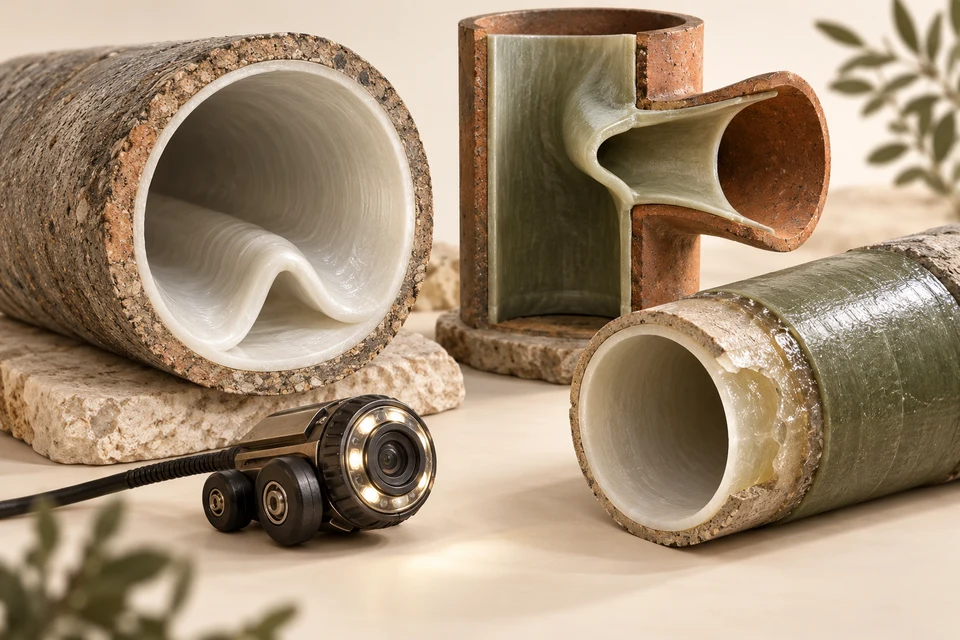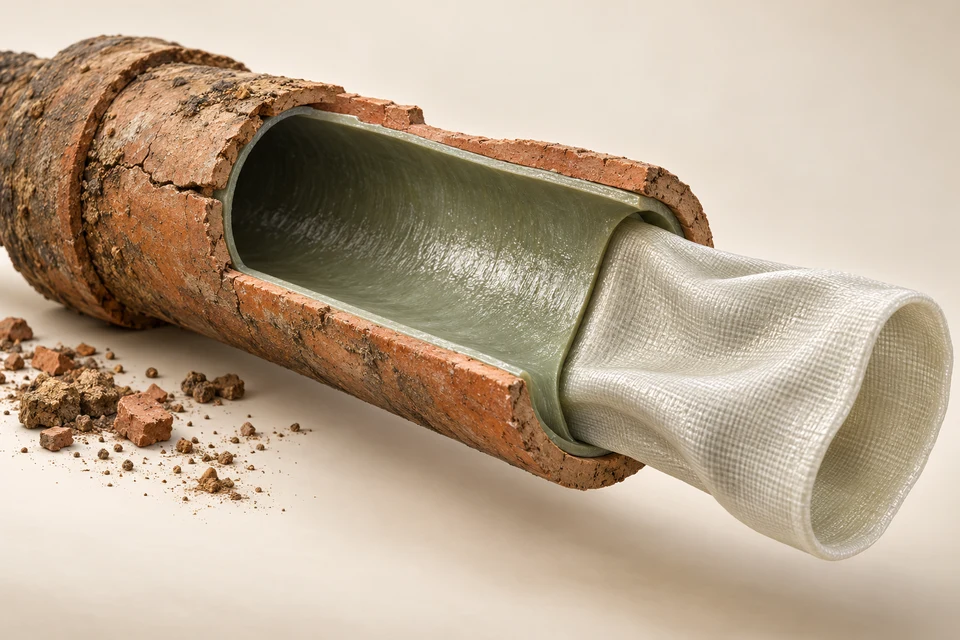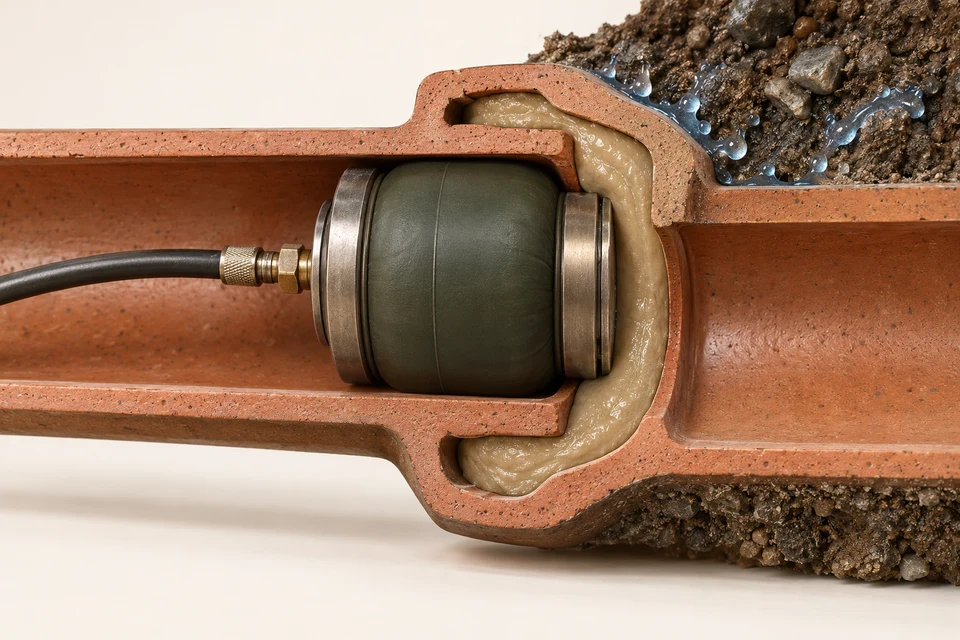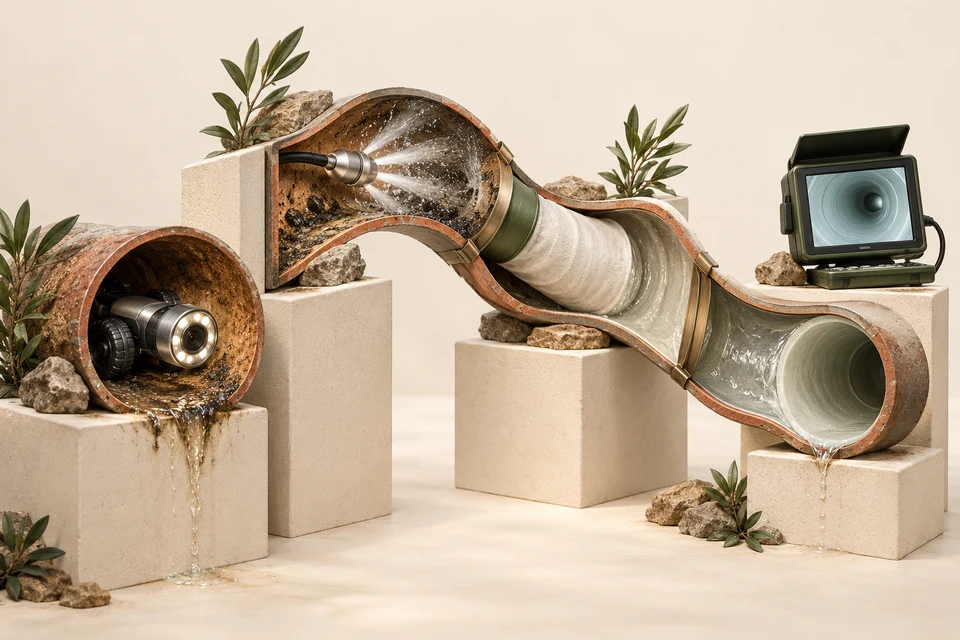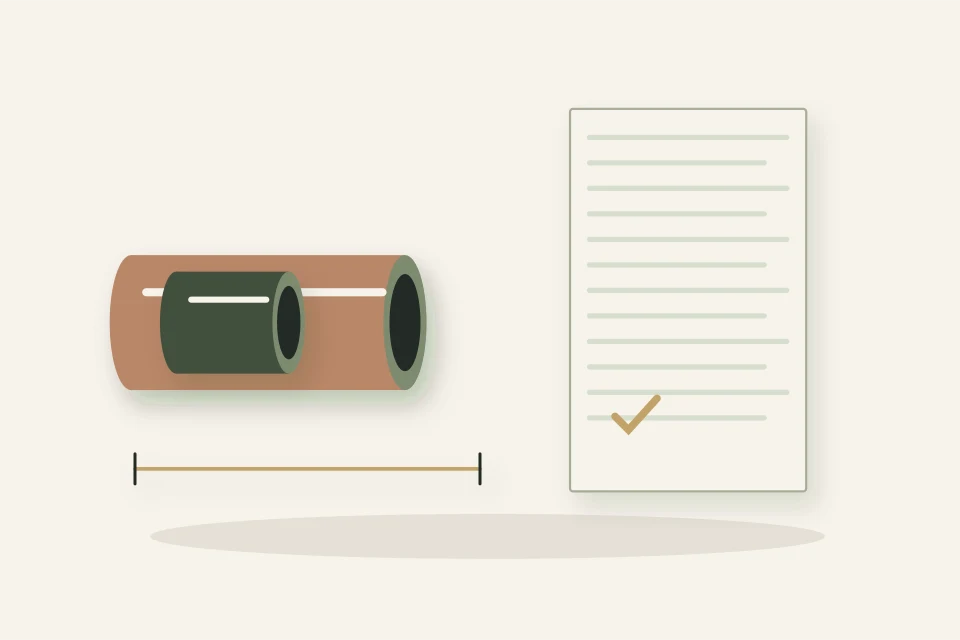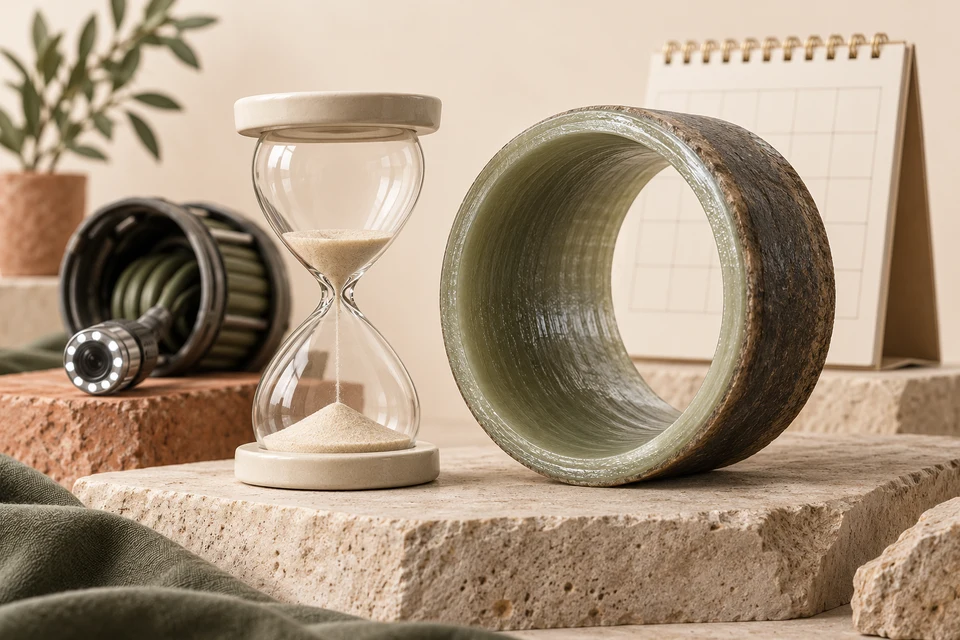
A well-installed liner or burst pipe is intended to last for decades, and design lives quoted by manufacturers are long, but the real figure for your line depends on the product, the installation, the host pipe and how the line is maintained. Ask for the manufacturer's documented design life and the installer's written warranty. The job itself usually takes one working day on site for a house lateral, after an inspection and any locates or permits.
- Service life depends on product, installation quality, ground conditions and maintenance, not on the method name.
- The US EPA's rehabilitation research included a retrospective study of CIPP liners in service for more than 25 years.
- A warranty is not a lifespan: read what it covers, for how long, and who backs it.
- Poor cleaning, unsealed ends and aggressive later cleaning are what shorten a repair's life.
- Planning time: inspection, then locates (at least three full working days in Alberta) and any permit, then usually one day on site.
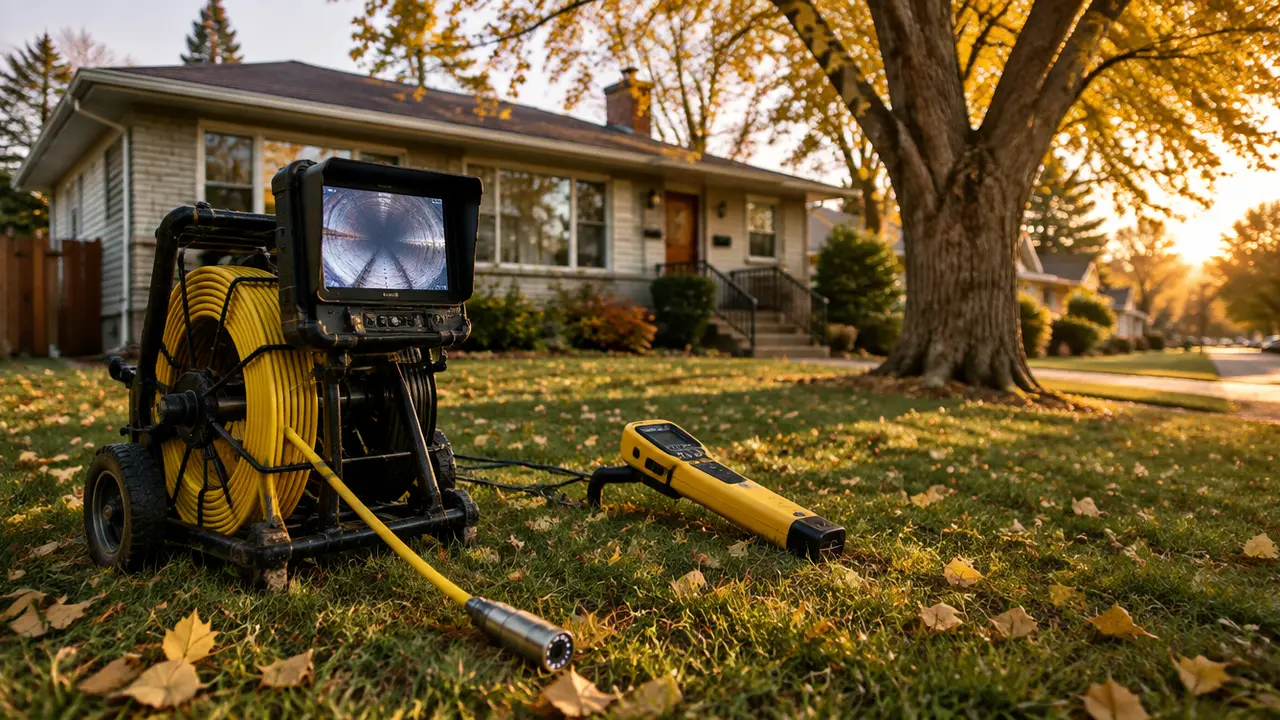
01 /How long does a trenchless sewer repair last?
There is no honest single number. A cured-in-place liner, a burst-in HDPE pipe and a grouted joint are all intended to last many decades when properly installed, and manufacturers publish design lives for their systems. But a liner cured poorly in cold groundwater, a connection left unsealed, or a repair laid over a belly will not reach those figures, while a careful installation in stable ground may exceed them.
What is on the public record helps frame it. The US EPA's research program on renewing water and wastewater pipes included a retrospective study of CIPP liners that had been in use for more than 25 years. NASSCO, the North American association of sewer rehabilitation contractors, states that acrylamide grout properly applied underground can last 50 years or more at a 12 percent concentration. Those are research and industry positions, not a promise for your line.
02 /What decides how long a repair lasts?
| Factor | Helps | Hurts |
|---|---|---|
| Preparation | Roots, scale and grease fully removed; clean, sound wall | Liner cured over debris or roots |
| Product and design | A system suited to the pipe size, depth and loads | Wrong thickness or resin for the conditions |
| Cure | Full, controlled cure with records | Heat loss, groundwater, short cure |
| Ends and connections | Sealed, cleanly reinstated | Unsealed; water tracking behind the liner |
| Grade | Line on grade, or belly fixed first | Belly lined over; solids keep collecting |
| Ground | Stable, well-supported pipe | Ongoing settlement or voids |
| Maintenance | Suitable cleaning methods; nothing harmful flushed | Aggressive cutting heads; grease and wipes |
Most of these are decided on the day of installation and are visible, at least in part, on the cleaning and final videos. That is why problems with trenchless sewer repair spends so long on what to look for on camera.
03 /Does the method make a difference to lifespan?
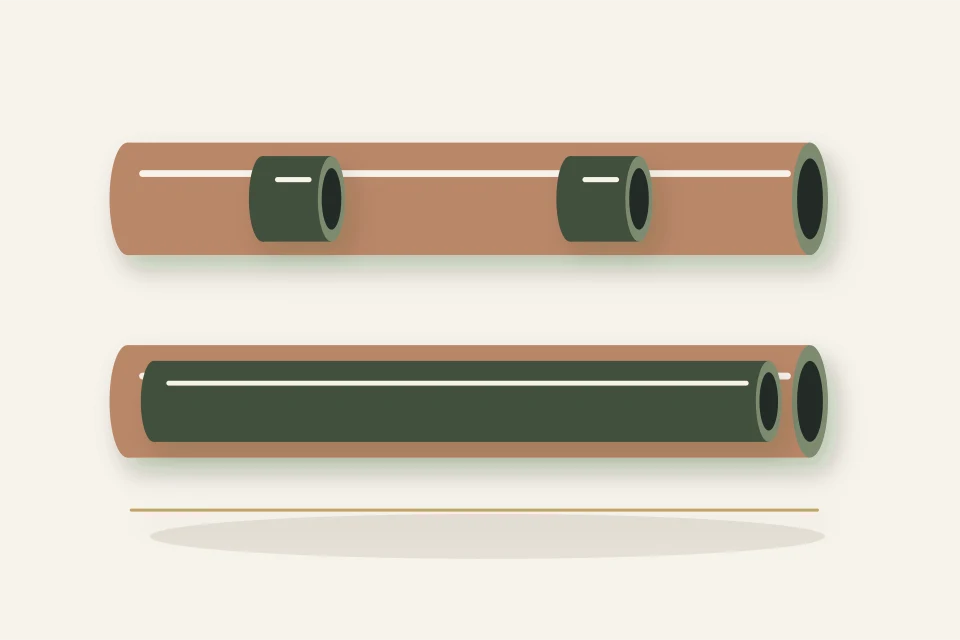
Each method renews something different, and that affects what can still fail. A full liner renews the whole run between its ends and seals every joint. A sectional liner renews only its own short length; the rest of the pipe keeps its original age. Bursting replaces the pipe with new continuous pipe along the old path. An excavated repair replaces a section with new pipe on new bedding. Grouting seals joints but adds no strength.
That is why a sectional liner can be the right repair and still be followed by another one a few years later on old clay, and why the Spot Repair or Full Liner? planner flags old jointed pipe with more than one defect as a close call.
04 /How is a warranty different from a lifespan?
A warranty is a promise about what the installer, or a manufacturer, will do if something fails within a stated period. It is usually much shorter than a design life, and its value depends on what it covers and on whether whoever backs it is still around. Read it before signing.
- What exactly is covered: the liner material, the workmanship, the connections, the ends?
- For how long, and does it transfer to a new owner if you sell?
- What voids it: certain cleaning methods, later work by others, blockages from what is flushed?
- Who backs it: the installer, the manufacturer, or both?
- What evidence is needed to claim: the final video, a new camera run?
Keep the warranty, the quote and every video with the house records. For a sale, the final video with distances is often what a buyer's inspector will ask for.
05 /How do I make a repair last longer?
Treat a lined or new line as you would any sewer: nothing in it but water, human waste and toilet paper. Wipes marketed as flushable, grease and food scraps build up in any pipe and catch at connections and any remaining joints.
- Ask the installer which cleaning methods their warranty allows on the liner, and keep that in writing for whoever clears the line next.
- Re-scope if symptoms return, rather than repeatedly clearing a line without looking.
- Keep a cleanout accessible, so future inspections do not mean pulling a toilet.
- If a belly was left in place, plan periodic maintenance at that distance.
06 /How long does the job take, start to finish?
The calendar time is usually longer than the time on site, because inspection, quoting, locates and permits come first.
- Camera inspection
Usually an hour or two on site; the video and report may follow the same day or later.
- Quotes
Allow time to get and compare written quotes built on the same footage.
- Locates and permit
If any pit or dig is needed in Alberta, request locates at least three full working days ahead; a permit where the municipality requires one.
- Repair day
Usually one working day for a house lateral, sometimes two with heavy cleaning or several connections; bursting adds pit time.
- Cure and reopen
Cure time depends on the resin and method — ambient cures take longer than heated or UV cures; the installer says when drains can be used.
- Restoration
Pits are backfilled on the day; sod, concrete or pavers may follow later, especially in winter.
Drains are out of use for part of the repair day. The City of Calgary's lateral lining program, for comparison, describes a connection closure of about three hours for the liner installation on its side of the service. The whole process is described in how trenchless sewer repair works.
07 /Is trenchless repair worth it over the long run?
Often, when the restoration saved is large and the pipe qualifies. As 2026 planning estimates, a full liner on a 15 to 25 m lateral typically quotes about $9,000 to $28,000 and open-cut replacement about $12,000 to $35,000 or more, while repeated clearing of a root-filled line adds up year after year without fixing anything. A dig can still be the better long-run buy on a short, shallow lawn run, or when the grade must change.
Weigh the methods for your own line with the trenchless fit checker, the prices on the trenchless sewer repair cost page, and, when you have quotes, a second opinion from the HAUSE Sewer desk.
08 /Which records prove a repair's condition years later?
Four documents: the pre-repair video showing what was wrong, the post-cleaning video showing what the liner went onto, the final video showing the finished repair with distances, and the written scope and warranty naming the product. Together they let a future contractor, buyer's inspector or insurer see exactly what is in the ground. Without them, a lined pipe looks like any other pipe on a later camera run, and questions about its age or condition become guesswork.
FAQQuestions people ask
What service life should I expect from a cured-in-place liner?
Manufacturers quote long design lives, and the EPA has studied liners in service for more than 25 years, but your liner's life depends on the product, installation and maintenance. Get the documented design life and warranty in writing.
How long does trenchless sewer repair take?
Usually one working day on site for a house lateral, after an inspection and any locates or permits. Heavy cleaning, several connections or bursting pits can add a day.
How long does CIPP take to cure?
It depends on the resin and cure method. Heated and UV cures are generally quicker than ambient cures; the installer tells you when drains can be used.
Does a sectional liner last as long as a full liner?
The sleeve itself can, but it renews only its own short length. The rest of the pipe keeps its age, so the next failure may be elsewhere on the line.
Can a lined pipe be cleaned later?
Yes, with suitable methods. Ask the installer which cleaning methods their warranty allows, and give that to whoever clears the line in future.
NETWORKGo deeper across the HAUSE Sewer network
Is trenchless sewer repair worth it? Lifespan, cost and when it fails
Is trenchless sewer repair worth it? How long lining and bursting last, when trenchless beats digging on cost, and the pipe conditions where it fails.
PipeCleaning.caHow long cast iron drain pipes last, and when to repair, line or replace
How long do cast iron drain pipes last? Why they rust and crack, how to judge remaining life, and when a repair sleeve, lining or replacement is right.
SewerInspector.caSewer inspection vs home inspection: where one stops and the other starts
Sewer inspection vs home inspection: what a home inspector checks in the plumbing, what only a sewer camera sees, who does each, and how to book both.