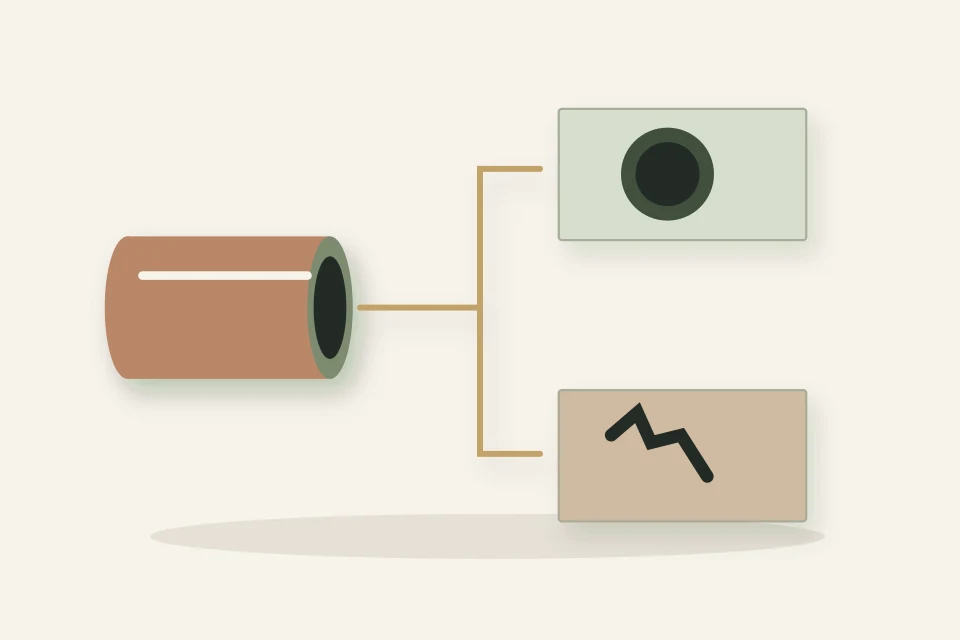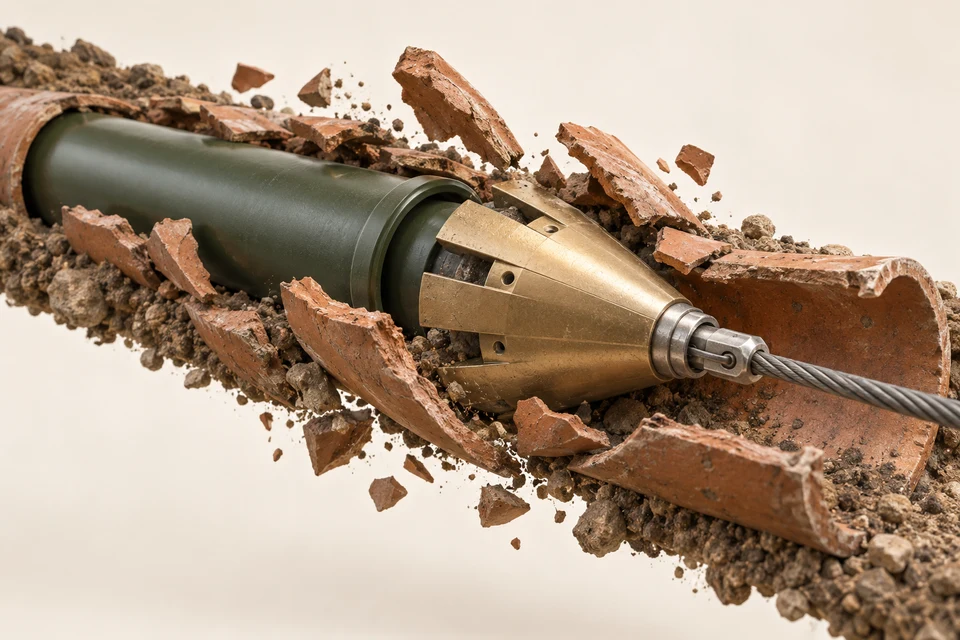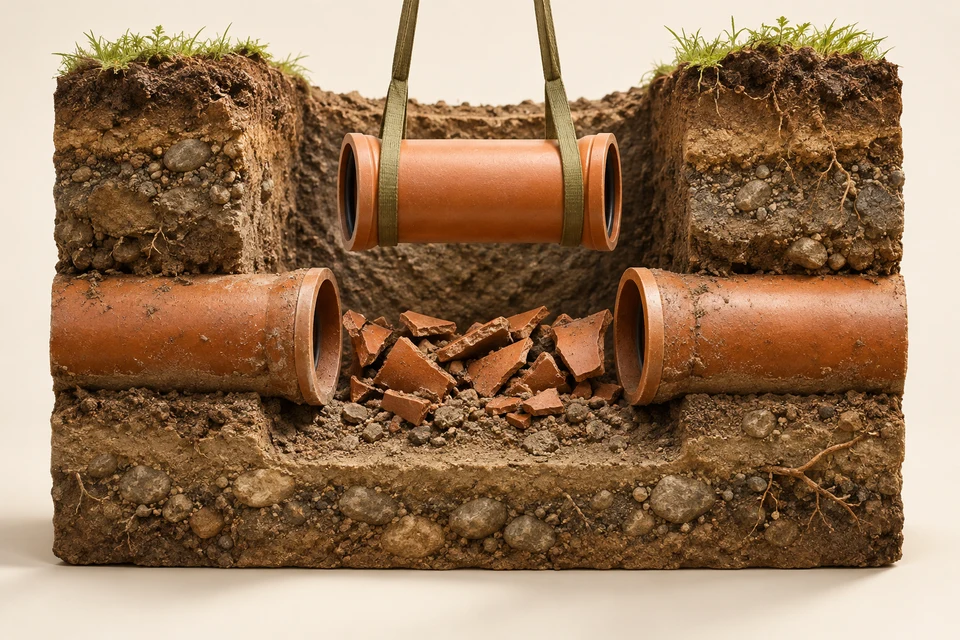
CIPP lining usually fits a sewer pipe that is still round and passable but has roots, cracks or leaking joints, with at least one usable access point such as a cleanout. It usually does not fit a collapsed section, a belly that holds water, or an offset the camera cannot pass, because a liner follows the old pipe's shape and grade and needs an open path to go in.
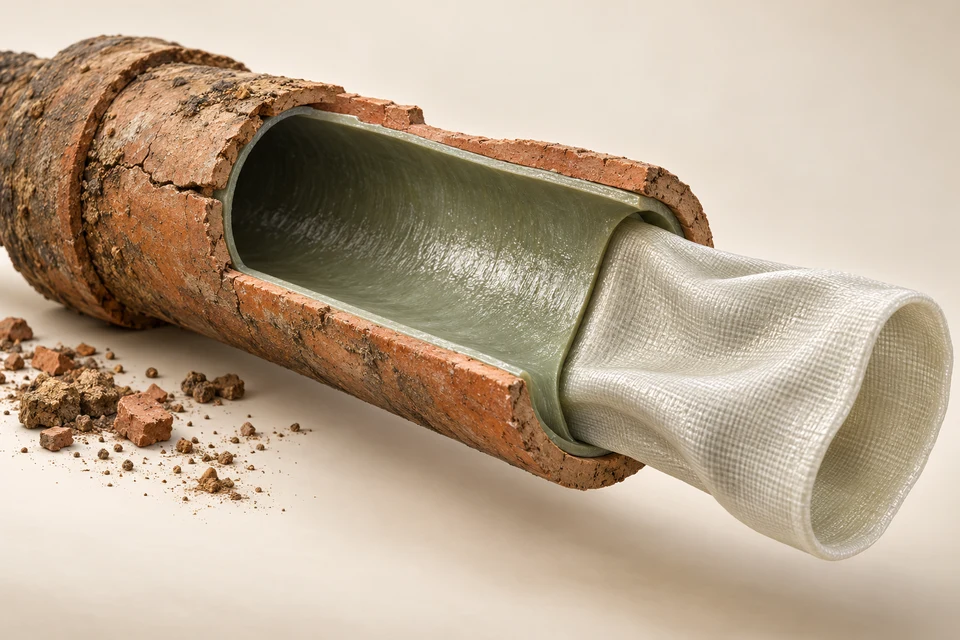
- A liner is a resin-soaked tube inverted or pulled into the old pipe and cured into a new, jointless pipe inside it.
- It inherits the host pipe's shape and grade, so it seals defects but does not correct a belly.
- Cleaning before lining and reopening branches after it are where quality is won or lost.
- A full liner and a sectional liner answer different problems; the number and spread of defects decides.
- Ask for the liner and resin system, the cure method, how connections are reinstated, and before-and-after video.
01 /What is a CIPP liner, in plain terms?
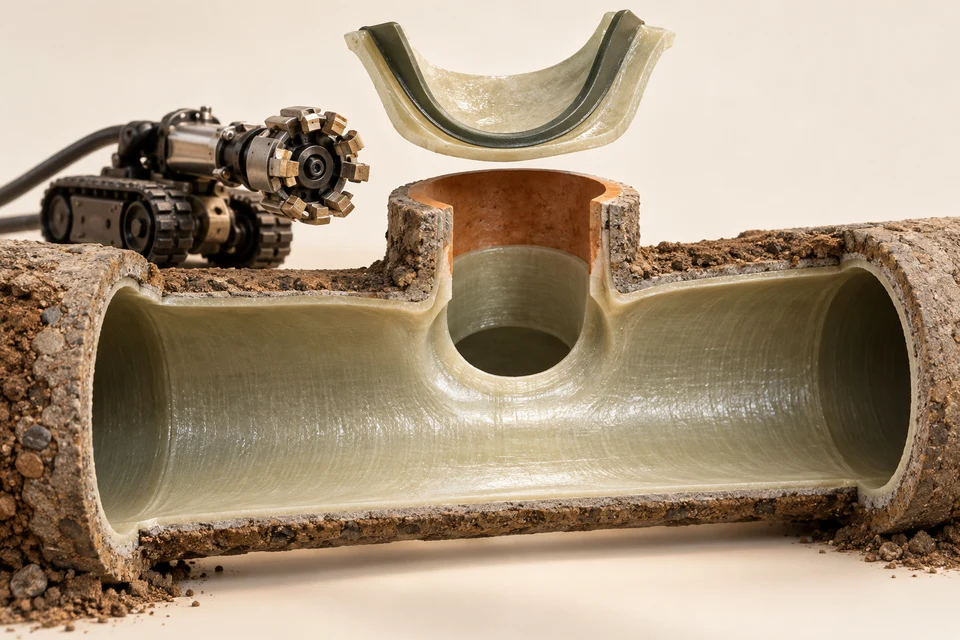
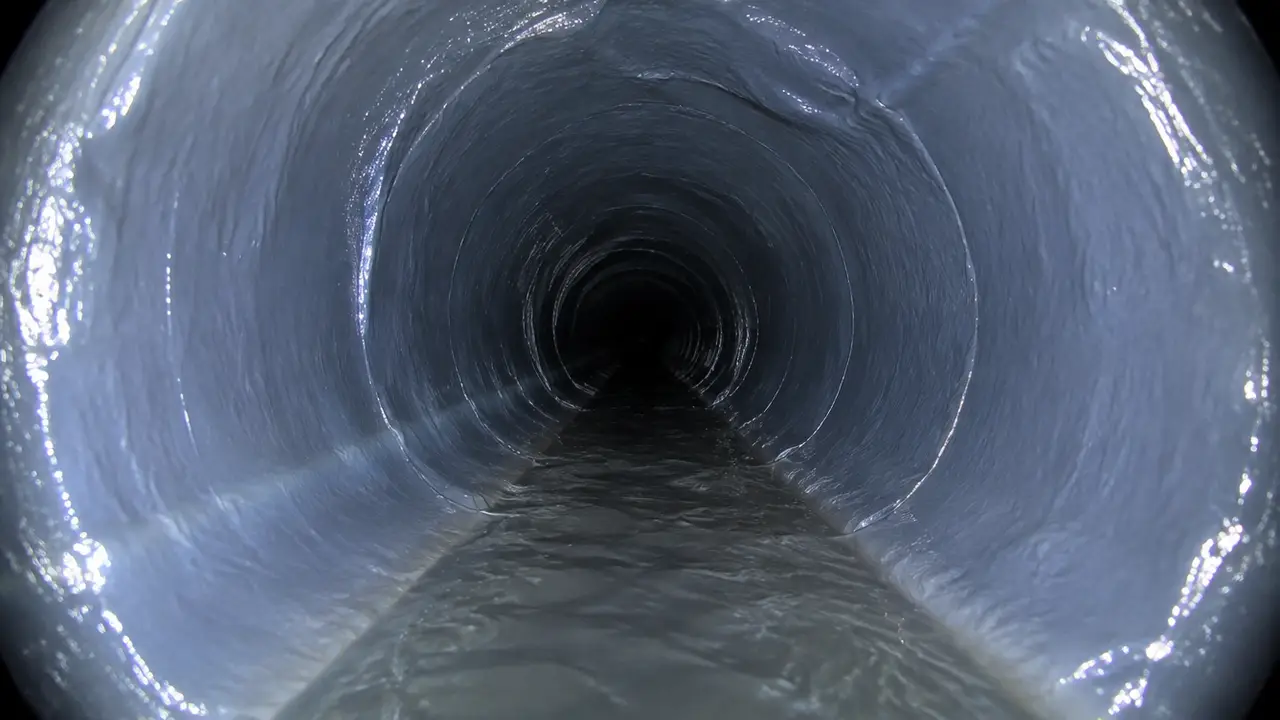
A cured-in-place pipe liner is a flexible tube, usually felt or a fibreglass fabric, saturated with resin, put inside the old pipe and then hardened where it sits. Once cured it is a continuous pipe with no joints, pressed tight against the inside of the old one, which is called the host pipe. The US EPA's fact sheet on trenchless sewer rehabilitation describes the two ways the tube gets in: winched into place and then inflated against the walls, or inverted, turned inside out as water or air pressure pushes it along the pipe.
The best-known standard for the inverted method is ASTM F1216, which covers pipes from 4 to 108 inches in diameter with the resin cured by circulating hot water or controlled steam. Many residential systems today also use ultraviolet light or ambient-cure resins. For a homeowner the important point is not the chemistry but the consequence: because the liner takes the shape of the host pipe, it inherits that pipe's alignment and grade, including any dips.
How liners are designed, how thick they are made and how each resin and cure behaves is the specialist lane of sister site SewerRelining.ca. This guide stays with the repair decision: when a liner is the right fix for the fault your camera found.
02 /Which defects does lining fix well?
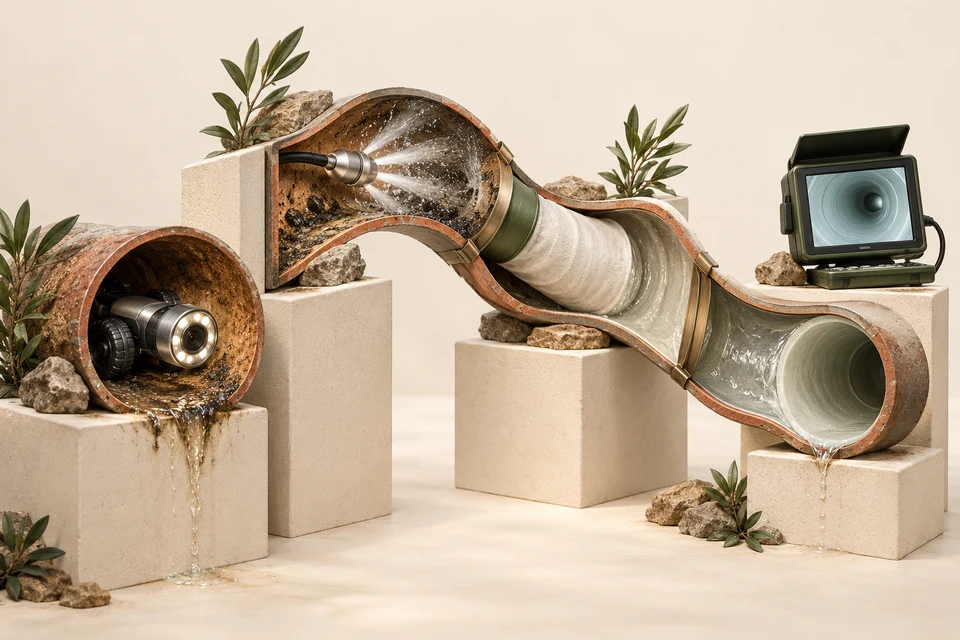
Lining is at its best on a pipe that has lost its seal but not its shape. Roots that forced their way through joints, cracks and fractures in pipe that is still round, joints leaking groundwater in or sewage out, and corrosion or scale in old cast iron that has been cleaned back to sound metal are all standard liner work. The liner bridges each defect and closes every joint it covers.
| Defect | Typical liner outcome | Condition |
|---|---|---|
| Roots through joints | Sealed at every lined joint | Roots cut out completely first |
| Longitudinal or circumferential cracks | Bridged and carried by the liner | Pipe still round |
| Leaking joints, infiltration | Closed along the lined length | Liner ends and connections sealed |
| Minor offsets | Usually lined through | Ask how wrinkling at the offset is controlled |
| Corroded or scaled cast iron | Lined after descaling | Enough wall left to support cleaning |
| Belly holding water | Not fixed; the liner keeps the sag | Needs a dig at that section |
| Collapse or blocking offset | Cannot be lined through | Dig or spot repair first |
The legacy advice on this site still holds: lining suits a pipe that is still round and passable. If your camera footage shows the pipe losing its shape, a crushed section, or a sag where water stands, the liner is not the first tool. The trenchless fit checker applies exactly this logic to your answers.
03 /How does a liner install go, from camera to final video?
A residential lining job normally takes one working day on site for a typical lateral, sometimes two when cleaning is heavy. The sequence below is what a careful installer does; if a quote skips a step, ask why.
- Camera inspection and measurement
A recorded run confirms the pipe is passable, measures the length and diameter, and marks every branch connection by distance.
- Cleaning
Root cutting, jetting and descaling so the liner can seat tight to a clean wall. Roots left in place leave lumps and gaps.
- Post-cleaning camera
A second look proves the pipe is clean and that cleaning did not break anything loose.
- Wet-out
The tube is saturated with measured resin, on site or in a controlled facility, and kept at the temperature the system needs.
- Inversion or pull-in
Air or water pressure turns the tube inside out along the pipe, or it is winched in and inflated.
- Cure
Hot water, steam, UV light or time hardens the resin while pressure holds the liner against the wall.
- Reinstatement
A remote cutter reopens each branch connection from inside; the ends are trimmed and sealed.
- Final recorded video
The whole liner, both ends and every reopened connection, on camera, with distances.
Drains connected to the line cannot be used while the liner is installed and curing. The City of Calgary's own lateral lining program, for example, asks residents not to run water during the work and describes a connection closure of about three hours for its side of the service. Your contractor will tell you how long your drains will be out for your job.
04 /When is a liner the wrong tool?
A liner needs an open path and does not change grade. That rules it out, or at least out of the first conversation, in four situations.
- Collapse: there is no round path to invert or pull the tube through. The collapsed section is exposed and replaced, and the rest may then be lined.
- Belly: the liner lies in the dip and the finished pipe holds water and solids exactly as before. Bellies are dug and relaid on grade.
- Severe offset: when joints have shifted far enough to stop the camera, the pipe usually needs to be exposed and realigned.
- Badly deformed fibre pipe: bituminous fibre (Orangeburg) can blister and flatten with age; if it is no longer round, a liner may not seat. Bursting or replacement is then the conversation.
Lining is also a weaker choice when the line is short, shallow and under open lawn, where a dig can cost less and gives new pipe on new grade. The honest comparison is in when excavation is necessary, and belly cases in trenchless sewer belly repair.
05 /Full-length liner or sectional liner?
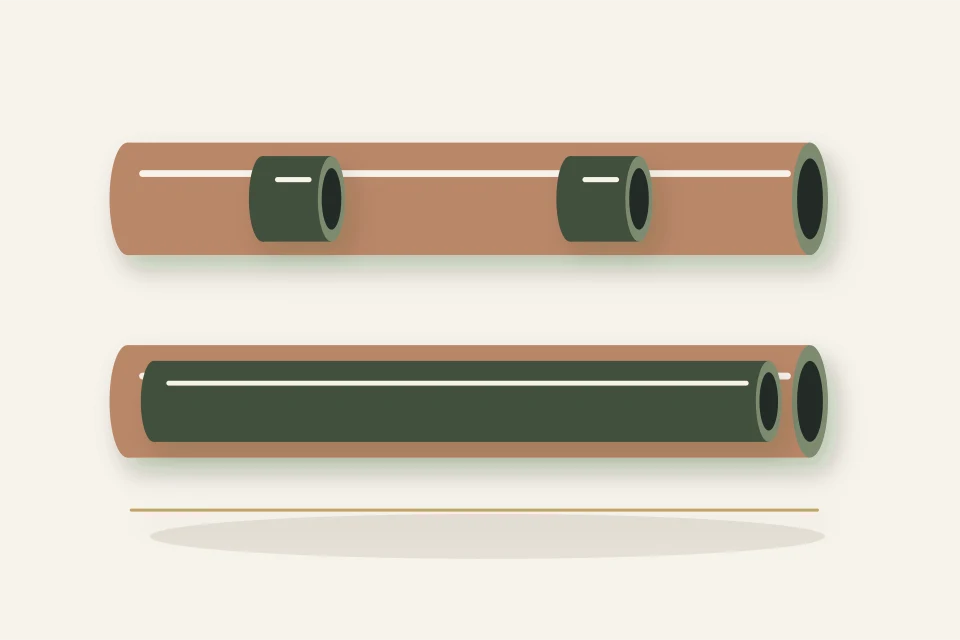
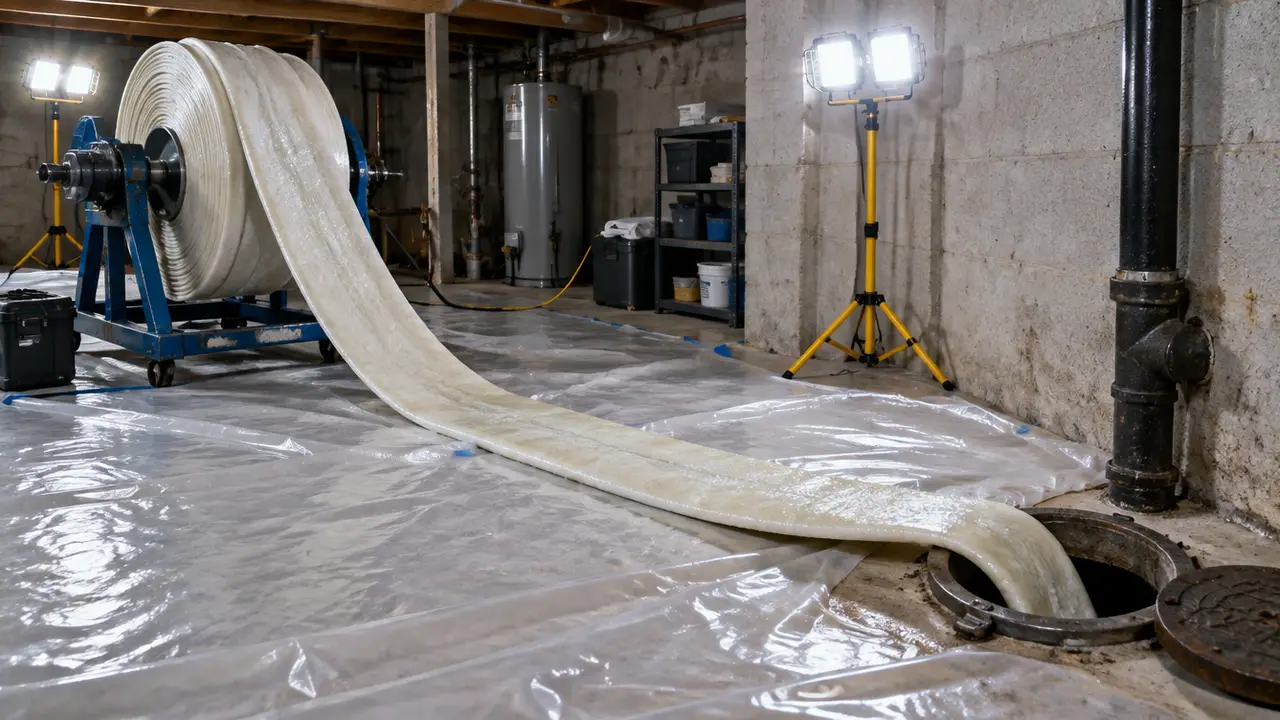
A full-length liner renews the whole lateral from the access point to the main or property line. A sectional liner, sometimes called a point or spot liner, is a short sleeve pressed over one defect on an inflatable packer. They solve different problems: one or two isolated faults on otherwise sound pipe suit sectional liners; defects spread along an old clay or cast iron line suit a full liner, because it also seals the joints that have not failed yet.
As 2026 planning estimates, a sectional liner typically quotes $2,500 to $6,500 for the first section and $1,500 to $3,500 for each extra one on the same visit, and a full liner on a 15 to 25 m lateral $9,000 to $28,000. The Spot Repair or Full Liner? planner puts your own defect list through those ranges, and sewer spot repair explains the trade-off in depth.
06 /What should I ask before I agree to a liner?
Service-life claims vary by product and installation, so ask for the manufacturer's documentation rather than relying on a headline number. The questions below get you the facts that decide whether a liner will do its job.
- What liner and resin system is it, and what cure method will you use?
- How will the pipe be cleaned, and will I see camera footage after cleaning and before lining?
- How long is the liner, where exactly do its ends sit, and how are the ends sealed?
- How many branch connections will be reopened, and how is each one sealed afterwards?
- Will I get before-and-after video with distances marked, as files I keep?
- Who confirms whether a permit is needed with the local authority, and who books locates if a pit is dug?
- What does the written warranty cover, for how long, and who stands behind it?
Reopening branches is where lined laterals most often go wrong, which is why it has its own guide, lateral reinstatement and connection seals. The common failure patterns, from wrinkles to soft spots, are in problems with trenchless sewer repair.
07 /Lining in Calgary: what is different?
Calgary's City-side sanitary service lines already include liners. The City's Public Sanitary Service Lines open data records 4,113 City-owned service lines coded CIPP, nearly all of them carrying dates in the 2010s and 2020s, and in communities such as Highwood, Glendale and University Heights about a fifth of City-side lines carry that code. That data covers only the portion from the main to the property line, which the City owns; the homeowner owns the pipe from the property line to the house.
So a Calgary lateral can end up half lined: new CIPP under the boulevard and 1960s clay tile under the front yard. If that describes your camera footage, a liner or a short run of sectional liners on the private side may be all the line needs. Look up your area in the Calgary guide, and when you have footage, send it to the HAUSE Sewer desk for a second opinion before you commit.
FAQQuestions people ask
Can a liner go through a pipe with roots in it?
Not well. Roots must be cut out completely first, or the liner cures around them and leaves lumps, gaps and a path for new roots. Ask to see camera footage after cleaning.
Does a CIPP liner make the pipe smaller?
Slightly, by the thickness of the liner. In a typical house lateral the smooth, jointless wall usually offsets that loss; ask the installer what finished diameter to expect.
Can a liner fix a sag in my sewer line?
No. The liner follows the existing grade, so a belly stays a belly. The sagging section is dug and relaid, and the rest can be lined.
How long are drains out of service during lining?
For the install and cure, usually part of a day for a house lateral. Your contractor should tell you in advance and confirm when drains can be used again.
Is CIPP lining allowed in my city?
Lining is widely used by Canadian municipalities on their own pipes, including Calgary's lateral lining program. Whether a permit is needed for private work depends on the municipality; ask your contractor to confirm with the local authority.
NETWORKGo deeper across the HAUSE Sewer network
Sewer pipe lining cost: what a CIPP liner should cost in Canada
Sewer pipe lining cost in Canada (2026): CIPP liner ranges in CAD for full laterals and single sections, the line items, cost drivers and quality checks.
SewerRoots.caPermanent fixes for roots in sewer lines
Permanent fixes for roots in sewer lines: CIPP lining, sectional point repairs, pipe bursting and open-cut replacement compared by cost, lifespan and fit.
SewerJetting.caJetting before trenchless lining: why the prep cleaning decides the result
Why jetting before trenchless lining matters: root removal, descaling cast iron, cleaning to a bare wall, camera checks and what rushed CIPP prep causes.
SOURCESSources and further reading
- US EPA — Collection Systems O&M Fact Sheet: Trenchless Sewer Rehabilitation (EPA 832-F-99-032)
- ASTM International — F1216 standard practice (CIPP by inversion)
- City of Calgary — Sanitary lateral lining program
- City of Calgary — Public Sanitary Service Lines (open data)
- NASSCO — National Association of Sewer Service Companies