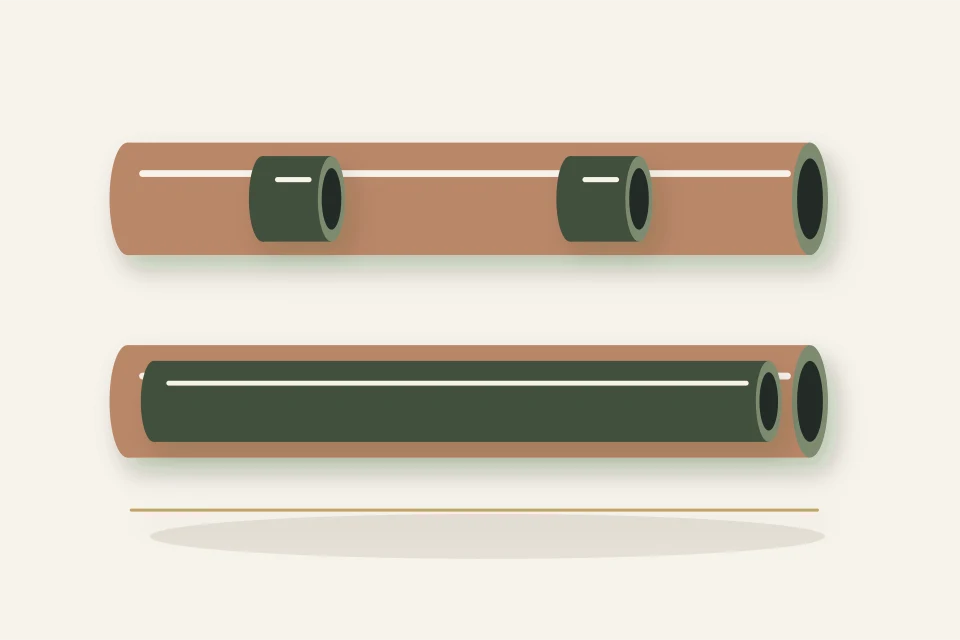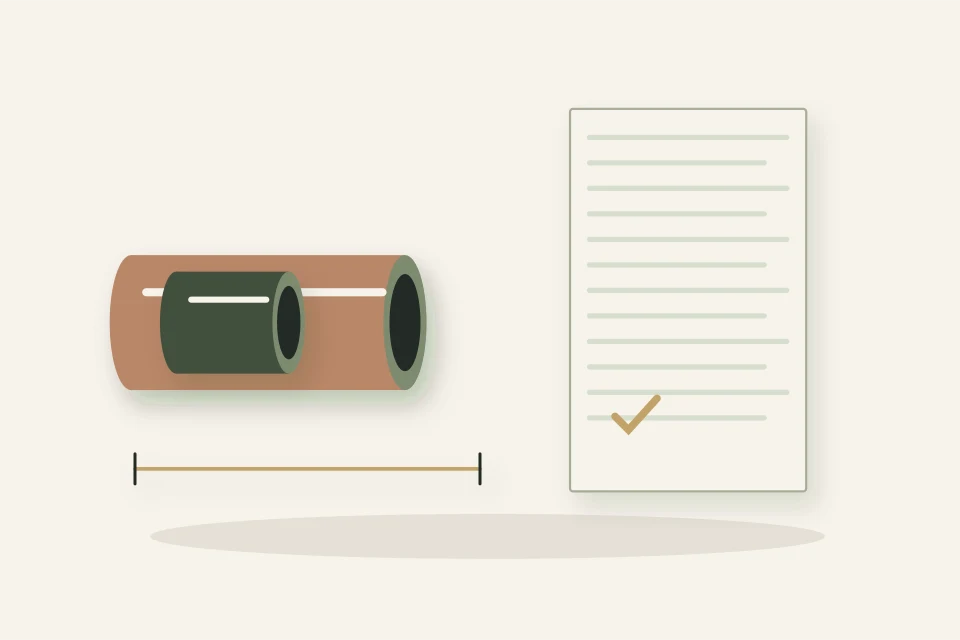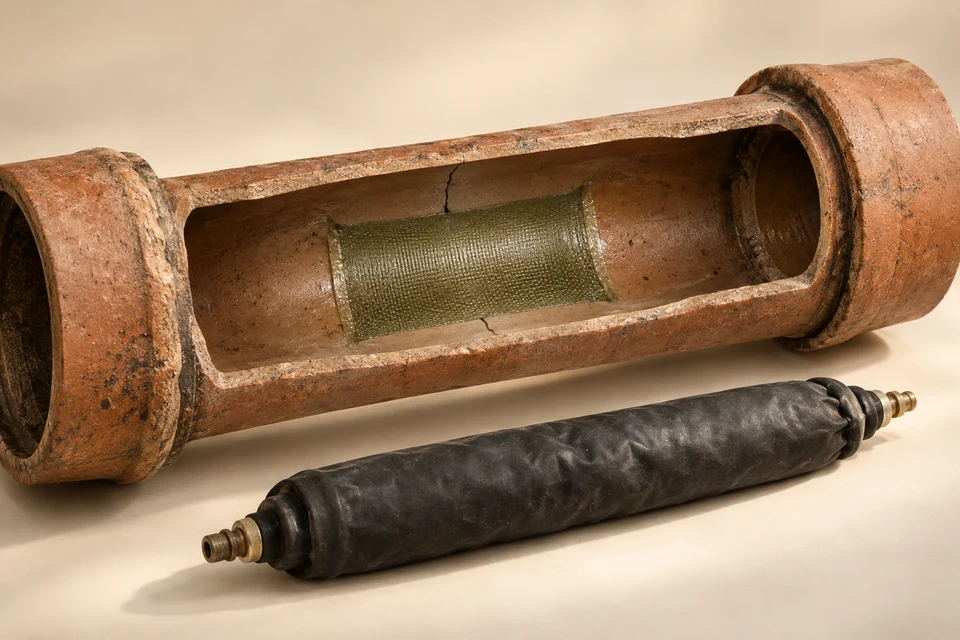
A sewer spot repair fixes one short section of a lateral at a defect found by camera, either with a trenchless sectional liner pressed onto the inside of the pipe or by digging down and replacing that piece. It is the right repair when the fault is isolated and the rest of the pipe is sound. When defects are spread along an old line, spot repairs tend to be followed by more spot repairs.
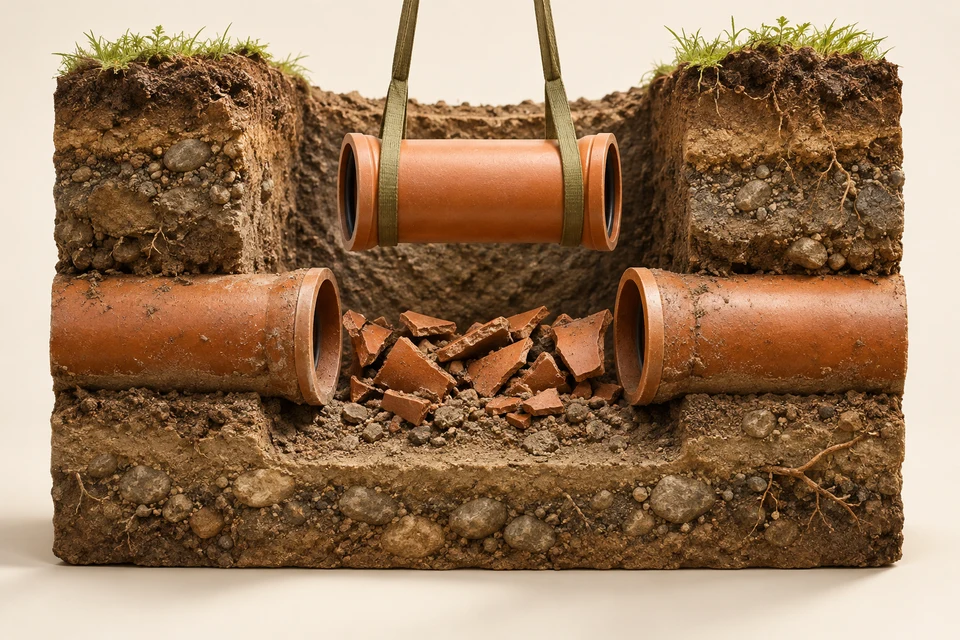
- There are two kinds of spot repair: a sectional (point) liner from inside, or an excavated repair from above.
- A sectional liner needs round, passable pipe; an excavated repair is the one that fixes a collapse or a belly.
- One defect on otherwise sound pipe is a spot-repair job; roots at many joints of old clay are usually not.
- As a 2026 planning estimate, a sectional liner starts around $2,500 to $6,500 and an excavated spot repair $3,500 to $16,000.
- Count the defects and price the full liner before committing to several spots.
01 /What counts as a sewer spot repair?
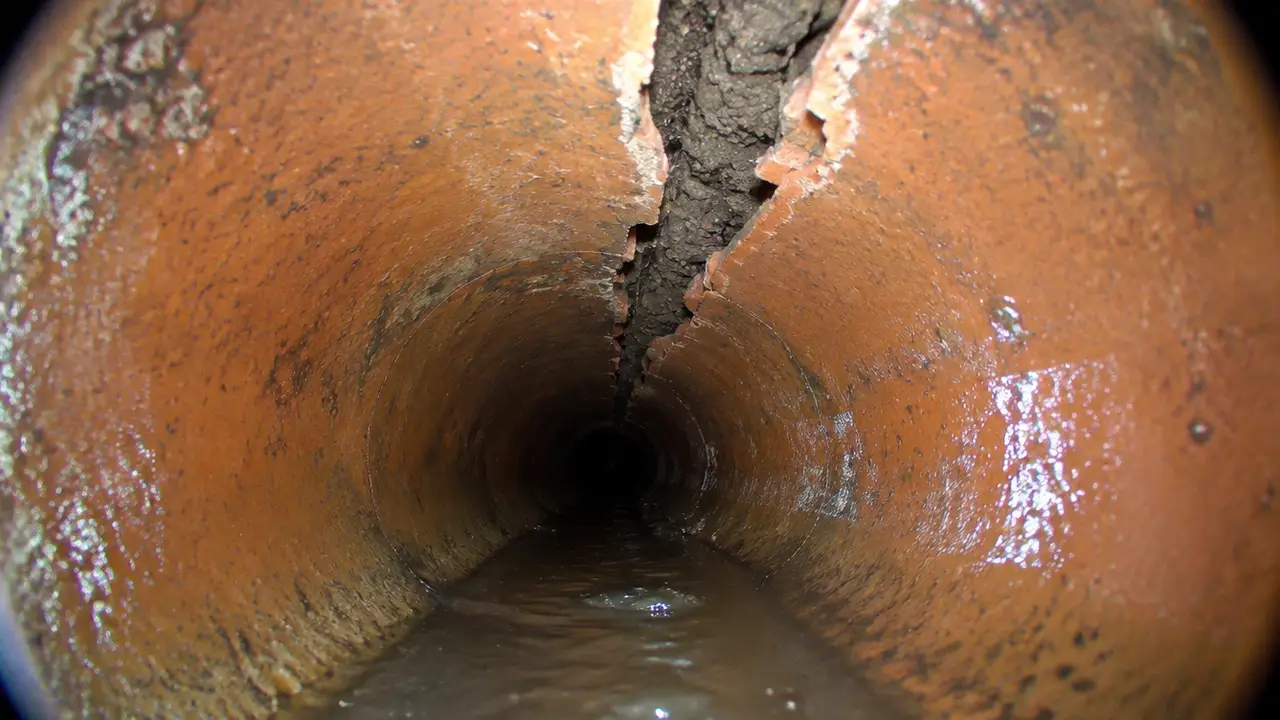
Any repair that renews a short length of pipe at a single location rather than the whole run. On a house lateral that usually means one to a few metres around a defect that a camera has pinned to an exact distance. There are two ways to do it, and they suit different faults.
Consumer patch kits and wraps sold for exposed drain pipes are not a repair for a buried sewer lateral. A spot repair on a lateral is professional work with a camera, a packer or an excavator, and in many municipalities a permit.
02 /How does a sectional liner go in?
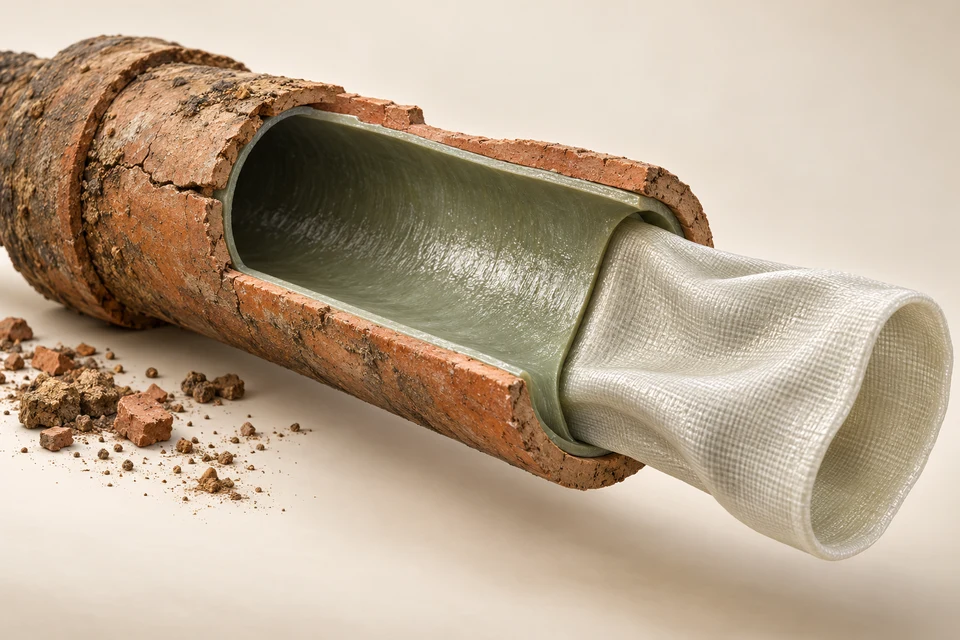
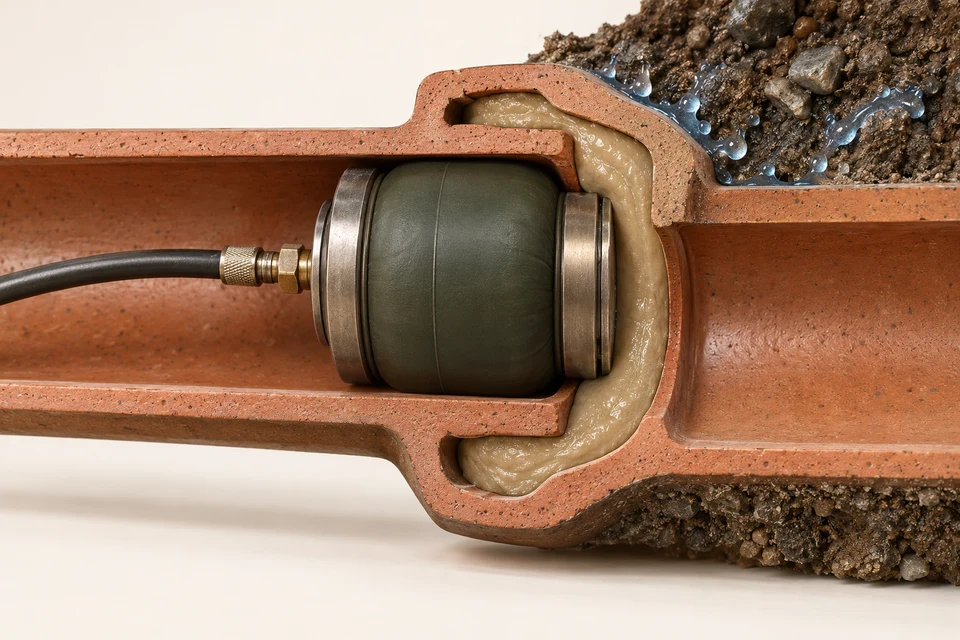
The installer measures the distance to the defect from the camera footage, then wraps a short length of fabric saturated with resin around an inflatable rubber packer. The packer is pushed down the pipe on rods or a cable to the defect, checked on camera, and inflated so the sleeve presses tight against the wall. It stays inflated while the resin cures, then is deflated and pulled out, leaving a short, jointless sleeve bonded over the fault.
The US EPA's fact sheet on trenchless rehabilitation groups these techniques as internal point repairs, alongside robotic repairs and grouting, and describes them as cost-effective for isolated defects. As with a full liner, the pipe must be cleaned back to a sound wall first, and the sleeve must lap onto good pipe on both sides of the defect. Ask how long each sleeve will be and where its ends will sit.
03 /When is one defect really a symptom of a failing line?
When the camera shows the same weakness waiting at every other joint. A 60-year-old vitrified clay lateral with roots through one joint almost certainly has the same kind of joint every metre or so along its length; the one with roots today is simply the one a root found first. Fixing it with a sectional liner stops that root and leaves the others open.
| Pattern on the camera | Spot repair makes sense? | Why |
|---|---|---|
| One crack from a known event (a dig, a heavy load) on plastic pipe | Usually yes | Isolated damage on pipe with sound joints |
| One offset joint on an otherwise straight, clean line | Often | A short liner or a single dig fixes it |
| Roots at one joint of old clay, other joints clean | Maybe | Other joints share the same age and gasket |
| Roots at three or more joints of old clay | Rarely | A full liner seals every joint for less than several sections |
| One collapse on an otherwise sound line | Yes, by excavation | Dig the collapse; consider lining the rest |
| Deformed fibre pipe with blisters along the run | No | The whole pipe is failing; bursting or replacement |
The Spot Repair or Full Liner? planner applies this reasoning to your own defect list: it counts sections, prices both plans, and calls two or more sections on old clay, concrete or cast iron a close call.
04 /What does a spot repair cost?
As 2026 planning estimates in Canadian dollars, a sectional liner typically quotes $2,500 to $6,500 for the first section and $1,500 to $3,500 for each extra section on the same visit. An excavated spot repair runs about $3,500 to $9,000 under lawn at up to about 2.5 m deep, $7,000 to $16,000 when deeper or under concrete or asphalt, and $4,000 to $12,000 under a basement slab. A full liner on a 15 to 25 m lateral is about $9,000 to $28,000 by comparison.
The arithmetic changes quickly with the defect count. Two sectional liners on the same visit plan at about $4,000 to $10,000; four plan at about $7,000 to $17,000, which is already in full-liner territory while covering only four short lengths of pipe. That is why the planner shows a break-even: the number of sections at which spot repairs stop being the thrifty option.
05 /Which defects suit a sectional liner, and which need a dig?
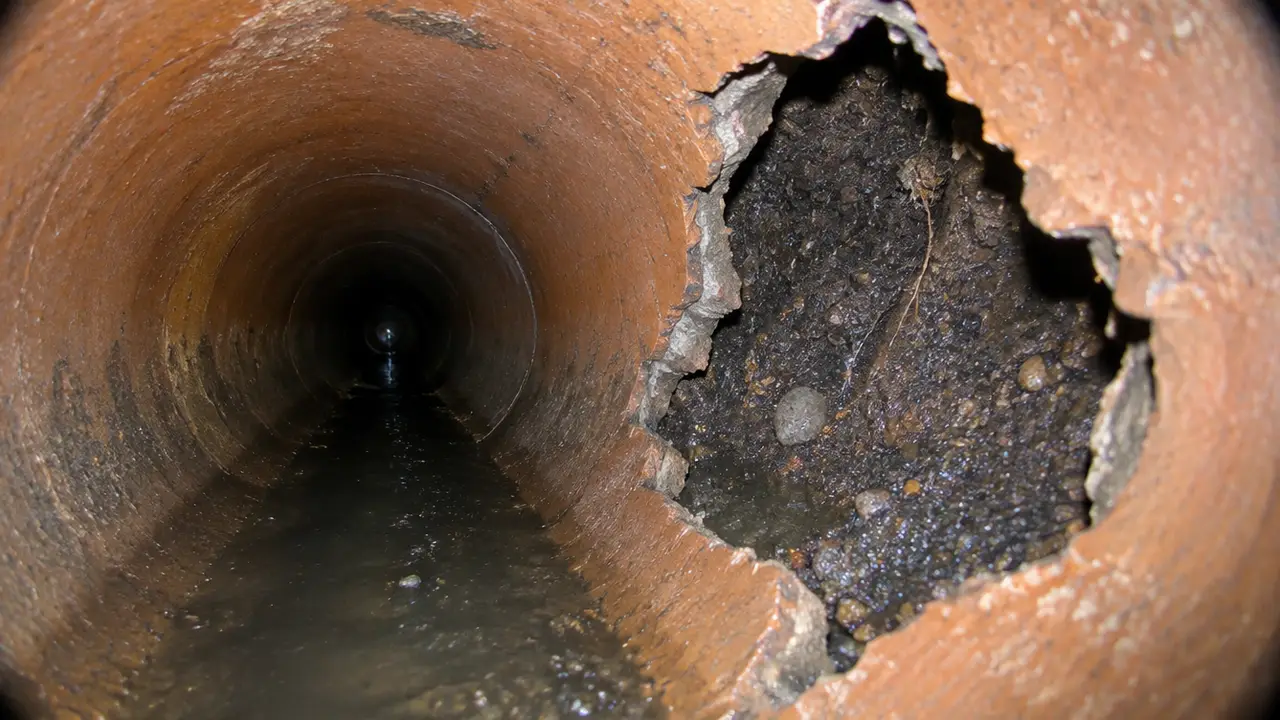
- Suit a sectional liner: roots through a joint once cut out, circumferential and longitudinal cracks, fractures where the pipe is still round, small holes where the surrounding pipe is sound, minor offsets the sleeve can bridge without folding.
- Need a dig: a collapsed or crushed section, a belly that holds water, an offset the camera cannot pass, a broken fitting at a connection, pipe so deformed a packer cannot seat.
- Might suit joint grouting instead: groundwater getting in at joints of pipe that is otherwise sound, where no structural repair is needed. See sewer joint grouting.
The same line of thinking runs through the trenchless fit checker: round and passable pipe keeps liners on the list, while a collapse or belly keeps a dig there whatever else you answer.
06 /What should a spot repair quote say?
- The defect being repaired, by type and distance from the access point.
- The method: sectional liner or excavated repair, and why the other was not chosen.
- For a liner: the sleeve length, resin system and cure, and where the ends sit.
- For a dig: depth, surface disturbed, couplings used and restoration included.
- Cleaning before the repair and a camera check after cleaning.
- A final recorded video showing the repaired section and the pipe either side.
- What happens to the other defects on the footage, if any, and whether they were priced.
- The written warranty, its length and who backs it.
Item seven is the one people forget. A quote to fix one spot on a line with four faults should at least say the other three were seen. If it does not, ask, and compare it against a full-liner price. How liners and the other methods compare as a whole is in how trenchless sewer repair works.
07 /Spot repairs on Calgary laterals
Calgary's City open data suggests where single-joint repairs are least likely to be the end of the story: about 20% of City-owned sanitary service lines are coded TIL, generally clay tile, most of them installed in the 1960s and 1970s, when every joint was a potential root entry. The data covers only the City's side of each service, from the main to the property line, so the private side has to be confirmed on camera, but a 1970s house in a mostly clay-tile community probably has clay on its side too.
Newer communities with PVC service lines, which the City data shows taking over in the 1980s, are where a single crack or a single offset is more often a genuinely isolated fault. The Calgary guide has the community picture. When you have your footage, send it to the HAUSE Sewer desk and ask whether a spot repair or a full liner is the better spend.
FAQQuestions people ask
Can a sewer line be repaired in just one spot?
Yes, when the defect is isolated and the rest of the pipe is sound. A sectional liner or a single dig renews that section and leaves the rest as it was.
Is a spot repair cheaper than lining the whole pipe?
For one or two sections, usually. By three or four sections on the same line, a full liner is often similar in price and seals every joint.
Do sectional liners stop roots?
They seal the joint they cover, so roots cannot re-enter there. Joints left unlined remain open to roots.
Can a spot liner fix a sag?
No. A sectional liner follows the existing pipe, so a sag stays. The sagging section needs to be dug and relaid on grade.
How long does a sectional liner take to install?
Often a few hours on site once the line is clean, most of it waiting for the resin to cure. Heavy root cutting or several sections add time.
NETWORKGo deeper across the HAUSE Sewer network
Permanent fixes for roots in sewer lines
Permanent fixes for roots in sewer lines: CIPP lining, sectional point repairs, pipe bursting and open-cut replacement compared by cost, lifespan and fit.
SewerQuotes.comSewer line repair cost: what a spot repair should cost
Sewer line repair cost in Canada for 2026: spot repair and sectional liner planning ranges in CAD, what drives the price, and when a repair beats full replacement.
SewerInspector.caCommon sewer defects, explained by what they do to the pipe
Common sewer defects explained: roots, cracks, fractures, offset and separated joints, sags, deposits, holes and collapse, with severity and usual next steps.