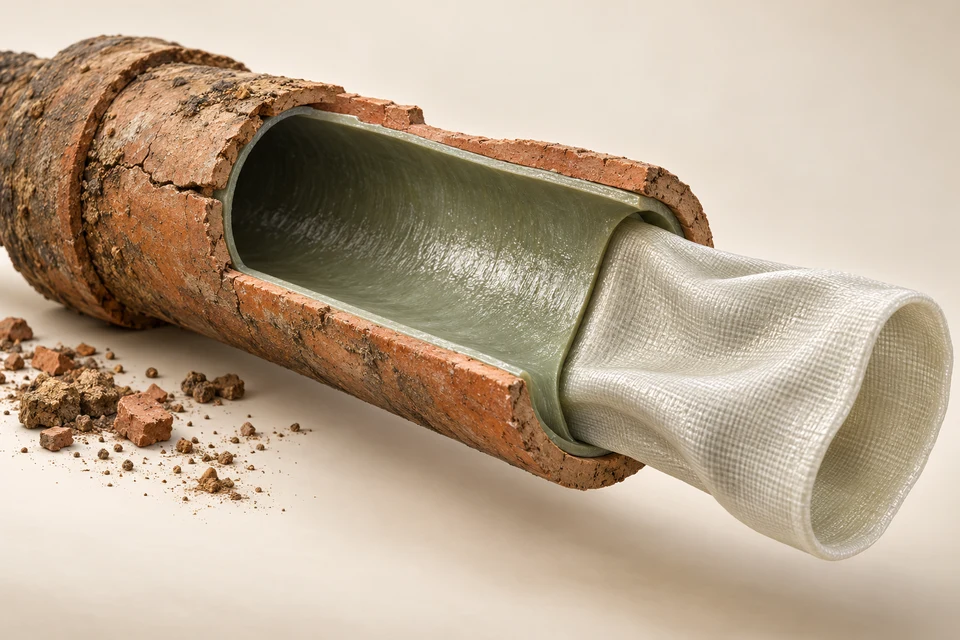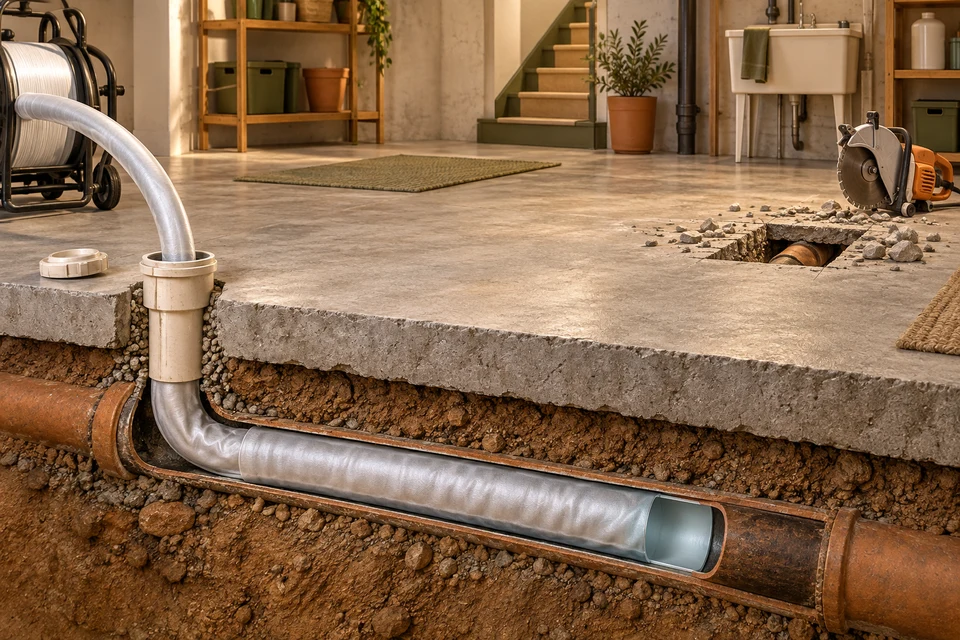
A cracked, corroded or root-damaged building drain under a basement floor can often be lined from a cleanout, leaving the slab, flooring and finished walls in place. That requires a round, passable pipe, a usable access point and branch connections that can be reopened from inside. A collapsed or bellied drain under the slab still needs the concrete saw-cut and the pipe dug out at that spot.
- The building drain under the slab joins the lateral near the foundation wall; it fails for the same reasons as the lateral.
- Lining from a cleanout avoids breaking up finished floors, but every branch under the slab must be reopened.
- Smaller branch drains under the slab need a liner system suited to their diameter; confirm what the installer can line.
- A backwater valve on the line changes the plan: the liner has to stop at it or it must be removed and refitted.
- As a 2026 planning estimate, an excavated repair under a basement slab typically quotes about $4,000 to $12,000.
01 /What pipe is under my basement floor?
In most Canadian houses with basements, the fixtures drain to a vertical stack, and the stack drops to a horizontal building drain buried in the gravel under the concrete floor. The building drain runs to the foundation wall, where it becomes the building sewer or lateral outside. Floor drains, basement bathrooms, laundry standpipes and sometimes a sump or a secondary stack join it as branches along the way, all under the slab.
Houses built through the 1950s and 1960s commonly have cast iron under the slab; later houses mostly have ABS or PVC. Cast iron corrodes from the inside and can scale heavily or lose its bottom, called the invert, where water has run for decades. Plastic drains can fail at joints, sag where the gravel bed settled, or crack under point loads. Roots rarely reach far under a slab but do get into the drain near the foundation wall.
02 /How does lining a drain under a slab work?
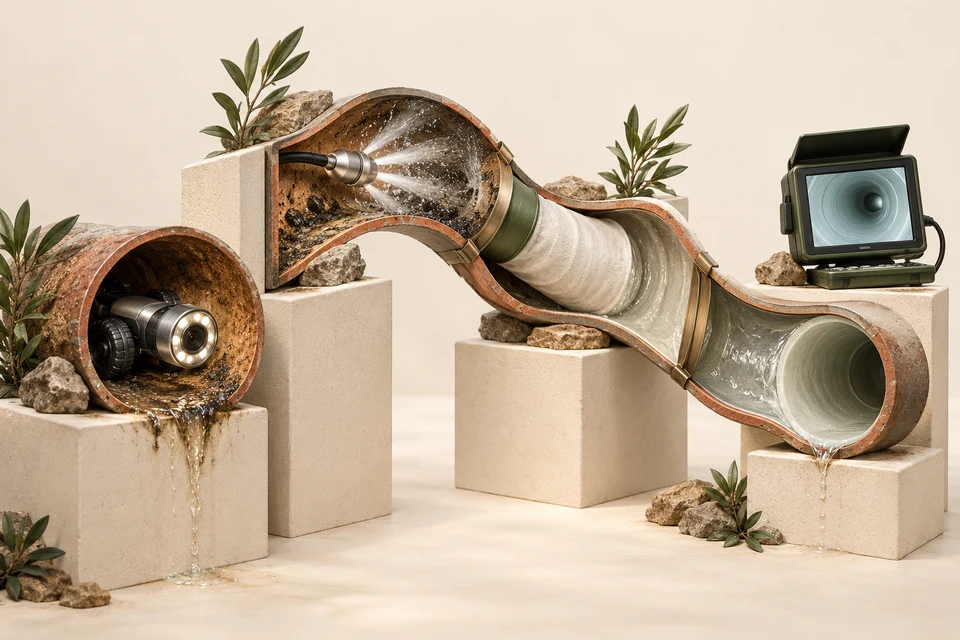
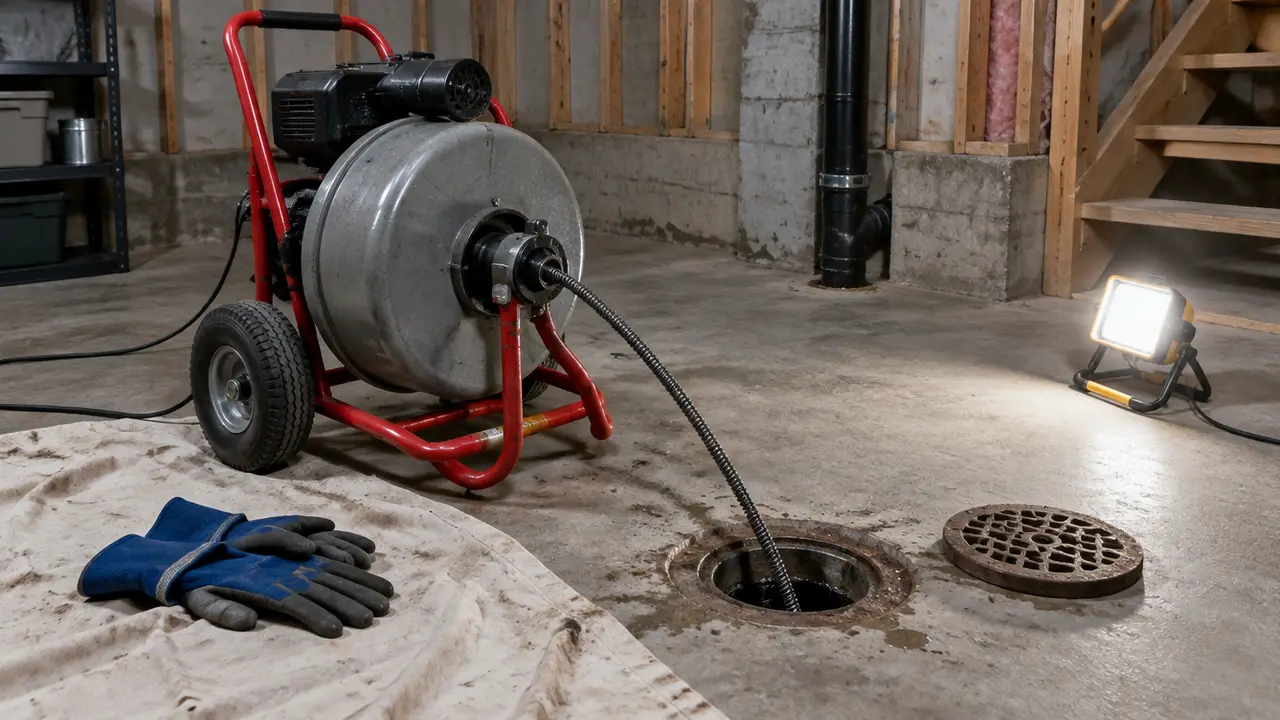
The same way as lining a lateral, only indoors. The drain is inspected on camera from a cleanout, often at the base of the stack, with every branch logged by distance. It is cleaned, which on cast iron usually means descaling back to sound metal, then a liner is installed from the cleanout toward the foundation, or right through to the lateral, and cured. The branches that join under the floor are then reopened from inside with a cutter.
The attraction is obvious in a finished basement: no concrete dust, no jackhammer, no rebuilding of flooring, walls or a bathroom. It is also why lining under a slab is priced carefully. Reopening several branches from inside a small pipe is precise work, and descaling thin cast iron is a judgement call about how much wall remains.
03 /When can the drain under a slab not be lined?
- Collapsed or crushed sections, or cast iron with the invert rotted through so there is nothing for the liner to bear on in that spot.
- Bellies where the gravel bed has settled and water stands; a liner keeps the dip.
- Branches too small or too tight for the installer's liner system or cutter; confirm the smallest diameter they can line and reinstate.
- No usable access and no reasonable place to add a cleanout.
- A layout that has been modified with odd fittings or mixed materials the liner cannot pass.
ASTM F1216, the best-known standard for inverted liners, covers pipes from 4 inches (about 100 mm) up; smaller-diameter systems exist for branch drains, but not every installer offers them. Ask specifically about the 2 and 3 inch branches under your floor, not only the main drain.
04 /What happens when the slab has to be cut?
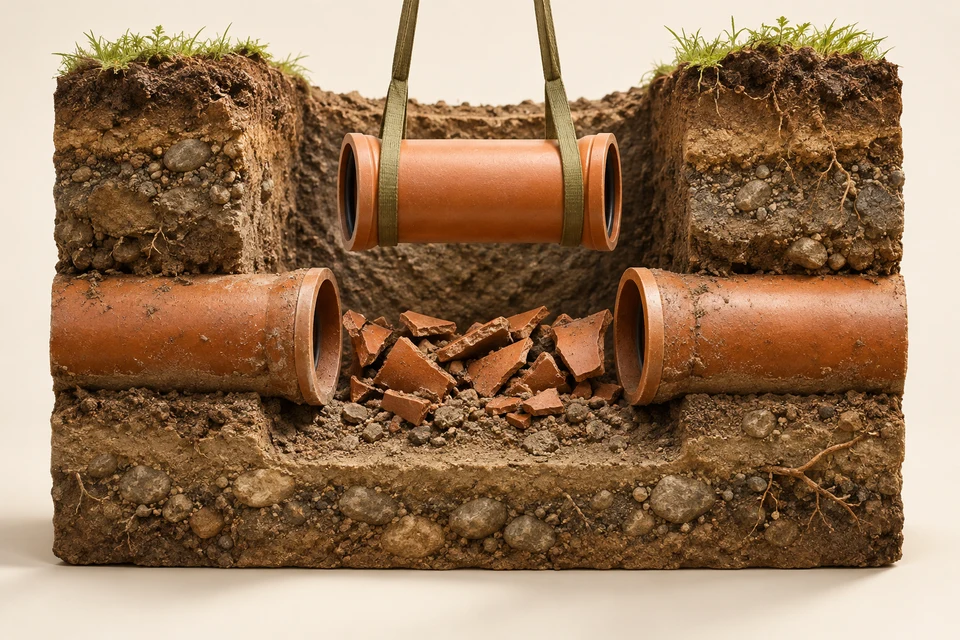
The installer marks the drain's route with a sonde, saw-cuts a strip of the slab over the failed section, breaks it out, digs by hand to the pipe, replaces the section with new pipe on compacted bedding at the correct slope, and has it inspected and videoed. The trench is backfilled in layers and the concrete re-poured. Flooring, walls and fixtures over the cut are then rebuilt.
- Locate and mark
The route and the failed section are traced from inside with a sonde.
- Protect the house
Dust barriers, floor protection and a plan for the fixtures that will be out of use.
- Saw-cut and break out
Only as much slab as the repair needs.
- Repair on grade
New pipe, bedding and couplings; a camera run and any required inspection before backfill.
- Re-pour and restore
Backfill, concrete, then flooring and finishes.
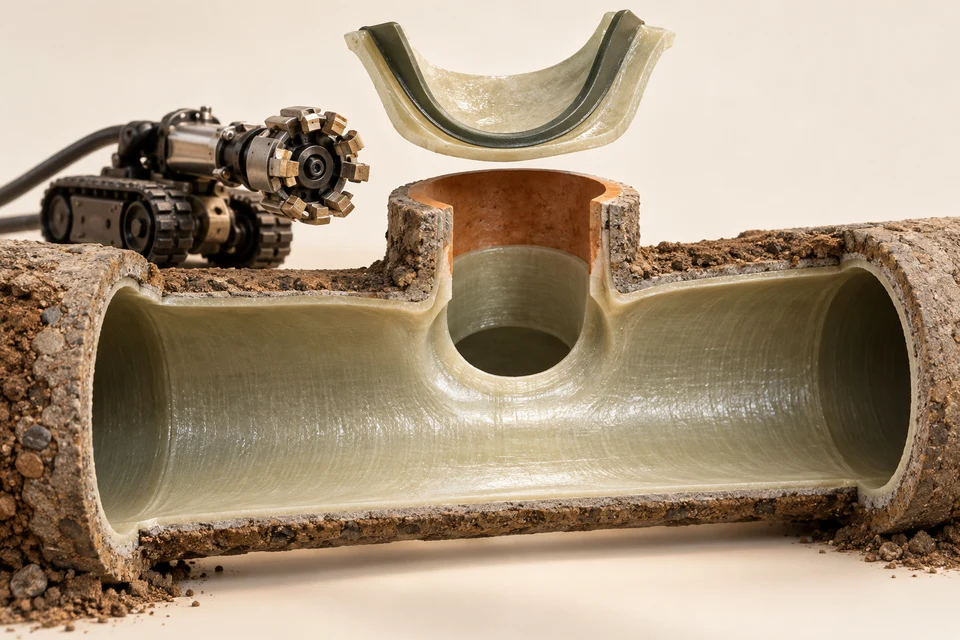
A hybrid is common here too: cut the slab at the one collapsed or bellied spot and line the rest of the drain from the cleanout. The logic is the same as outdoors, laid out in when excavation is necessary.
05 /What about a backwater valve?
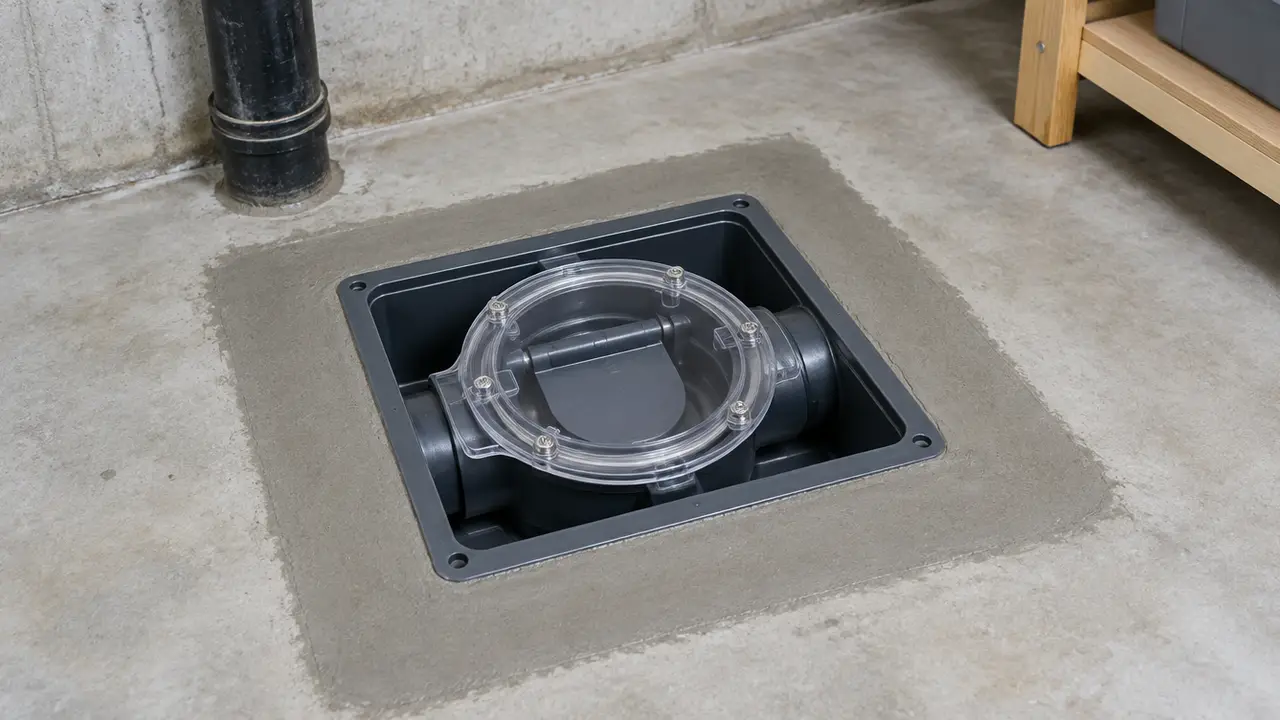
Many basements have, or are advised to add, a backwater valve on the building drain to stop sewage flowing back into the house during a surcharge. The City of Calgary's sewage backup guidance, for example, recommends installing a backwater valve on below-grade fixtures. A valve sits in the drain under or at the slab, often in an access box, and it affects any lining plan.
A liner cannot pass through a working valve. Either the liner is installed on one or both sides and ends at the valve, with the ends sealed, or the valve is removed, the pipe lined and a valve refitted. Ask the installer which they plan, and whether the valve body itself is sound. If you are planning both a valve and a repair, doing them in one visit can share the access.
06 /What does repair under a slab cost?
As 2026 planning estimates in Canadian dollars, an excavated repair under a basement slab typically quotes about $4,000 to $12,000, including saw-cutting, hand digging and re-pouring the concrete but not usually new flooring or finishes. A sectional liner under the slab plans at $2,500 to $6,500 for the first section, and a full liner is priced per metre, about $500 to $1,200 after setup, plus cleaning and $300 to $1,200 for each branch reopened.
Finishes are the swing factor. A saw-cut through bare concrete is one thing; one through tile, a finished bathroom or built-in cabinetry is another. Price the restoration explicitly when you compare. The Spot Repair or Full Liner? planner can model the drain if you enter its length and the defects from the video, and all line items are on the trenchless sewer repair cost page.
07 /What should I ask before a slab repair?
- Which sections under the slab can be lined, and which need cutting, by distance?
- What is the smallest branch you can line and reopen, and how many branches are there?
- How will the cast iron be descaled, and what happens if the wall is too thin?
- What happens to the backwater valve, if there is one?
- What floor and finish restoration is included, and what is excluded?
- Will I get before, after-cleaning and final videos, and who handles the permit?
Condos and townhouses add a question: who owns the drain under your unit? Check with the board or manager before any work. For the wider decision, see how trenchless sewer repair works and trenchless repair by pipe material. When you have footage, send it to the HAUSE Sewer desk.
08 /What should be protected in the house during a slab repair?
Either method brings equipment indoors. For a lining job, expect hoses through a door or window to the basement, resin handling near the cleanout and, with some resins, an odour that needs ventilation. For a saw-cut, expect concrete dust, noise and a trench open for a day or more. Ask how the crew will protect floors and stairs, contain dust, keep furnace and air returns clean, and which fixtures will be out of use and for how long. Keep children and pets away from the work area and any open cleanout or trench.
FAQQuestions people ask
Can a sewer pipe under a slab be repaired without breaking concrete?
Often, by lining it from a cleanout, if the pipe is round and passable and the branches can be reopened from inside. Collapsed or bellied sections still need the slab cut at that spot.
Can cast iron under the basement floor be lined?
Frequently, after descaling back to sound metal. Where the bottom of the pipe has rotted through, that section usually needs replacing.
Do small drains under the slab get lined too?
They can with suitable systems, but not every installer lines 2 or 3 inch branches. Ask what they can line and reopen.
What happens to my backwater valve if the drain is lined?
The liner ends at the valve with sealed ends, or the valve is removed and refitted after lining. Ask which plan the installer proposes.
Is lining cheaper than cutting the slab?
Often in a finished basement, where restoring floors and finishes is costly. In an unfinished basement with one short failure, cutting can be competitive.
NETWORKGo deeper across the HAUSE Sewer network
Backwater valve installation cost and municipal subsidies
Backwater valve installation cost in Canada for 2026: CAD ranges for unfinished and finished basements, line items, subsidy program patterns and insurance angles.
SewerJetting.caJetting before trenchless lining: why the prep cleaning decides the result
Why jetting before trenchless lining matters: root removal, descaling cast iron, cleaning to a bare wall, camera checks and what rushed CIPP prep causes.
SewerRoots.caHow to stop roots growing in a sewer line: every prevention method, ranked
How to stop roots growing in a sewer line: prevention methods ranked by whether they close the joint, from lining and point repair to barriers.